
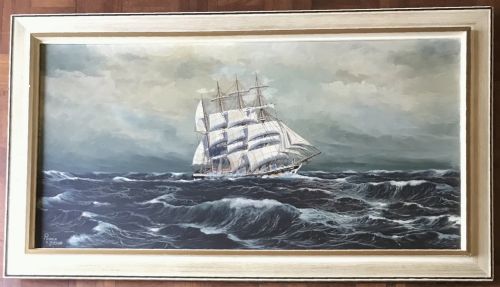
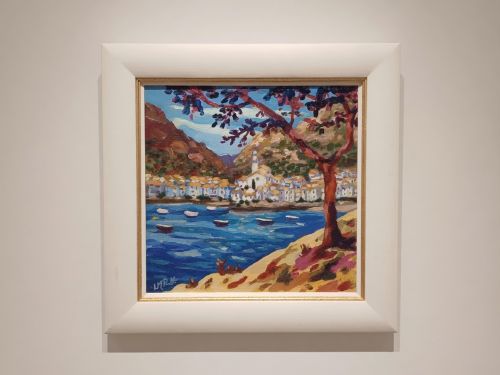
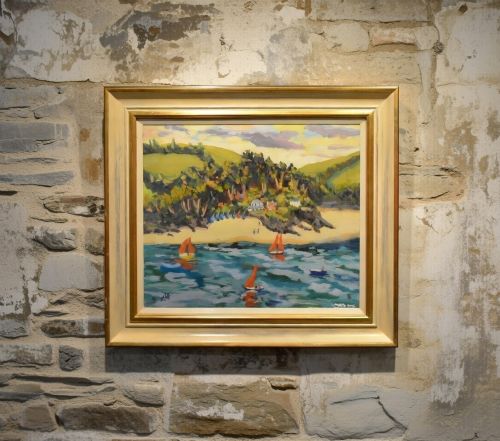
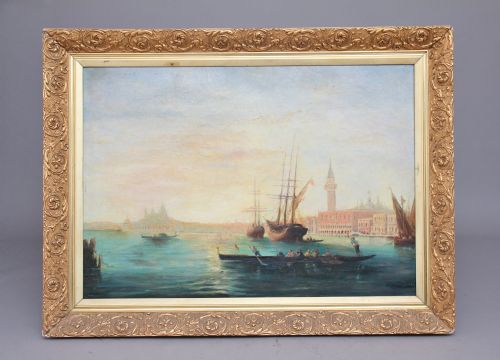


Blue Water Oil Painting
A blue water oil painting captures rivers, seas and lagoons with fluid depth, bringing the movement of open water into a room.
Blue Water Oil Painting
A blue water oil painting brings together maritime scenes, river views and tranquil lakes across a span of periods. When searching for a blue water oil painting, buyers encounter works ranging from nineteenth-century marine canvases to contemporary impressions.
The selections span French Impressionism, Italian coastal views and traditional British school compositions. Many pieces focus specifically on coastal waters, Venetian lagoons and atmospheric river banks.
Canvases stretch from early nineteenth-century depictions of stormy seas to mid-century abstract water studies. These works utilise varied approaches to capture the reflection and motion of water.
Materials and methods
Artists apply oil paint directly onto stretched canvas or wooden panels, building rich textures and deep tones. Many works incorporate canvas support mounted within gesso and gold leaf gilt wood frames.
Some painters work en plein air to capture immediate light conditions on rivers and coastal inlets. Others construct detailed studio compositions using traditional layering techniques.
Listings feature periods from the nineteenth century through to contemporary works, spanning canvas, wood, cardboard and gilt wood frames.
Distinctions in quality
Superior works demonstrate a confident handling of light and shadow across the surface of the water. The best paintings capture natural movement and atmospheric depth through assured brushwork.
Frame construction also marks a difference, with original gilt wood and gesso moulding adding period context. Weaker examples often rely on repetitive mark-making without genuine observation of light.
Lucy Pratt·Armand Guillaumin·Arthur Joseph Meadows·William Ernst Burwell·Adolphe Gumery·Owen Bowen·Charles Clement Calderon
The Blue Water Oil Painting Glossary
- Canvas
- A heavy woven fabric stretched across a wooden frame to serve as a painting surface. It provides the primary foundation for most traditional oil works.
- Gesso
- A plaster-like mixture applied to wooden panels or frames to prepare the surface for gilding or painting. It creates a smooth, durable base.
- Gilt wood frame
- A wooden picture surround coated in a thin layer of gold leaf. These frames often show period-specific moulding styles.
- Plein air
- The practice of painting outdoors directly from the subject. This method allows artists to record shifting natural light on water.
- Impressionism
- An art movement focused on capturing light and fleeting moments rather than precise detail. It heavily influences many water and landscape scenes.
Blue Water Oil Painting: Frequently Asked Questions
Are these frames original?
Many works retain their period gesso and gilt wood frames, adding historical context to the piece. Inspect the corners and moulding for signs of age that match the canvas.
Replacement frames occur frequently in older art to preserve the work. Check for matching patination between the painting and its surround.
Where were these painted?
Locations span British coasts, French rivers, Italian lagoons and Mediterranean ports. Artists travelled extensively to capture specific maritime environments.
Studio work often followed initial plein air sketches completed on site. Signatures and titles on the reverse frequently record the exact geographic location.
How do I date an oil painting?
Stilistic markers, canvas preparation and framing materials help determine the approximate creation period. Nineteenth-century works differ visibly in palette from mid-century abstracts.
Artist signatures and exhibition labels provide further chronological clues. Documentation on the stretcher bars often records historical provenance.