



Impressionist Venice Cityscape
Impressionist venice cityscape paintings capture the light, canals, and gondolas of the lagoon through loose brushwork and atmospheric colour.
Impressionist Venice Cityscape
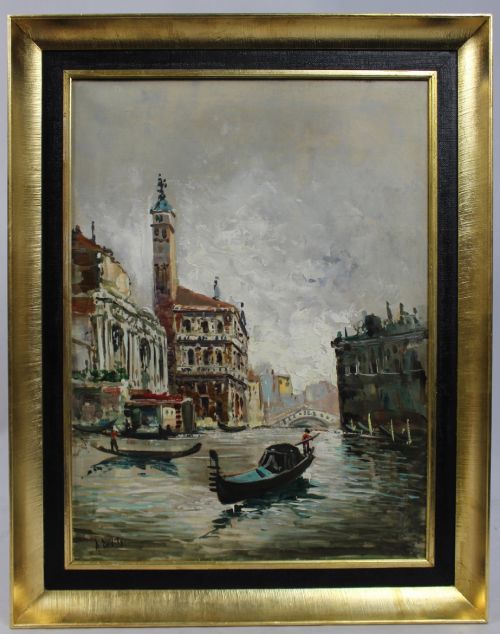
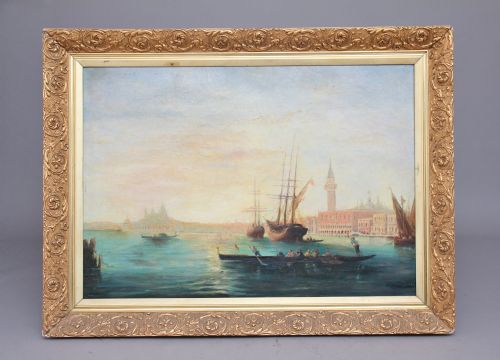
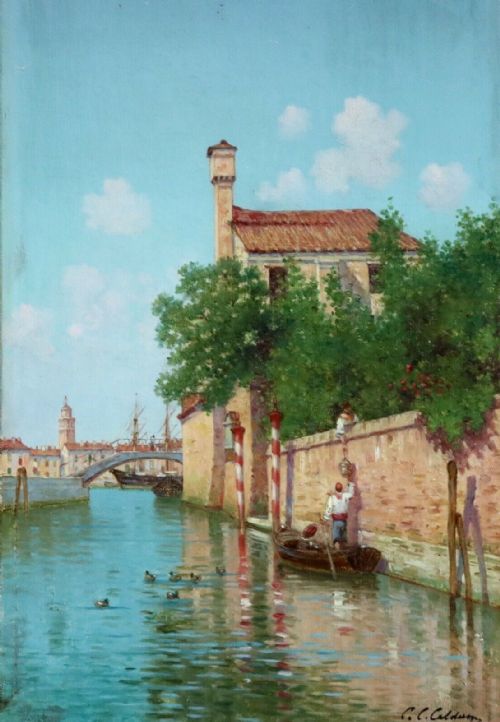
An impressionist venice cityscape brings the iconic waterways, bridges, and palazzos of the lagoon into interior spaces through the medium of paint. These works focus on the play of light over water, capturing familiar sights such as the Grand Canal and the Bridge of Sighs.
Collectors encounter pieces spanning from the late nineteenth century through the mid-twentieth century, encompassing Italian, French, and British artistic interpretations. Canvas and paper serve as the primary supports for these atmospheric views.
Oil paintings dominate the selection, often housed in giltwood frames that complement the luminous palettes of the artists. Watercolour paintings also appear, offering a lighter, more transparent rendering of the Venetian atmosphere.
Materials and Technique
Artists primarily utilised oil paint on canvas to build rich, textured surfaces that evoke the shimmering quality of the Venetian lagoon. Watercolour on paper offered a contrasting medium for those seeking swift, translucent impressions of canals and gondolieri.
Giltwood and gesso frames frequently encase these works, providing a traditional decorative boundary that enhances the visual depth of the painted scenes. The combination of tactile paint application and ornate framing defines the physical presence of these pieces.
Listings feature works spanning from the nineteenth century through the nineteen-sixties, created using oil paint and watercolour on canvas and paper.
Gradations in Quality
The handling of light and atmospheric depth distinguishes more accomplished compositions from simpler decorative records of the city. Skilled artists manage the interplay between water and historic masonry with confident, purposeful brushwork.
The integrity of the canvas and the preservation of the pigment layer significantly influence the overall standard of a piece. Original framing, particularly period giltwood, adds considerable character and context to the artwork.
Antonio DeVity·Claude Jousset·Marc Aldine·Vittore Zanetti Zilla·Emanuele Cappello·Henry Wimbush·Charles Clement Calderon·Helen Donald Smith
The Impressionist Venice Cityscape Glossary
- Giltwood
- Wood that has been coated with gold leaf or a gold-coloured finish. This material is commonly found on the ornate frames enclosing traditional paintings.
- Gesso
- A plaster-like mixture applied to wood or canvas as a base for painting or for creating moulded decorative details on frames. It provides a smooth, stable surface for gilding.
- Gondolier
- A traditional oarsman who propels a gondola through the canals of Venice. They frequently appear as focal subjects in lagoon cityscapes.
- Lagoon
- The enclosed bay of the Adriatic Sea in which Venice is situated. Its unique tidal waters and shifting light are central themes in these paintings.
Impressionist Venice Cityscape: Frequently Asked Questions
How do I date a Venice painting?
Examine the materials of the canvas, stretcher frames, and any associated framing, as nineteenth-century and early twentieth-century works utilise specific hardware and timber constructions.
Signatures, stylistic markers of impressionism, and artist biographies further narrow down the decade of creation.
Where should I hang these?
These works suit reception rooms, studies, or hallways where natural light can illuminate the brushwork and gilding of the frame.
Keep them away from direct sunlight and excessive moisture to protect the oil paint and paper supports.
What subjects are most common?
Canals, gondolas passing beneath bridges, and historic palazzos dominate the compositions found across these works.
Views featuring landmark sites such as the Grand Canal and the lagoon appear frequently in both oils and watercolours.
Are watercolours as durable as oils?
Watercolour paintings on paper require careful framing behind glass to protect the pigments from fading and moisture damage.
Oil paintings on canvas offer greater physical resilience but still benefit from stable indoor environments.