


Italian Canal Scene Painting
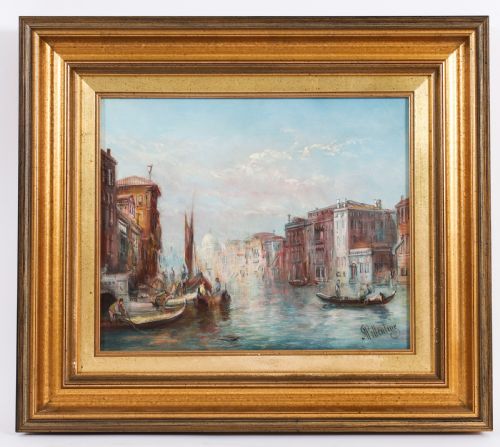
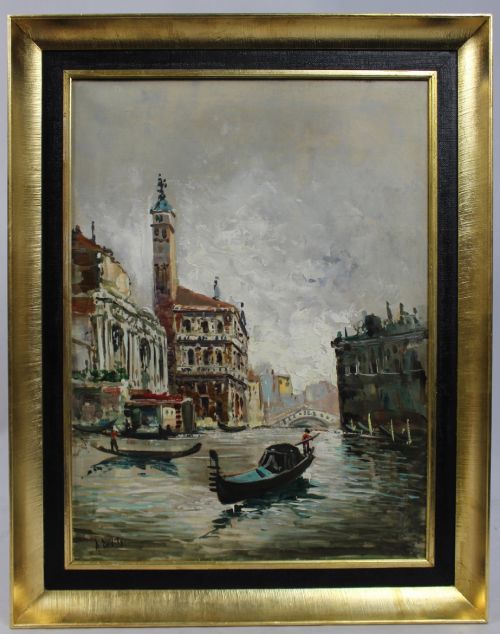
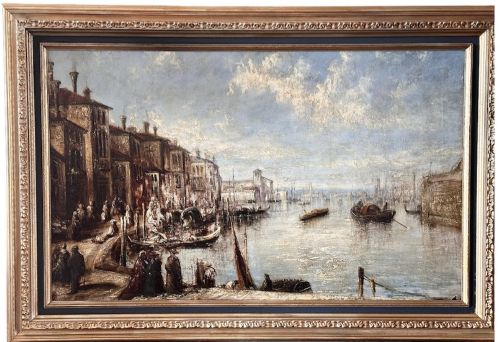
These Italian canal scene painting works capture the light and architecture of Venice across the nineteenth and twentieth centuries.
Italian Canal Scene Painting
An italian canal scene painting portrays the waterways, palazzos, and gondolas of Venice through historic artistic interpretations. Buyers searching this phrase encounter works ranging from Victorian views to mid-century impressionistic compositions.
Materials and methods
Artists predominantly applied oil paint onto canvas or wood panels, capturing the distinctive luminosity of the Venetian lagoon. Watercolour, pastel, and gouache on paper also appear frequently among the listed works.
Many of these paintings retain their period frames, constructed from gilded wood or giltwood that complements the historic artwork.
Several gondoliers captured in these historic canals have been silently passing beneath the same stone bridges for over a century.
Distinctions in quality
Quality rests upon the artist's ability to handle light and atmospheric perspective across water and stone. Signed works by documented painters carry stronger attribution value than anonymous compositions.
The sophistication of the brushwork and the preservation of the canvas or paper surface determine the standing of an individual piece.
Alfred Pollentine·Antonio DeVity·Francis Moltino·Claude Jousset·Jane Vivian·Vittore Zanetti Zilla·Charles Clement Calderon·Helen Donald-Smith
The Italian Canal Scene Painting Glossary
- Oil on Canvas
- A painting medium where pigments suspended in drying oil are applied to stretched woven fabric. This combination allows for rich colour blending and textured brushwork.
- Giltwood
- Wood carved and treated with a thin layer of gold leaf or metallic powder. It provides an ornate and reflective border for historic paintings.
- Gouache
- An opaque water-based paint mixed with a binding agent. It creates solid, matte areas of colour often used alongside watercolour.
- Impressionism
- A style of painting emphasising light and its changing qualities rather than precise detail. Artists in this tradition use visible brushstrokes to capture fleeting visual impressions.
Italian Canal Scene Painting: Frequently Asked Questions
How do I identify a nineteenth-century Venetian painting?
Look closely at the canvas preparation, stretcher frames, and stylistic conventions typical of the period. Pigment analysis and artist signatures also help establish the correct era.
Compare the handling of light and architectural details with known examples from the same decade. Framing materials often provide additional clues to the age of the work.
What subjects appear most often in these scenes?
The Grand Canal, the Bridge of Sighs, and Santa Maria della Salute dominate these artistic depictions. Gondoliers navigating the historic waterways also feature prominently.
Artists frequently portrayed specific landmarks under varying light conditions, from bright afternoon sunshine to evening moonlight.
How should I hang and care for oil on canvas?
Keep paintings away from direct sunlight, heating vents, and damp environments to protect the canvas and paint layers. Stable indoor humidity prevents the wooden stretcher frames from warping.
Dust the surface gently with a soft, dry brush without applying pressure to the paint film.
Are watercolours different to oil paintings in framing?
Watercolour paintings require glass protection and acid-free mount boards to prevent paper degradation and moisture damage. Oil paintings on canvas are left unglazed to allow the paint surface to breathe.
Ensure that paper works do not touch the glass directly inside the frame.