



Venetian Seascape Canvas
A venetian seascape canvas brings the light and water of the lagoon straight onto your wall.
Venetian Seascape Canvas
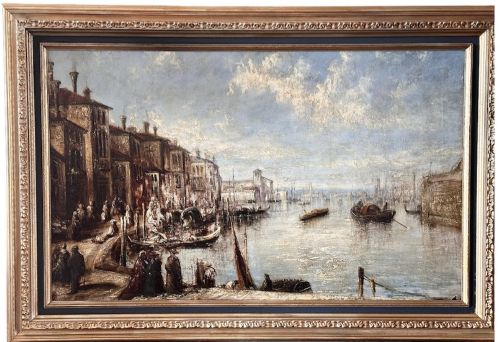
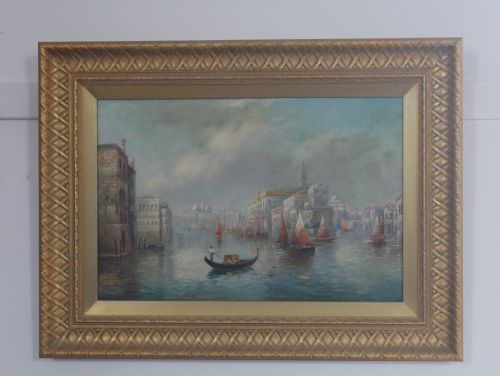
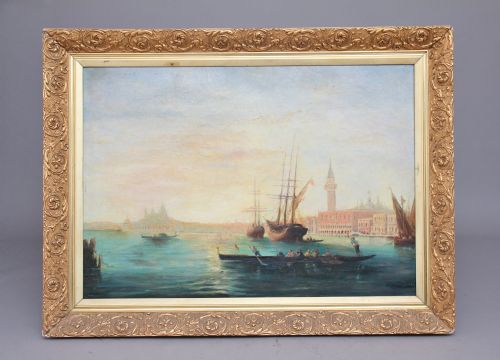
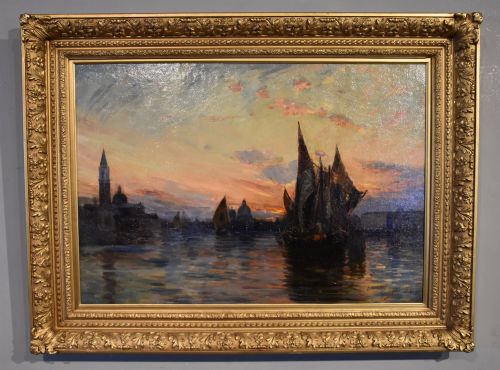
A venetian seascape canvas captures the unique architecture and shimmering waters of Venice through oil paint. You will most frequently encounter nineteenth-century interpretations on canvas, often framed in giltwood and gesso.
The subjects range widely across the historic city, focusing heavily on the Grand Canal, the lagoon, and landmarks such as the Doge's Palace. These works span from the Victorian era into the early twentieth century, reflecting various European and British artistic movements.
How they were made
Artists painted primarily in oil on canvas, utilising traditional techniques to capture the distinct light and atmosphere of Italy. The physical support relies on stretched canvas secured to wood frames.
Frames are frequently constructed from wood with decorative gesso moulding, sometimes finished with gold leaf. This combination of oil medium and ornate gilt framing defines the physical presence of the works.
Alfred Pollentine painted the Grand Canal so often he essentially set up a second home on the water inside nineteenth-century giltwood.
What varies in quality
Quality rests upon the skill of the brushwork and the precision with which the artist captures the distinctive architectural details and atmospheric light of the Venetian setting. Stronger pieces demonstrate a confident handling of water reflections and perspective along the Grand Canal.
The craftsmanship of the surrounding frame also influences the overall character, particularly the depth and preservation of the giltwood and gesso ornamentation. Original framing that complements the period of the canvas generally elevates the piece.
Francis Moltino·Thomas Hodgson Liddell·Jane Vivian·Alfred Pollentine·William Raymond Dommersen
The Venetian Seascape Canvas Glossary
- Oil on Canvas
- A traditional painting technique where pigments suspended in oil are applied to a woven fabric stretched across a wooden frame. This method allows for rich colour blending and textured brushwork.
- Giltwood
- Wood that has been thinly coated with gold leaf or gold paint for decorative effect. It is commonly found on the ornate frames surrounding nineteenth-century paintings.
- Gesso
- A plaster-like mixture applied to wood frames as a smooth base before gilding or painting. It allows craftsmen to mould intricate relief decorations.
- Impressionism
- An artistic style characterised by relatively small, thin yet visible brush strokes and an emphasis on accurate depiction of light. The evidence records examples of both Italian and British impressionism.
Venetian Seascape Canvas: Frequently Asked Questions
Where should I hang a venetian seascape canvas?
Choose a wall with stable ambient temperature and humidity away from direct sunlight. Prolonged exposure to intense light can degrade oil paints and damage antique canvas.
Ensure the wall is strong enough to support the weight of the canvas and its heavy wooden frame. Hanging the piece at eye level generally offers the best viewing experience.
How can I tell the period of a painting?
Examine the materials of the canvas support, the style of the wooden stretcher, and the construction of the frame. Nineteenth-century works often display specific framing techniques and ageing patterns on the rear canvas.
Artist signatures, inscriptions, and stylistic traits like Victorian romanticism or early twentieth-century impressionism also help narrow down the date of creation.
What is the difference between a lagoon view and a canal scene?
Lagoon views typically feature open expanses of water, distant horizons, and sailboats under wide skies. They focus on the natural atmosphere surrounding the city.
Canal scenes concentrate on the urban waterways flanked by historic palazzos, bridges, and architectural landmarks like the Grand Canal. Both subjects appear frequently across nineteenth-century works.