
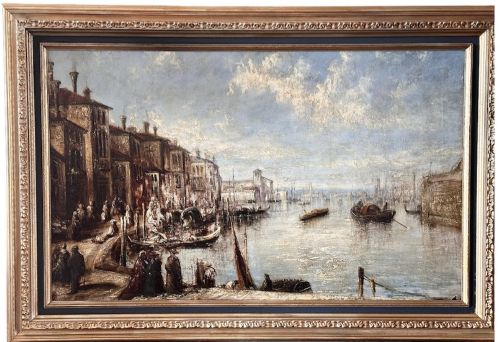


Antique Canal Scene Canvas
An antique canal scene canvas brings the atmospheric waterways of Venice, Dutch landscapes and British canals into a room through oil paint.

Antique Canal Scene Canvas
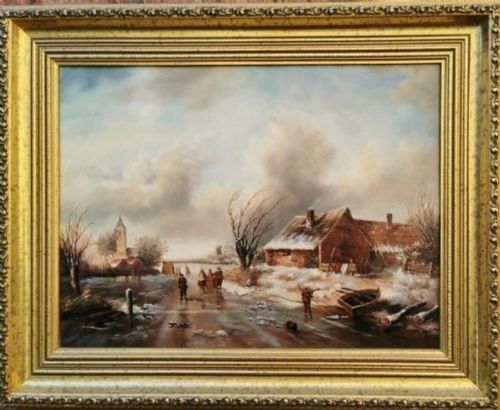
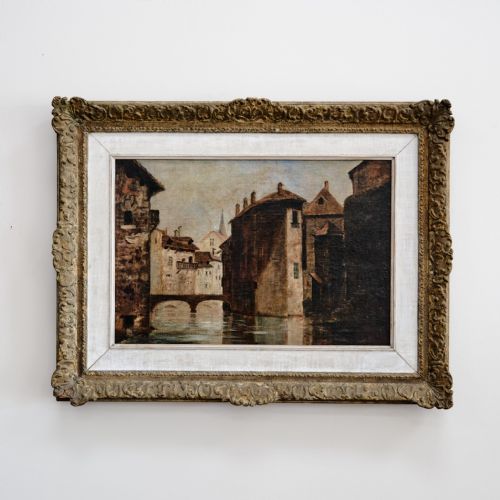
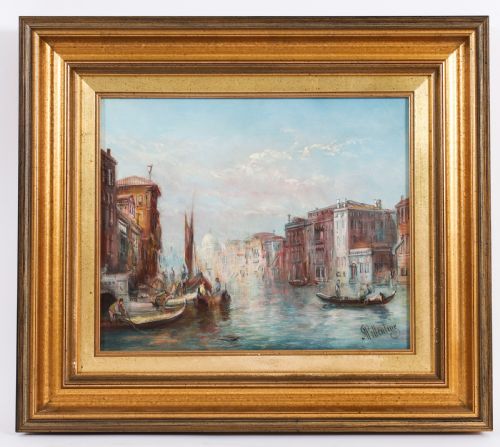
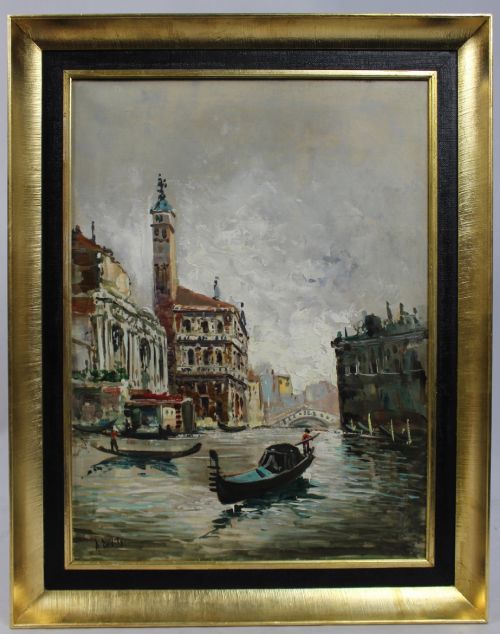
An antique canal scene canvas depicts waterways, urban quaysides and winter landscapes rendered in oil paint upon woven fabric supports. These works capture specific architectural views such as the Grand Canal in Venice alongside Dutch windmills and British canal settings.
The pieces on this page span the nineteenth century up to the mid twentieth century, encompassing Victorian compositions, Dutch school traditions, Impressionist treatments and Post-Impressionist approaches. Buyers encounter both signed works by known nineteenth and twentieth century artists and unsigned continental townscapes.
Formats range from intimate barge studies to massive Venetian architectural views framed in wood, gesso and gold leaf. The subject matter centres persistently on water transport, historic mansions and gondolieri navigating beneath stone bridges.
How these canvases were made
Painters applied oil paint directly to stretched canvas substrates, utilising the textured weave of the fabric to hold pigment and build impasto surfaces. Many works incorporate preparatory grounds of gesso beneath the oil layers to seal the textile base and brighten the subsequent colours.
The finished artworks are typically housed within wooden frames, frequently adorned with moulded gesso detailing and finished with gold leaf or giltwood highlights. These frames contribute structural depth and define the visual boundary of the landscape.
Listings span the nineteenth century to nineteen sixty, recording oil on canvas, wood, gesso, and gold leaf across Victorian and Impressionist styles.
What varies in quality
The distinction between standard works and exceptional examples rests upon the handling of light, atmospheric perspective and architectural precision within the oil medium. Superior canvases demonstrate a confident command of reflection upon water and the subtle tonal shifts of Venetian lagoons or Dutch winter skies.
The integrity of the original canvas support, the stability of the oil paint layer and the quality of the surrounding giltwood or gesso frame also separate ordinary decorative pieces from fine artistic output. Masterly brushwork by named practitioners elevates a composition far above anonymous provincial studio output.
Alfred Pollentine·Francis Moltino·Claude Jousset·Frederick Tully Lott·Marc Aldine·Jane Vivian·William Raymond Dommersen·Herbert Royle·Ludwig Hermann·Maud Raphael Jones·Charles Clement Calderon
The Antique Canal Scene Canvas Glossary
- Oil on Canvas
- A painting technique where pigmented oil paint is applied to a stretched woven fabric support. This combination allows for rich blending and textured brushwork.
- Giltwood
- Wood that has been treated and covered with a thin layer of gold leaf or metallic powder. It provides a reflective, ornate border for traditional paintings.
- Gesso
- A paint mixture consisting of a binder mixed with chalk, gypsum, or pigment. It was applied to wooden frames and canvas grounds to create a smooth surface.
- Impressionism
- A nineteenth century art movement characterised by relatively small, thin yet visible brush strokes and an emphasis on accurate depiction of light. Artists working in this style focused on ordinary subject matter and shifting visual angles.
- Dutch School
- A collective term for painters working in the Netherlands or following seventeenth and eighteenth century Dutch artistic traditions. These works frequently depict flat landscapes, winter scenes and waterways.
Antique Canal Scene Canvas: Frequently Asked Questions
What subjects appear on these canvases?
The subjects focus heavily on Venetian waterways featuring palaces, bridges and gondolieri, alongside Dutch winter landscapes and windmills. British canal scenes and continental townscapes also feature prominently.
Artists captured these busy quaysides and quiet river banks using oil paint on canvas during the nineteenth and early twentieth centuries.
How do I hang a giltwood framed canvas?
These heavier framed works require secure wall fixings anchored directly into masonry or wall studs to support the weight of the wood, gesso and canvas combined.
Position the painting away from direct sunlight and heat sources to protect the oil paint and gilded frame from environmental stress.
Are all these paintings signed?
The collection includes both signed works by named nineteenth and twentieth century artists and unsigned continental townscapes.
Signatures when present help attribute the piece to specific schools or individual painters recorded in the listing details.
How do I identify the period of a canvas?
Periods are identified through stylistic movements such as Victorian realism, Impressionism, Post-Impressionism and the Dutch school tradition.
Framing materials like gesso and gold leaf also offer contextual clues alongside artist dates spanning the nineteenth and twentieth centuries.