


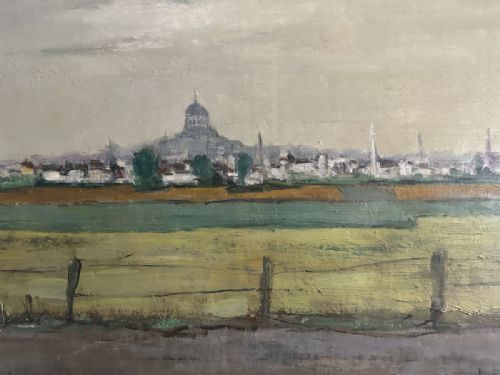

Antique European Cityscape
An antique european cityscape captures the architectural charm and bustling street life of old towns across the continent.

Antique European Cityscape
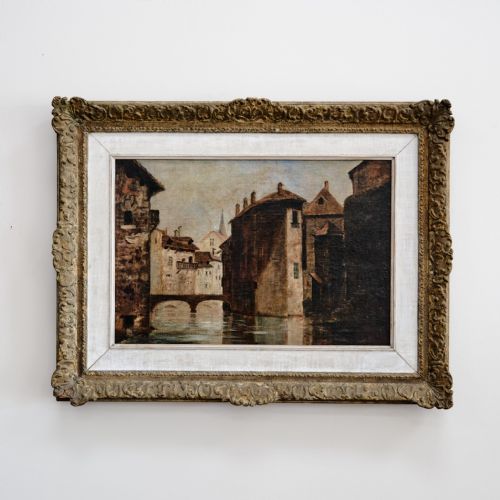
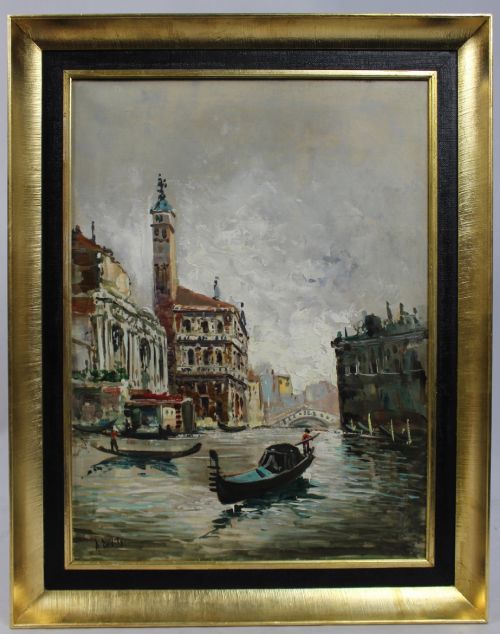
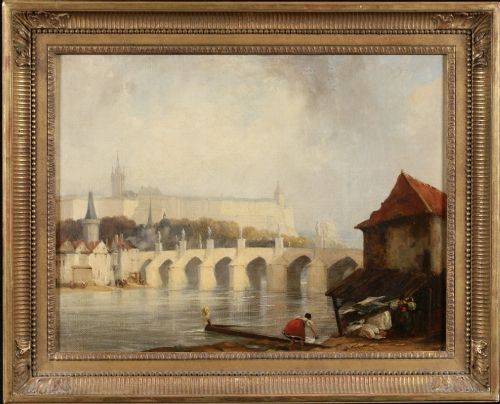
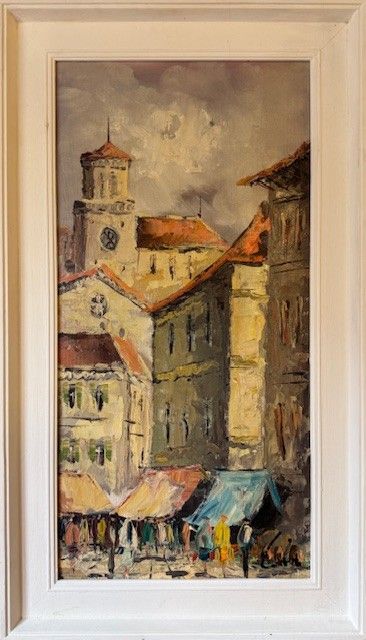
An antique european cityscape presents streets, canals, cathedrals, and harbours painted by artists working across different centuries and European schools. These works document the evolving facades of historic locations such as Prague, Paris, Bruges, and Antwerp.
The pieces on this page are most commonly oil paintings on canvas or board, alongside watercolours that record picturesque townscapes. Examples range from late Georgian and 19th Century French or Dutch school compositions to later Impressionist and German Expressionist interpretations.
Subjects often focus on specific landmarks, including bridges, cathedrals, and bustling riverside quays, framed within distinct regional aesthetic traditions.
Materials and technique
Artists relied primarily on oil paint applied to canvas, board, or paper, building up texture and tone to describe masonry, water, and shifting daylight. Watercolour on paper was also utilised frequently for lighter, more immediate topographical views.
Framing often involves period components such as giltwood, gold leaf, and moulded gesso, which complement the tonal range of the painted urban vistas.
Materials recorded across the inventory include oil on canvas, oil on board, watercolour, gold leaf, gesso, and giltwood.
Standards of execution
Quality rests on the precision of perspective, the handling of light across stone and water, and the artist's ability to render the atmosphere of a specific European locality. Stronger works demonstrate confident brushwork and a convincing sense of space within complex architectural surroundings.
The sophistication of the palette and the preservation of the original surface, whether oil on canvas or delicate watercolour, further distinguish finer examples from simpler decorative works.
Frederick Tully Lott·William George Meadows·Lewis J Wood·Noel Harry Leaver·Ludwig Hermann·Letitia Marion Hamilton·Charles James Keats·Christian Asmussen
The Antique European Cityscape Glossary
- Cityscape
- A painting, drawing, or other art form that depicts the physical aspects of a city or urban area. These views frequently emphasise architectural elements and street life.
- Oil on Canvas
- Pigment mixed with a drying oil applied to a stretched fabric support. This combination allows for rich blending and textured application.
- Giltwood
- Wood that has been treated with gold leaf or a gold-coloured finish. It is commonly found on period frames enclosing traditional paintings.
- Watercolour
- A paint consisting of pigment suspended in a water-soluble vehicle. It is typically applied to paper to produce translucent, luminous views.
- Impressionism
- A 19th-century art movement characterised by relatively small, thin, yet visible brush strokes and an emphasis on accurate depiction of light. Artists focused on transient moments in urban and natural settings.
Antique European Cityscape: Frequently Asked Questions
What is an antique european cityscape?
An antique european cityscape is a work of fine art depicting streets, buildings, rivers, and landmarks in European towns and cities. These pieces serve as visual records of urban architecture and daily life from past centuries.
Created primarily in mediums such as oil and watercolour, these works reflect the changing artistic styles of periods ranging from the Georgian era through the mid-20th century.
How do I date these paintings?
Dating typically relies on stylistic evidence, artist signatures, framing materials, and the physical composition of the canvas or paper support. Details of clothing, transport, and architectural alterations visible in the scene can also narrow down the period.
Many works carry specific attribution to known 19th or 20th-century schools, providing a reliable baseline for the era of execution.
Where were these urban views painted?
Artists travelled widely across the continent to record famous locations, capturing sites in France, Germany, Belgium, the Czech Republic, and beyond. Common subjects include cathedrals, busy harbours, bridges, and historic market squares.
These topographical records often highlight specific recognizable landmarks such as Notre Dame or Prague Castle.
How should I display a cityscape?
Cityscapes look best hung at eye level on neutral walls where the architectural detail and colour palette can be appreciated without distraction. Proper lighting helps bring out the textures of oil paint or the delicate washes of watercolour.
Consider pairing the piece with an appropriate period frame to maintain the historic character of the artwork.