

British Coastal Oil Painting
Capturing harbours, cliffs and tides, a british coastal oil painting brings the maritime atmosphere of the shore directly into an interior.
British Coastal Oil Painting
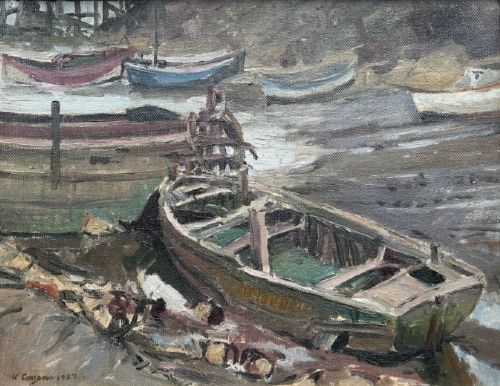
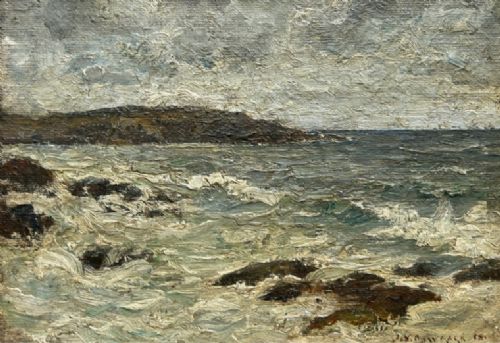
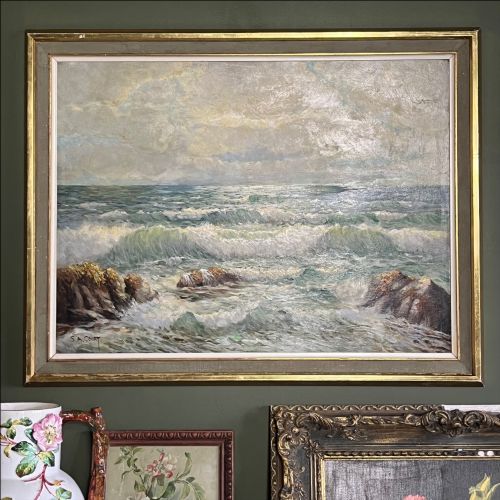
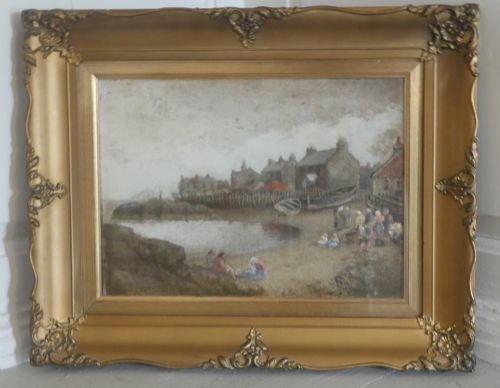
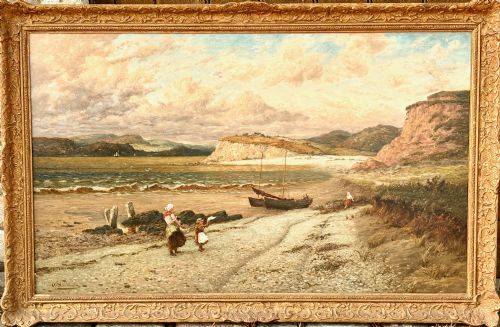
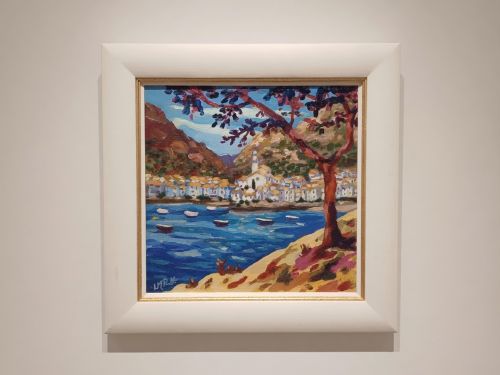
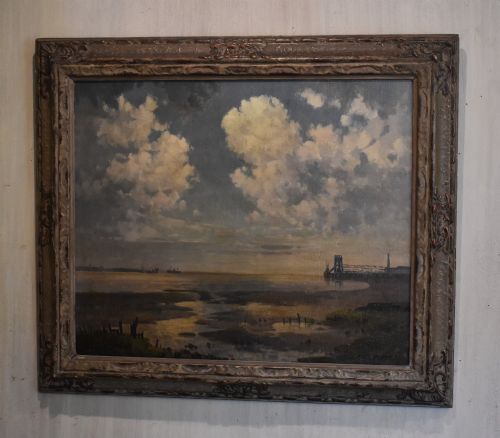
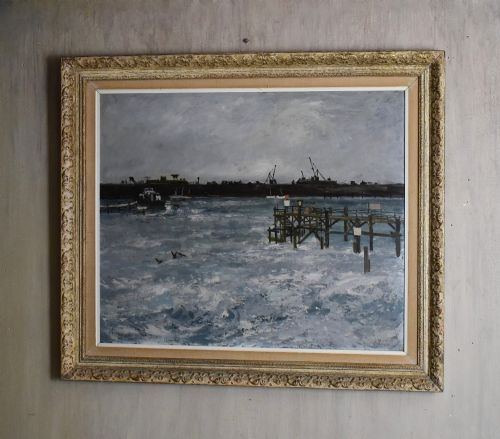
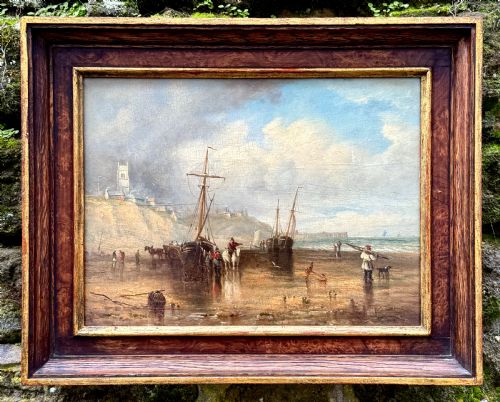
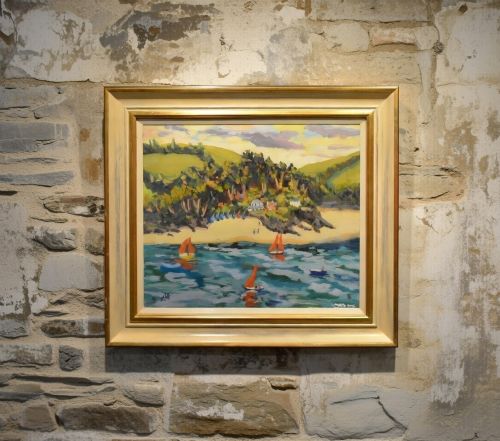
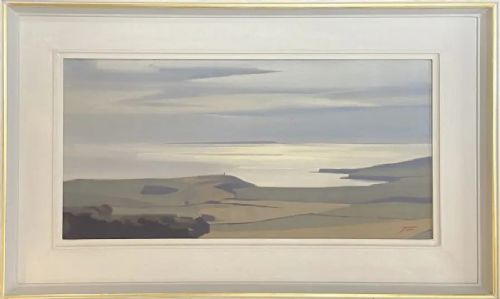
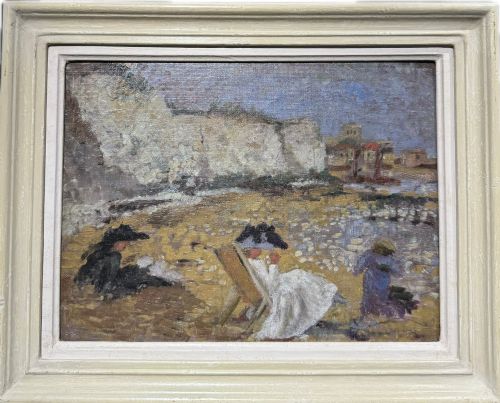
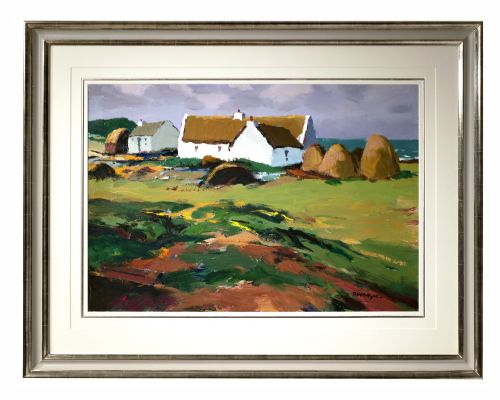
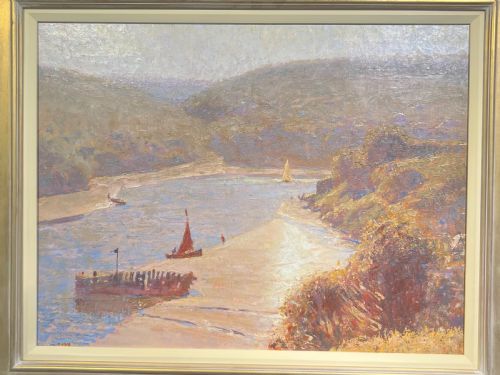
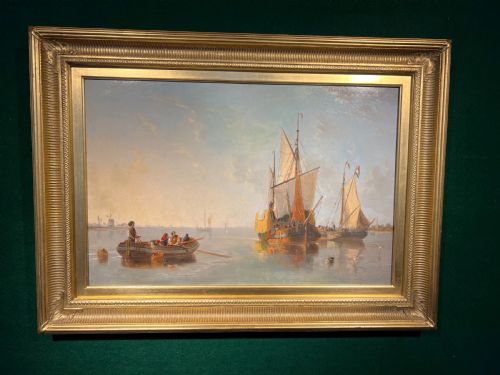
A british coastal oil painting depicts maritime scenes ranging from quiet estuaries and fishing villages to stormy seas and rocky cliffs. These works span multiple periods, with Victorian marine art sitting alongside mid-century impressionism and modern British interpretations.
Buyers encounter depictions of specific locations such as Cornwall, St Ives, Morecambe Bay and the Isle of Man. The format varies from intimate board studies painted en plein air to large-scale canvas works intended for prominent display.
The enduring appeal lies in the direct connection to the shore, recorded through the varied lenses of nineteenth-century romanticism and twentieth-century observation.
Materials and methods of the shore
Artists painted primarily with oil paint on stretched canvas, wooden panels, or rigid board, often working directly outdoors to capture changing coastal light and weather. The medium allowed for both thin, translucent washes of colour and thick, textured impasto applications.
Many works were subsequently housed in gilt wood frames that complemented the maritime subject matter. The physical support often reveals the conditions of its creation, from card and panel to traditional woven canvas.
The listings span from nineteenth-century academic marine art through to 1960s modernist interpretations on canvas and board.
Distinctions in execution and atmosphere
Quality rests in the artist's handling of light, atmosphere, and maritime movement rather than the mere recording of topographical detail. Stronger examples demonstrate a confident command of paint application, whether through subtle tonal shifts or energetic impasto strokes that convey the weight of the sea.
The cohesion of the composition and the fidelity of the coastal atmosphere separate standard topographical records from works of lasting artistic merit.
John Wilson Carmichael·Abraham Cooper·Charles Napier Hemy·Edward Seago·William Henry Williamson
The British Coastal Oil Painting Glossary
- Impasto
- Paint applied thickly to a canvas or board, standing out in relief from the surface and capturing the physical texture of waves or clouds.
- En plein air
- The practice of painting entirely outdoors to directly observe the shifting effects of light and weather upon the coastline.
- Marine art
- Artistic representation of the sea, ships, coastal views, and maritime activities.
- Gilt wood
- Wood coated with a thin layer of gold leaf or metallic gilt, commonly used for traditional picture framing.
- British Impressionism
- A painting style developed in the late nineteenth and early twentieth centuries focusing on loose brushwork and natural light.
British Coastal Oil Painting: Frequently Asked Questions
How do I date an antique coastal oil painting?
Dating relies on a combination of stylistic clues, framing, and the physical characteristics of the canvas or board. Pigment analysis and stretcher construction also provide reliable indicators of age.
Signatures, exhibition labels on the reverse, and biographical details of the artist help narrow the creation period to a specific decade or art movement.
Where should I hang a coastal oil painting?
These works suit rooms with good natural light, though direct sunlight should be avoided to protect the oil pigments over time. Pairing the painting with neutral walls allows the coastal palette to stand out.
Consider sight lines from seating areas so the horizon line sits comfortably at eye level for an immersive viewing experience.
How do I distinguish between Victorian and mid-century styles?
Victorian marine art tends to feature meticulous detail, narrative depth, and dramatic atmospheric conditions such as storms or bustling harbours. The palettes often lean towards deep, traditional tonalities.
Mid-century works frequently embrace impressionistic brushwork, simplified forms, and brighter, more spontaneous colour relationships inspired by modern British movements.
What is the difference between painting on canvas and board?
Canvas provides a flexible woven support that responds well to traditional layering and larger formats. Board offers a rigid surface that was frequently favoured for smaller, spontaneous outdoor sketches.
Both materials were widely utilised, with board often indicating an en plein air study painted quickly on location.