
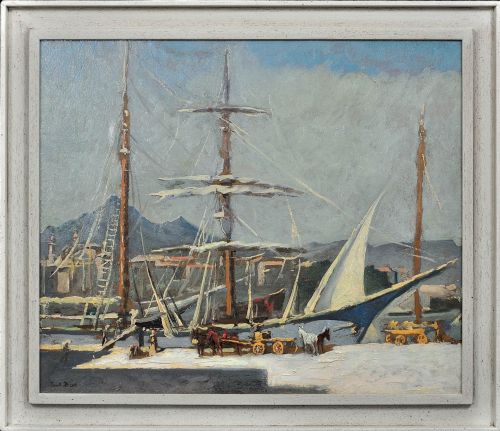
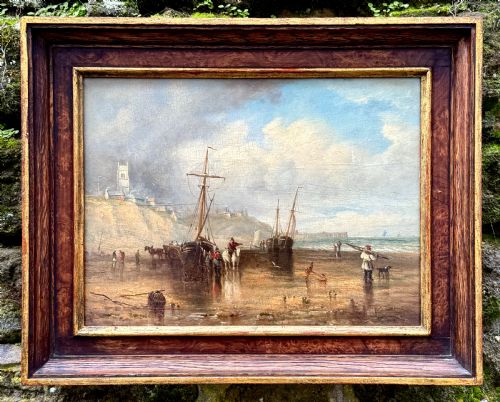
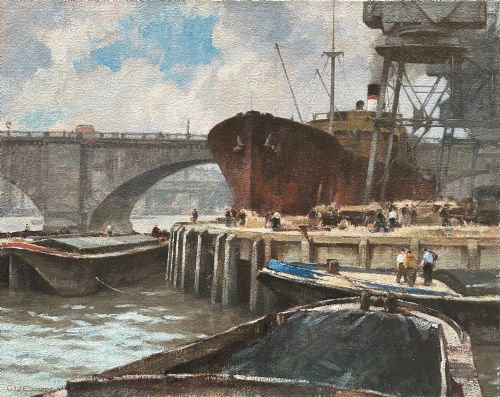
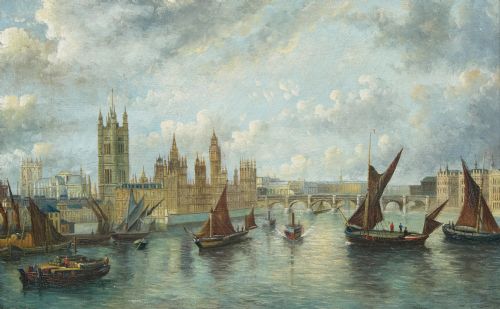


Blue Sky Maritime Artwork
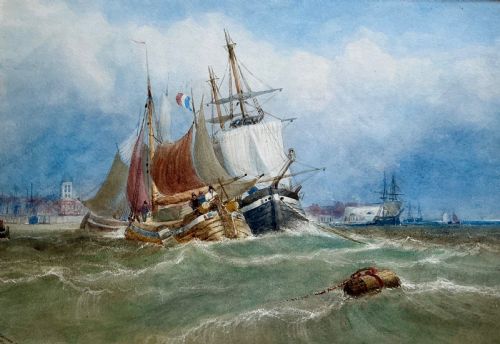
Blue sky maritime artwork encompasses marine paintings and watercolours capturing open waters, harbours, and coastal shipping under bright daylight.
Blue Sky Maritime Artwork
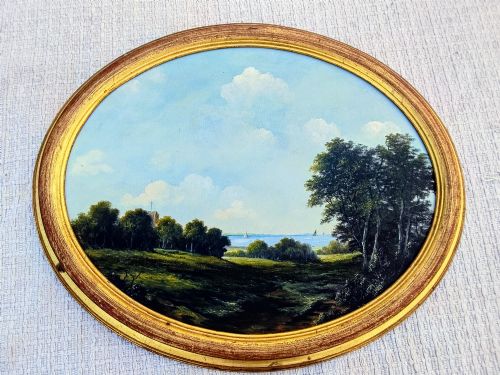
When you search for blue sky maritime artwork, you encounter paintings that focus on coastal views, harbour scenes, and open sea navigation under clear daytime skies. The selections span the nineteenth century through the mid twentieth century, featuring both oil paint and watercolour on canvas, paper, wood, and panel.
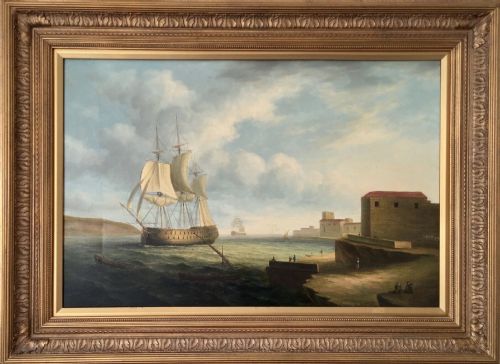
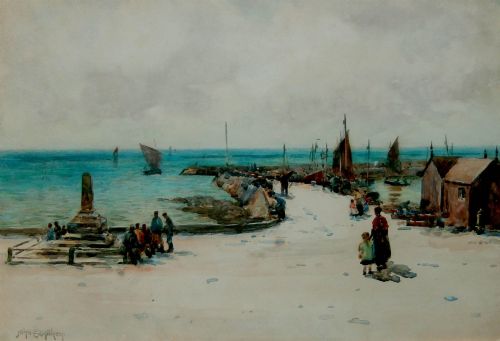
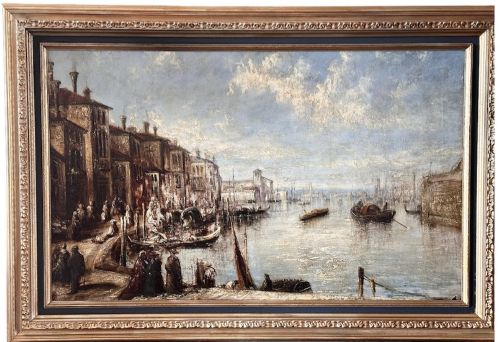
The version you are most likely to meet on this page is a nineteenth century or Victorian oil painting or watercolour depicting shipping vessels, fishing boats, and European ports. These works range from detailed depictions of British rivers and Venetian canals to atmospheric coastal vistas.
Represented traditions include British Impressionism, Victorian marine art, and Dutch Golden Age influences. Artists record bustling commercial harbours, quiet estuaries, and historical warships with varied levels of topographical detail and painterly touch.
How They Were Made
Artists utilised oil paint on canvas, wood panels, or oil paint applied to board, building up rich textures for sea and sky. Watercolours on paper offer a lighter touch, capturing luminous atmospheres with transparent washes and fine brushwork.
Support materials varied according to the period and scale, with stretched canvas favoured for larger works and wood or card utilised for portable plein air studies. Original frames of gilded wood frequently accompany these paintings, completing the presentation.
Several Victorian artists painted ships so accurately that modern historians identify individual vessels by their rigging alone.
What Varies in Quality
The distinction between ordinary and superior pieces rests upon the confidence of the brushwork and the artist's ability to render light upon water. Stronger works demonstrate a sure handling of perspective in rigging, hull structures, and coastal architecture.
Provenance and attribution elevate certain pieces, particularly those bearing signatures or documentation linking them to established marine painters of the period. The harmony of the composition and the preservation of the original paint surface determine the overall integrity of the piece.
Francis Moltino·Thomas Bush Hardy·William Frederick Settle·Alfred Pollentine·Edward Seago
The Blue Sky Maritime Artwork Glossary
- Seascape
- A painting depicting the sea, ships, or coastal views. These works often focus on the interaction between vessels and open water.
- Watercolour
- A painting method where water-soluble pigments are used on paper. This technique yields translucent washes suitable for luminous skies and calm seas.
- Panel
- A rigid support for painting, typically made of wood. Artists frequently utilised panels for smaller outdoor sketches.
- Marine Art
- Artistic representation of the sea, ships, and maritime life. This genre encompasses historical naval battles, port scenes, and coastal shipping.
Blue Sky Maritime Artwork: Frequently Asked Questions
What subjects appear in these paintings?
The works depict shipping vessels, war vessels, fishing boats, and commercial harbours across British and European waterways. Scenes range from bustling ports in Venice and Malta to quiet coastal inlets in Devon and Dorset.
Artists also recorded leisure piers, boatyards, and river shipping along major waterways like the River Mersey and the River Humber.
How do I care for an oil on canvas?
Keep oil paintings away from direct sunlight and fluctuating temperatures to prevent the canvas from slackening and the paint from cracking. Dust the surface gently with a soft, dry brush without applying pressure.
Avoid using liquid cleaners or water on the painted surface or the gilded wood frame.
Are watercolours framed differently from oils?
Watercolours require framing behind glass to protect the paper surface from atmospheric moisture and dust. They are typically mounted with acid-free card to keep the paper away from the glazing.
Oil paintings on canvas or panel are generally displayed unglazed to allow the textured paint surface and varnish to be seen directly.
How are periods identified?
Periods are determined through a combination of stylistic evidence, artist signatures, clothing styles of any figures depicted, and the framing materials. Canvas stamps and inscriptions on the reverse of panels or stretchers frequently provide dates.
Victorian and nineteenth century works display characteristic handling of pigment and varnish distinct from later twentieth century modernist approaches.