



Vintage Fishing Boat Artwork
Vintage fishing boat artwork captures coastal industry through oil and watercolour, offering a direct view into historic maritime communities.
Vintage Fishing Boat Artwork
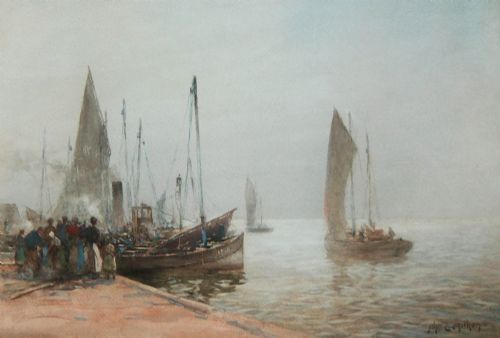
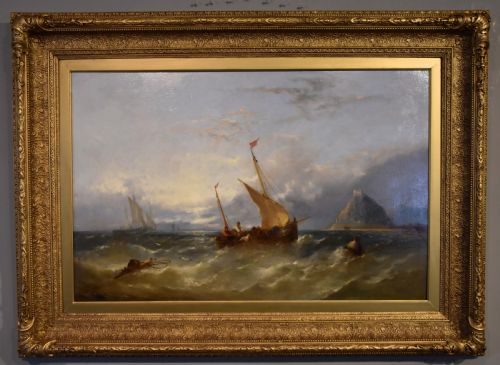
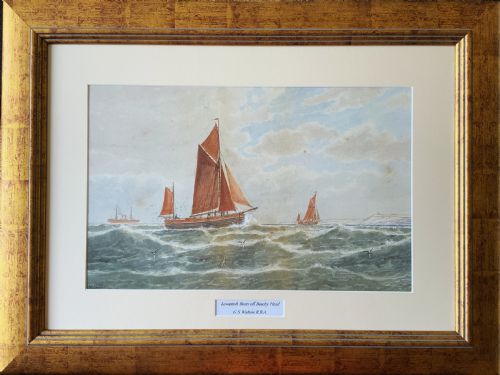
When you search for vintage fishing boat artwork, you encounter coastal scenes rendered during the nineteenth and twentieth centuries. These paintings and watercolours record harbours, trawlers and tidal shores across Britain and continental Europe.
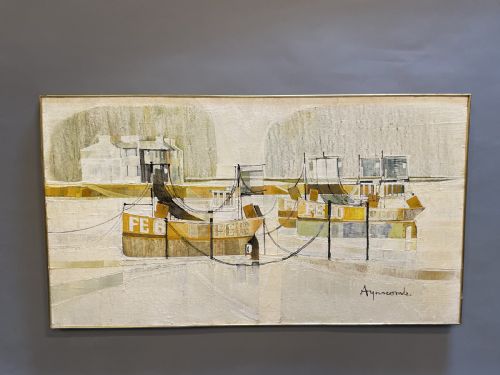
The selection ranges from Victorian marine watercolours to mid-century oil paintings on board and canvas. Many works focus on specific fishing ports such as St Ives, Whitby, Mevagissey and Mousehole.
Artists captured working vessels at sea or moored in bustling harbours. The depictions vary from detailed topographical records to impressionistic treatments of light and water.
Materials and methods
Artists recorded coastal scenes using oil paint, watercolour, pastel and gouache applied to canvas, wood board, card and heavy paper. Oil on canvas and board allowed for rich textures and layered brushwork, particularly suited to choppy seas and stormy weather.
Watercolour and gouache on paper captured the translucent qualities of sea and sky, often completed with rapid brushwork during outdoor sketching sessions. Etchings and prints offered another medium for translating harbour views into graphic editions.
Several artists clearly preferred the smell of salt fish over dry studios, braving Cornish gales with soggy sketchbooks.
Distinctions in quality
Quality rests upon the artist's command of marine anatomy, handling of light and atmospheric perspective. Stronger works convey the weight of wooden hulls and the movement of water through confident, purposeful brushwork rather than rigid detail.
The composition of harbour architecture and vessel placement distinguishes accomplished paintings from routine topographical records. Works by recognised marine painters display a surer grasp of scale, rigging and maritime environment.
James E Aitken·Thomas Bush Hardy·Charles Napier Hemy·William Lee Hankey·George Stanfield Walters
The Vintage Fishing Boat Artwork Glossary
- Oil on canvas
- Pigment suspended in drying oil applied to a stretched woven fabric support. This medium permits extensive blending and textural build-up.
- Watercolour
- A paint consisting of colorants suspended in a water-soluble vehicle, typically applied to paper. It relies on the white of the paper to provide luminosity.
- Seascape
- A work of art depicting the sea, coastal views or maritime activity. These subjects gained prominence during the Victorian period and continued into the mid-twentieth century.
- Gouache
- An opaque watercolour paint containing pigment mixed with a binding agent and white filler. It produces a dense, matte surface often combined with transparent watercolour.
- Impressionism
- An artistic approach characterised by relatively small, thin yet visible brush strokes and an open composition. It emphasises accurate depiction of light and its changing qualities.
Vintage Fishing Boat Artwork: Frequently Asked Questions
How do I identify the period of a painting?
Dating relies upon stylistic markers, framing techniques and artist signatures recorded alongside the work. Mid-century pieces often display looser brushwork and modernist palettes, whereas Victorian examples favour tighter maritime detail.
Examining the reverse of the canvas or board frequently reveals old gallery labels, inscriptions or stamps that help narrow the date of creation.
Where were most of these scenes painted?
Many works depict notable fishing ports and harbours around the British coast, particularly in Cornwall, Yorkshire and Kent. Locations such as St Ives, Whitby and Mousehole proved especially popular with visiting artists.
Continental ports in France and the Netherlands also appear frequently within European marine art of the period.
How should I frame and display these works?
Original frames, where preserved, complement the period aesthetic of the painting or watercolour. Conservation mounting using acid-free materials protects works on paper from long-term degradation.
Positioning the artwork away from direct sunlight preserves the stability of both pigments and paper supports.
What is the difference between oil and watercolour here?
Oil paintings utilise thick pigments on canvas or board, offering rich textures and deep tones suited to dramatic seascapes. Watercolours employ translucent washes on paper to capture lighter atmospheric effects.
Both mediums served artists recording coastal life across the nineteenth and twentieth centuries.