


Blue Seascape Canvas Painting
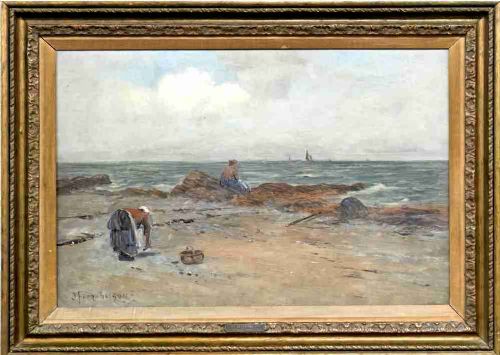
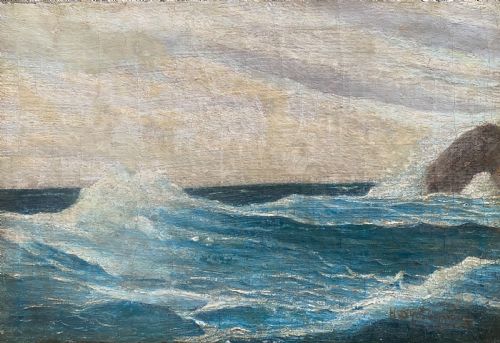
When you search for a blue seascape canvas painting, you are looking at oil works spanning the nineteenth and twentieth centuries that capture coastal scenes, harbours and maritime shipping.
Blue Seascape Canvas Painting
A blue seascape canvas painting encompasses maritime scenes, coastal views and harbour landscapes executed in oil paint. These works range from nineteenth-century Victorian maritime art to mid-twentieth-century examples.
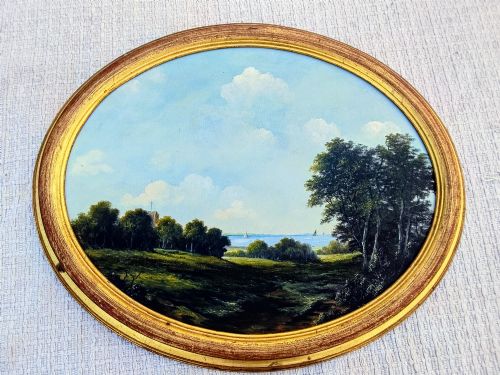
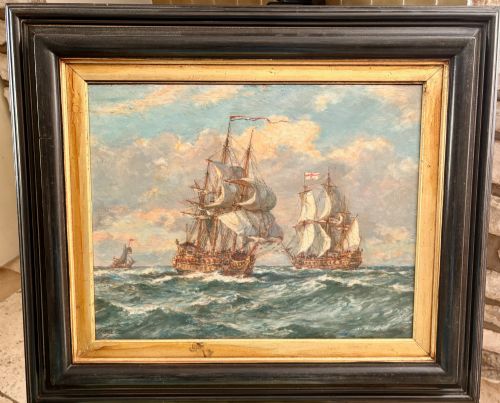
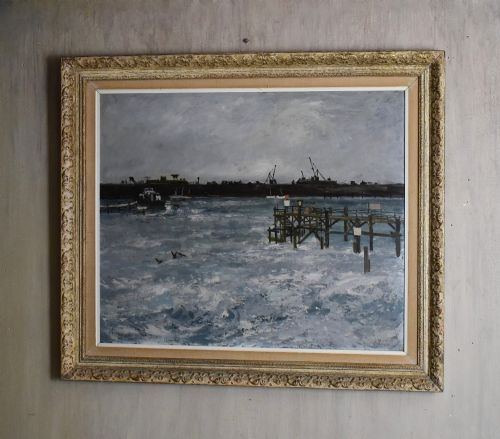
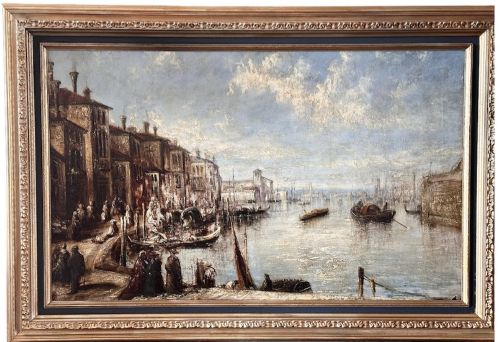
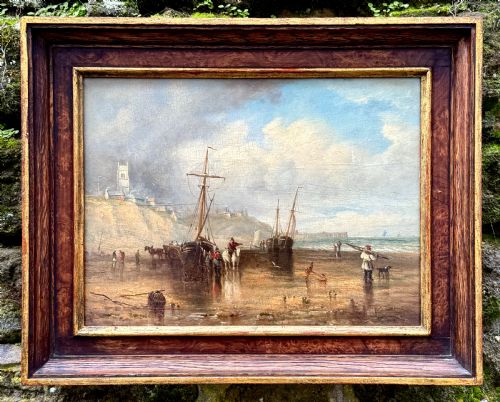
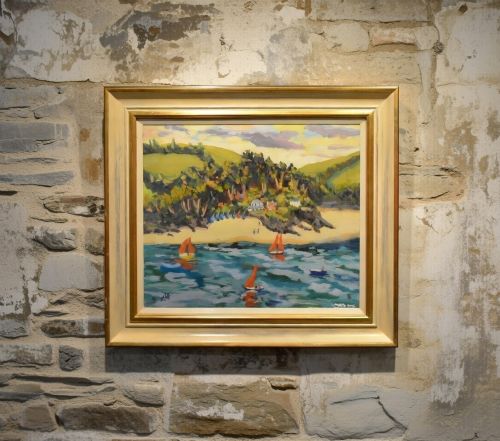
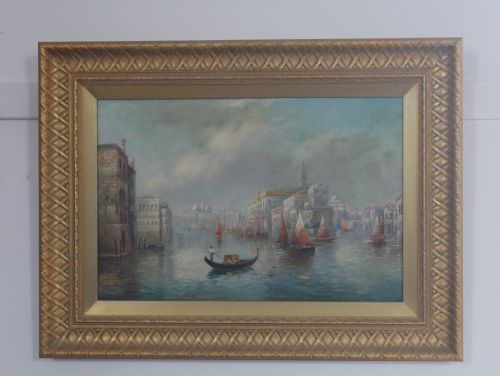
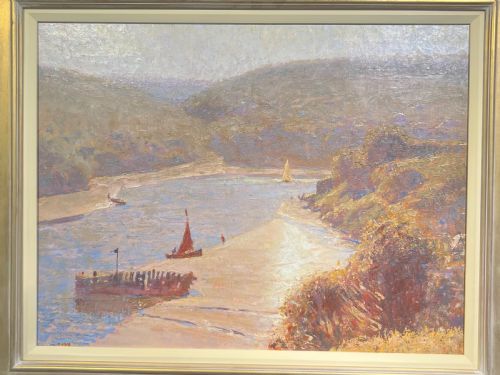
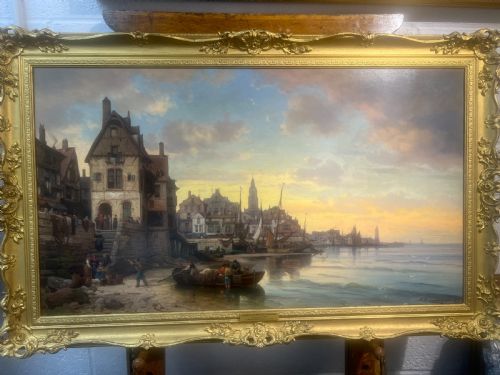
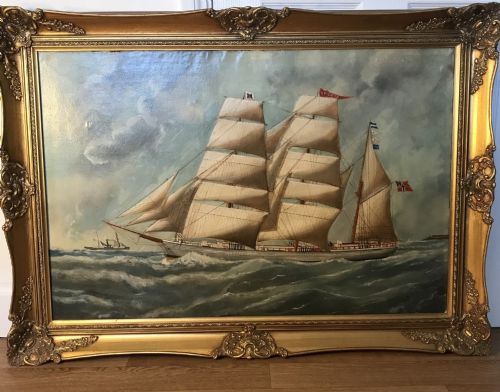
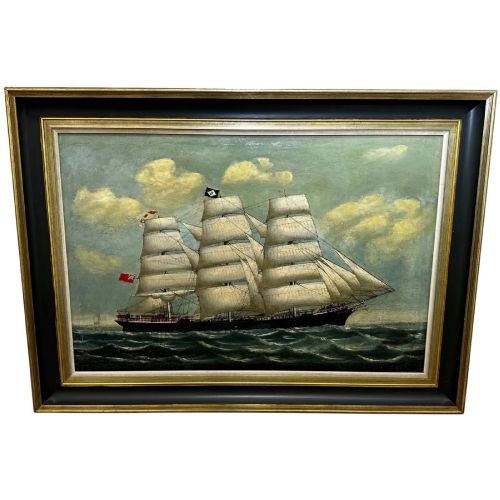
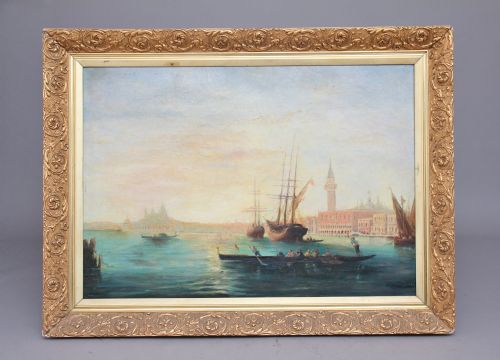
The pieces on this page include depictions of Venetian lagoons, Cornish harbours, tall ships and open coastal waters. Painters recorded these subjects across Britain, France and beyond, applying oil onto stretched canvas.
You will encounter works framed in wood or gilded wood, reflecting traditional framing methods alongside the stylistic shifts from maritime realism to post-impressionism.
Materials and construction
Artists painted these works using oil paint applied to woven canvas supports. The medium allowed for layered brushwork, blending and impasto textures that rendered the movement of water and light.
Canvases were stretched over wooden frames to maintain tension during the painting process. Many works are housed in their original or period wooden and gilded wood frames, which protect the edges of the canvas.
Sailors measured knots while painters measured blues.
Assessing quality and execution
Quality in these works rests upon the artist's handling of light, atmospheric depth and brushwork control. Superior paintings capture the specific movement of waves and coastal atmosphere with assured composition.
The condition of the oil paint and the stability of the canvas determine the integrity of the piece. Works that retain their original pigment vibrancy and undisturbed canvas tension represent the higher end of the range.
Bernard Gribble·Peter Brannan·Francis Moltino·Bernard Benedict Hemy·Thomas Creswick·Charles Euphraisie Kuasseg·Lai Fong·Joseph Farquharson·Dubovsky·Nicholas Condy·William Henry Williamson·Walter Goodin·Elisabeth Bardon·Lokre·Edward Matthew Elliott·Charles Napier Hemy·Louis Suire·Helen Layfield Bradley·Gustave Vidal·Gyrth Russell·Jean-Baptiste Olive·George Turland Goosey·Norman Lloyd·Gustave De Bréanski·Daniel Sherrin
The Blue Seascape Canvas Painting Glossary
- Canvas
- A heavy woven fabric used as a surface for oil painting. It is stretched tightly over a wooden frame before the artist begins work.
- Impasto
- A technique where oil paint is laid thickly on the canvas, standing out from the surface. This allows brush marks and palette knife strokes to catch the light.
- Maritime Realism
- An artistic style focused on accurate depiction of ships, coastal views and the sea. Practitioners recorded marine architecture and nautical conditions with precision.
- Gilded Wood
- Wood treated with a thin layer of gold leaf or gold-coloured finish. Frames made from this material were frequently used to house nineteenth and twentieth-century paintings.
Blue Seascape Canvas Painting: Frequently Asked Questions
What periods do these paintings come from?
The works span the nineteenth and twentieth centuries, including Victorian pieces alongside 1930s and 1960s examples.
Styles shift from traditional maritime realism and British impressionism to post-impressionist interpretations of coastal scenes.
How should I care for an oil on canvas painting?
Keep the painting away from direct sunlight and fluctuating humidity to protect the oil paint and canvas.
Dust the surface gently with a soft, dry brush and avoid using water or cleaning solvents.
What subjects are common in these seascapes?
Common subjects include sailing ships, fishing boats, harbour walls, estuaries and open coastal waters.
Views range from Cornish and French coastal towns to Venetian canals and historic shipping lanes.
Are the frames original to the paintings?
Many works retain their period wooden or gilded wood frames, which were selected to complement the era of the painting.
Framing styles vary from ornate gilded moulding to simpler wooden profiles depending on the date of execution.