


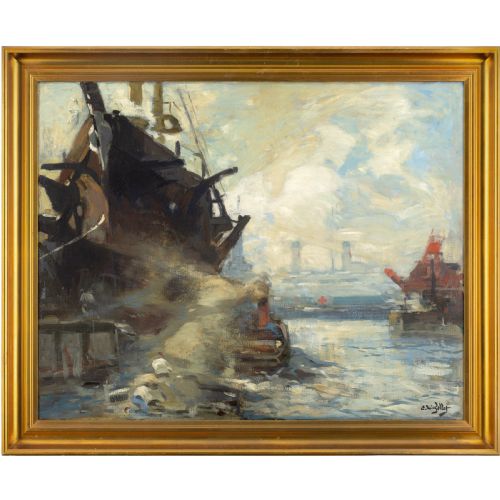
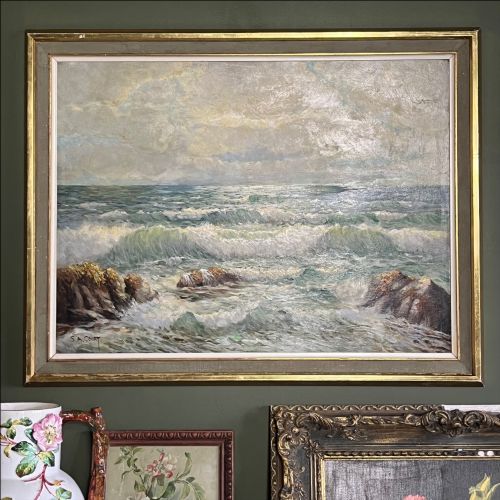

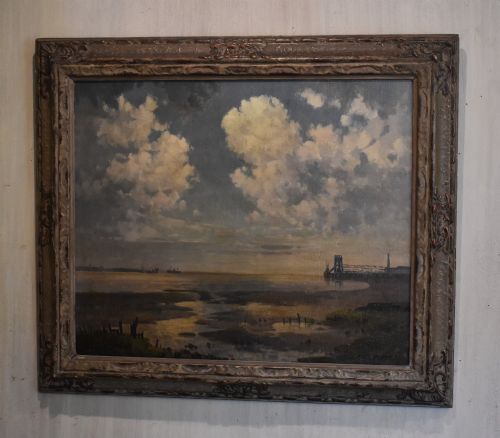
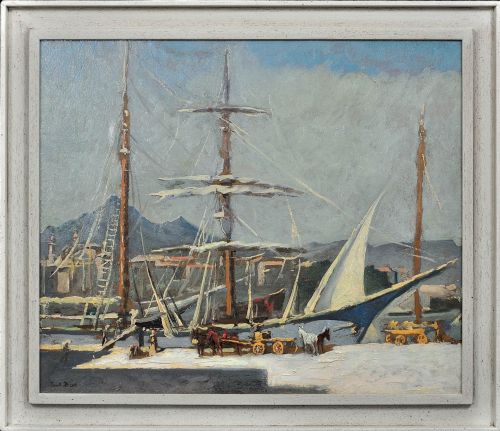


Framed Impressionist Marine Artwork
Framed impressionist marine artwork captures coastal light and water across British and French ports from the Victorian era to the mid-twentieth century.
Framed Impressionist Marine Artwork
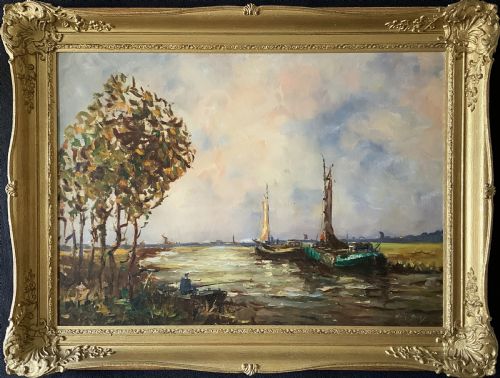
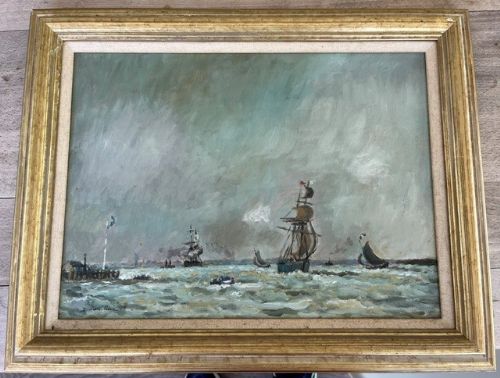
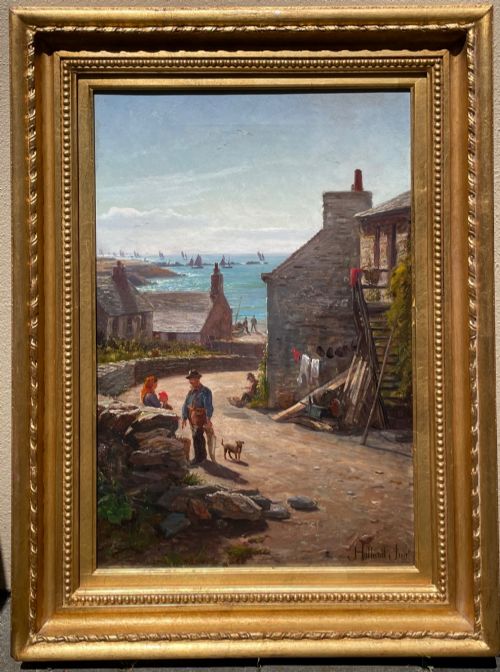
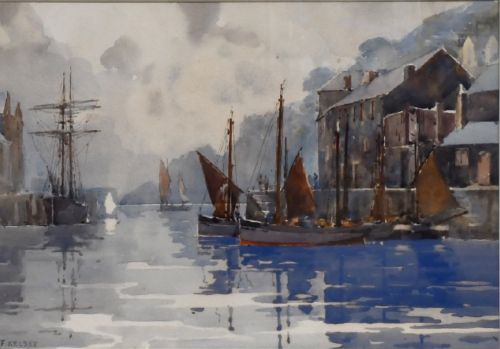
A search for framed impressionist marine artwork brings together oil paintings, watercolours and oil on board pieces depicting harbours, coastal cliffs and open seas. These works span from the Victorian period and the nineteenth century through to the 1960s, capturing maritime life in Britain and France.
The pieces on this page are most commonly mid-nineteenth to mid-twentieth century oils and watercolours framed in wood and gilt. Subjects range from Cornish fishing villages like St Ives and Polperro to Norman ports and the Côte d'Azur.
Works often emerge from recognised regional groups such as the Newlyn School or French post-impressionist circles. Buyers encounter everything from moody moonlit seascapes to sunlit harbour scenes executed en plein air.
Materials and technique
Artists painted primarily in oil on canvas, oil on board, or applied watercolour to paper, capturing immediate atmospheric effects outdoors. The physical application ranges from thin washes to thick impasto that records the texture of water and sky.
Wooden frames, frequently finished with gilt, enclose the painted surface to protect the edges and complement the tonal palette. Support materials vary from heavy woven canvas to wood panels and fine paper sheets.
Materials recorded across the selection include oil paint, canvas, paper, wood, and gilt frames.
Evaluating quality
Quality rests on the artist's handling of light and maritime atmosphere rather than the sheer scale of the canvas. Stronger works demonstrate confident brushwork and precise colour harmony that convey the movement of tides and the openness of coastal air.
The integrity of the original frame, the clarity of the artist's signature, and the stability of the oil paint or watercolour surface distinguish superior examples from ordinary decorative pieces.
Clifford Hanney·Eugène-Louis Gillot·Sidney A. Court·William Banks Fortescue·Clive Browne·Paul Bret·Willem Bos·John Holland·Frank Kelsey·Elisabeth Bardon·Louis Suire·Gustave Vidal·Raymond Picque·William Lee Hankey·Fred Pailhes·Norman Lloyd·Fred Lawson·William Greaves·Edward Seago·Pauwels·Roger de la Corbiere·Donald McIntyre·Marc Aldine·Antoine Bouvard Senior·Frederick William Hattersley
The Framed Impressionist Marine Artwork Glossary
- Impressionism
- A nineteenth-century painting style focusing on the accurate depiction of light in its changing qualities. It prioritises open brushstrokes and ordinary subject matter over rigid academic finish.
- En plein air
- The act of painting outdoors to capture the direct effects of light and weather on a subject. This approach defined much of the coastal and marine work produced in European artist colonies.
- Impasto
- Paint applied thickly to a canvas or board, standing out in relief from the plane. This technique adds tactile dimension to representations of crashing waves or rugged sea cliffs.
- Gilt
- A gold leaf or gold-coloured coating applied to wood frames. It provides a reflective border that isolates the marine artwork from its surrounding wall.
- Watercolour
- Pigments suspended in a water-based, translucent solution applied to paper. It allows artists to achieve luminous, delicate washes suitable for coastal skies and calm harbours.
Framed Impressionist Marine Artwork: Frequently Asked Questions
What subjects do these marine paintings show?
The artworks depict fishing boats, busy harbours, sailing yachts, and rugged coastal cliffs. Scenes range from Cornish ports to French seaside towns.
Artists frequently recorded working vessels, tidal flats, and open seas under varying atmospheric conditions.
How do I date a marine oil painting?
Dating relies on stylistic evidence, artist biography records, and the construction methods of the wooden frame. Canvas types and stretcher marks also offer clues to the period.
Signatures, exhibition labels on the reverse, and written inscriptions help narrow the decade of creation.
How should I display watercolour marine art?
Watercolours require protection from direct sunlight to prevent the pigments and paper from fading. Framing under glass with acid-free mount board preserves the paper.
Keep the artwork in a room with stable humidity to avoid warping the paper or damaging the wash.
What is the difference between oil and watercolour marine pieces?
Oils use pigment suspended in drying oils on canvas or board, offering rich textures and deep colour saturation. Watercolours utilise water-soluble pigments on paper for a lighter, translucent effect.
Oils handle heavy impasto and coastal light well, whilst watercolours excel at luminous skies and transparent water.