
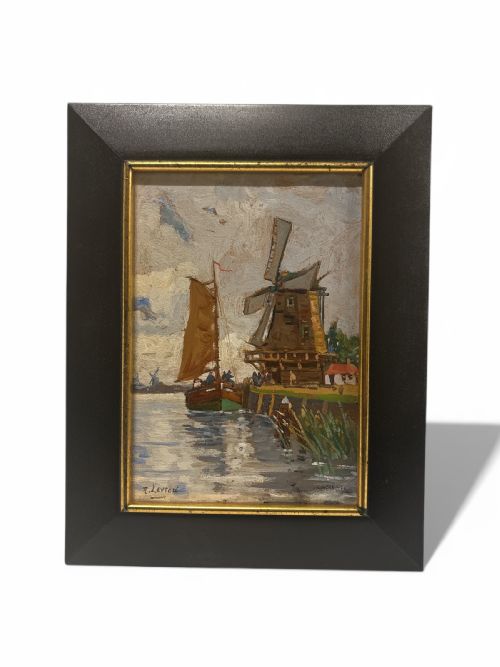

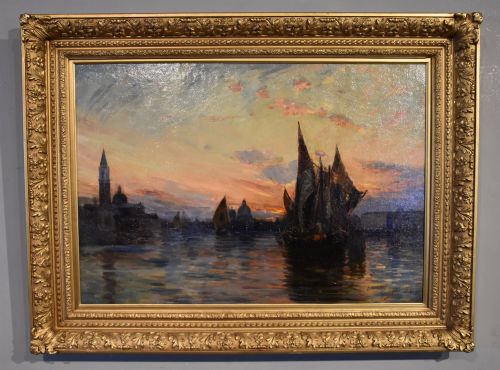


Original Sailboat Oil Painting
An original sailboat oil painting brings the movement of coastal and river waters straight into a room through rich brushwork.
Original Sailboat Oil Painting
When you search for an original sailboat oil painting, you encounter maritime scenes stretching from the nineteenth century through the mid-twentieth century. These artworks capture vessels on rivers, lakes, and coastal waters, often rendered through Impressionist and British Impressionist lenses.
The versions you meet most frequently on this page span the Edwardian era up to the 1960s. Painters utilised both canvas and board supports to record harbours, open seas, and quiet estuaries.
Subjects range from British coastal views to European ports and Mediterranean harbours. Each piece offers a direct window into historical watercraft and traditional sailing methods.
How these oil paintings were constructed
Artists applied oil paint directly onto stretched canvas or rigid wood boards, building up textures with brushes and sometimes palette knives. These oil mediums allowed painters to blend light across water and sky.
Many works retain their original wood or gilt wood frames, which complement the maritime subject matter. The combination of oil pigments and sturdy supports ensured the survival of these coastal scenes across decades.
Listings feature oil paintings created across the nineteenth and twentieth centuries, using canvas, board, and gilt wood materials.
What separates works within this range
The handling of light and atmospheric depth distinguishes a superior maritime painting from a standard composition. Masterful control over the brush conveys the actual movement of water and wind.
The strength of the artist's signature and the preservation of the paint surface dictate the standing of each piece. Original frames that match the period of the painting add notable character to the artwork.
R Leyton·Thomas Hodgson Liddell·Louis Suire·Norman Lloyd·Adrian Van Porten·Edward Seago·E Tucker·Paul Jean Clays·Antonio Godoy·Charles Euphrasie Kuwasseg·Johan Jens Neumann·John William Gilroy
The Original Sailboat Oil Painting Glossary
- Impressionism
- A nineteenth-century painting style focusing on accurate depiction of light in its changing qualities. Artists used visible brushstrokes and open compositions to capture fleeting moments on the water.
- Canvas
- A closely woven fabric used as a surface for oil painting. Painters stretched this material over wooden frames before applying their pigments.
- Gilt wood
- Wood decorated with gold leaf or a gold-coloured finish. This material frequently appears in the period frames housing nineteenth-century marine art.
- Board
- A rigid flat panel utilised as an alternative to canvas for oil paintings. Artists often painted directly onto these stable surfaces during the twentieth century.
- Maritime
- Depicting ships, shipping, or the sea. This term covers all the coastal and harbour scenes found in these oil paintings.
Original Sailboat Oil Painting: Frequently Asked Questions
What periods do these paintings cover?
The works span from the early nineteenth century through the mid-twentieth century. This includes Victorian, Edwardian, and mid-century modern movements.
Each period brings distinct stylistic choices in how artists recorded maritime life and coastal environments.
Are these paintings on canvas or board?
Painters utilised both stretched canvas and rigid wood boards as supports for their oil pigments. Both methods were common across the decades represented here.
The choice of support often depends on the date of the work and the specific preference of the artist.
Where were these marine scenes painted?
The locations include British coastal spots, European ports, Mediterranean harbours, and Scandinavian waterways. Artists travelled to active trading ports and quiet bays to capture local vessels.
Specific titles often name the exact harbour, bay, or coastline immortalised by the painter.
How should I frame an oil painting?
Many pieces come housed in their original wood or gilt wood frames, which suit the period of the artwork. Preserving these frames maintains the historical context of the piece.
If framing a bare canvas, select a moulding that matches the aesthetic of the painting era.