




Blue Red Flatweave Rug
When you search for a blue red flatweave rug, you are looking at tribal textiles and flatweaves woven across Persia, the Caucasus, and Central Asia.
Blue Red Flatweave Rug
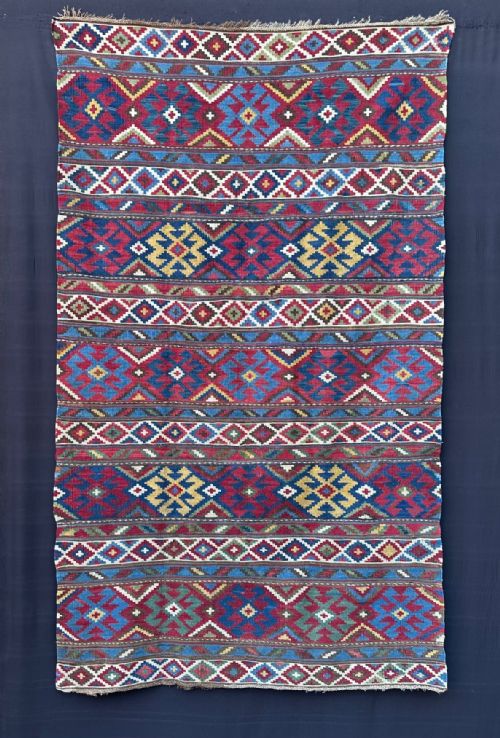
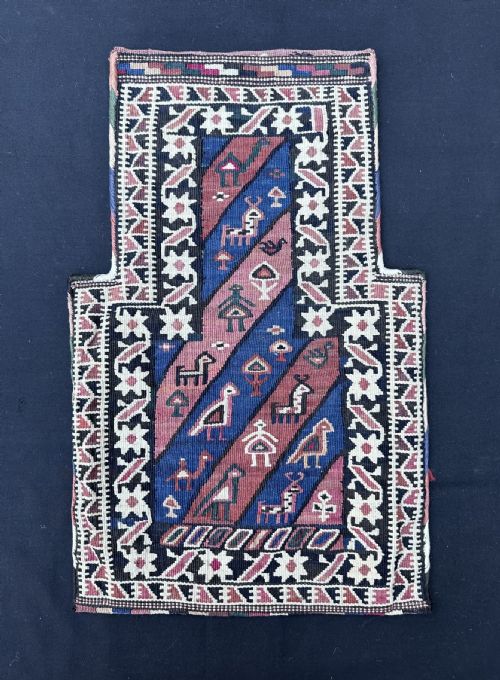
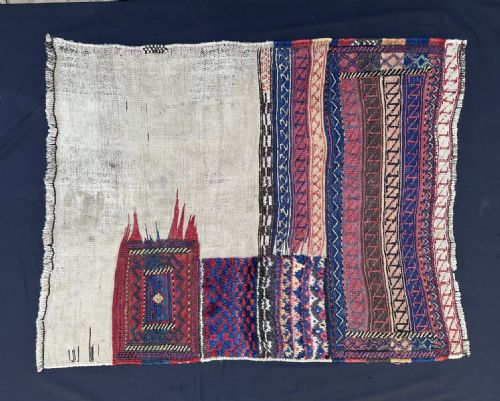
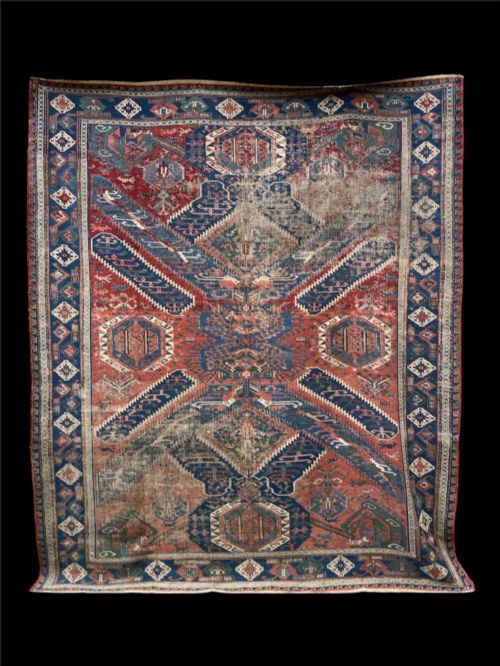
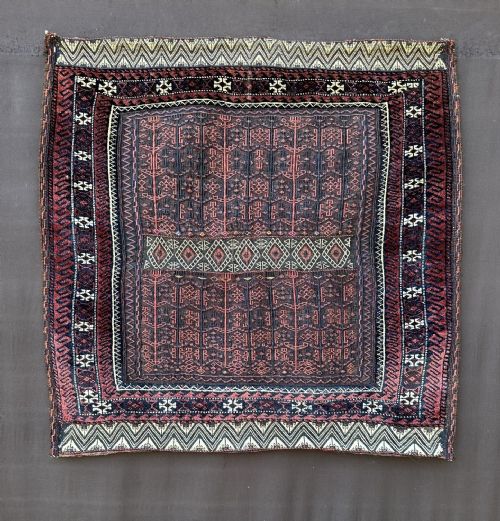
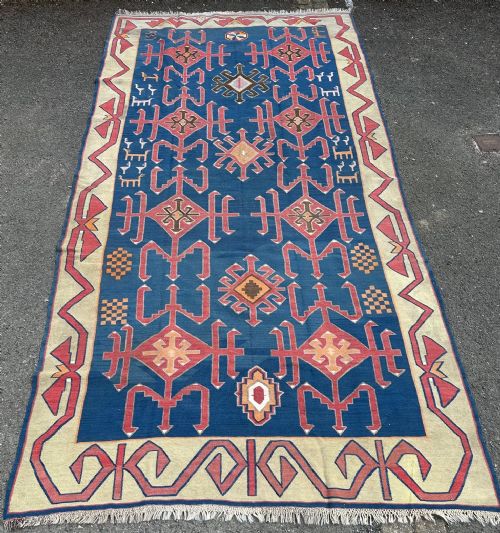
A blue red flatweave rug encompasses a variety of tribal textiles, including kilims, sofiteh dining cloths, salt-bags, and saddlebag faces. These floor coverings and utility textiles originate from nomadic and village groups such as the Shahsavan, Afshar, Kurdish, and Baluch tribes. The pieces available on this page reflect weaving traditions spanning from the late nineteenth century into the mid twentieth century.
Nomadic weavers produced these textiles for utilitarian purposes within daily life, utilising flat-weaving techniques rather than pile knotting. Common formats range from narrow runners and large carpets to storage bags and eating cloths. The predominant visual identity relies on geometric patterns, medallions, and banded designs rendered in distinctive regional palettes.
How they were made
Makers constructed these textiles primarily using hand-spun wool and cotton foundations, occasionally incorporating goat hair for structural durability. Weavers employed traditional slit-tapestry flatweave methods, as well as soumak wrapping techniques that created textured surface designs. These structural methods allowed for intricate geometric patterning without the use of pile knots.
Colouring agents derived from natural and vegetable dyes, producing rich indigo blues and madder-based reds that softened gracefully over time. The interaction of hand-spun fibres with these traditional dye sources gave each textile subtle tonal variations across the field. Local tribal groups passed down specific pattern vocabulary and structural techniques through generations of nomadic life.
Materials recorded on this page consist primarily of wool, cotton, and goat hair, dyed using traditional natural and vegetable methods.
What varies in quality
Quality in these flatweaves depends significantly on the tightness of the weave and the handling of the geometric structures. Tightly beaten wefts create a firmer, more resilient fabric that maintains its structural integrity over decades of use. Finer wool preparation and skilful dye application yield greater depth and clarity within the blue and red fields.
The sophistication of the tribal design work also distinguishes finer examples, particularly where complex medallions, dragons, or pictorial elements appear. Completeness adds considerable merit, especially for functional forms such as storage bags retaining their original plain-weave backs. Regional identity and adherence to traditional tribal motifs further separate standard utility pieces from exceptional collector examples.
The Blue Red Flatweave Rug Glossary
- Kilim
- A flat-weave carpet or rug produced without a pile by tightly interweaving warp and weft strands. This technique creates a lightweight, reversible textile utilised for floor coverings and wall hangings.
- Sofreh
- A flat-woven cloth traditionally used for dining, food preparation, or bread making among nomadic tribes. These textiles frequently feature distinctive banded designs or central medallions.
- Soumak
- A brocade-like flat-weaving technique where coloured weft threads are wrapped around the warp threads in a specific sequence. This method produces a raised, textured surface on the face of the textile.
- Mafrash
- A large rectangular storage bag or chest face woven by nomadic groups for transporting household belongings. They often display elaborate geometric or dragon motifs.
- Medallion
- A central ornamental design motif positioned in the middle of the rug field. Tribal weavers rendered these shapes in varied geometric forms, including stars, diamonds, and hooked polygons.
Blue Red Flatweave Rug: Frequently Asked Questions
What is a flatweave rug?
A flatweave rug is a textile constructed without pile knots by interweaving warp and weft threads directly on a loom. This results in a flat, thin fabric that is typically reversible and historically suited to nomadic transport.
Nomadic and village weavers across Persia, the Caucasus, and Central Asia produced these rugs for daily utility, floor covering, and animal transport. Their lack of pile distinguishes them from knotted carpets, creating a distinct textural profile.
How do I care for an antique flatweave?
Protect your flatweave by placing a breathable rug underlay beneath it to prevent slipping and reduce friction against hard floors. Vacuum the textile gently on a low setting without a rotating brush roll to remove embedded dust.
Rotate the rug periodically to ensure even exposure to foot traffic and ambient light. Professional cleaning by a specialist familiar with antique textiles is recommended for deep maintenance.
How do I distinguish regional styles?
Regional styles appear through characteristic colour palettes, structural techniques, and geometric vocabulary unique to specific tribal groups. Caucasian weaves often feature sharp, angular polygons and striking contrasts, while Persian tribal pieces frequently incorporate soft madder reds and detailed borders.
Examining the weave density, edge finishes, and supplementary techniques like soumak work provides further clues to origin. Comparing known tribal formats, such as salt-bags or bread sofitehs, helps narrow down the specific producing community.