




Anatolian Kilim Carpet
An anatolian kilim carpet brings flatweave geometry and regional wool texture into a room, offering durability and historical craft.
Anatolian Kilim Carpet
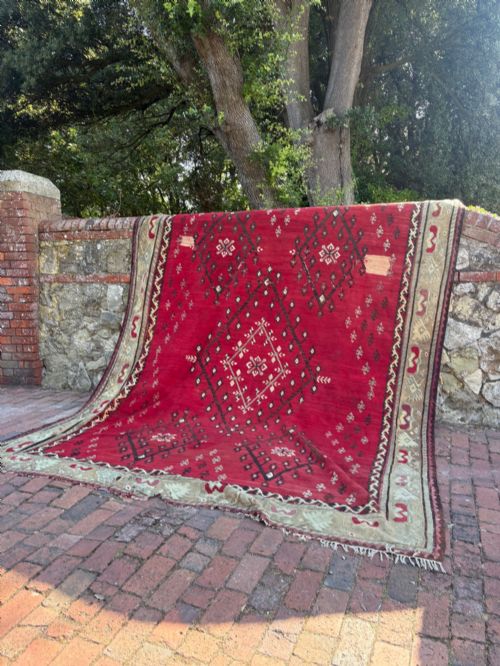
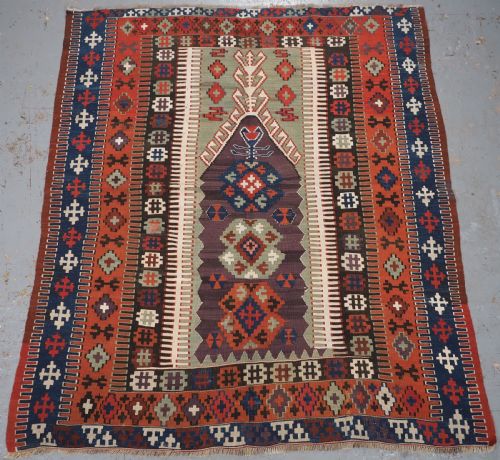
An anatolian kilim carpet is a flatwoven textile originating from Turkey, encompassing traditional runner rugs, prayer formats, and large area carpets. Buyers encounter regional pieces originating from towns like Malatya, Konya, and Ushak, dating from the late nineteenth century into the early decades of the twentieth century. These textiles span formats from compact scatter rugs and cushions to large two-part compositions designed for expansive floors.
The aesthetic draws on tribal and traditional motifs characteristic of Anatolian weaving regions, often showing bold geometric patterns or muted soft colours. Many examples reflect specific village or regional traditions such as Bergama, Reyhanli, or Sarkoy, utilising flatweave structures rather than knotted piles. The selection includes long runner rugs suited for hallways and large formats designed to anchor principal rooms.
Gradations in Quality
Quality rests in the precision of the flatweave execution, the complexity of the regional design, and the retention of original coloration. Superior examples display balanced proportions, sophisticated dye palettes, and tightly beaten wefts that ensure structural integrity over decades of use. Condition plays a role, though historical timeworn repairs and even wear often accompany genuine age in textiles handled across generations.
The distinction between standard village production and finer regional pieces lies in the crispness of the geometric transitions and the depth of the wool. Larger formats that maintain structural balance across extended dimensions demand greater skill from the weaver, separating utilitarian floor coverings from master regional works.
Geometric formats on this page range from compact cushion covers and prayer rugs to expansive room-size runners exceeding four metres.
The Anatolian Kilim Carpet Glossary
- Flatweave
- A textile produced by interweaving warp and weft threads without knotting pile tufts. This technique creates a smooth, thin surface characteristic of kilims.
- Warp
- The vertical foundation threads stretched tightly on the loom before weaving begins. In these rugs, wool forms the primary structural grid.
- Weft
- The horizontal threads passed through the warps to create the pattern and colour field. Tightly packed wefts completely obscure the warp threads.
- Prayer Kilim
- A regional rug featuring a mihrab or arch design oriented towards Mecca. These portable textiles served individual devotional use.
- Slit-weave
- A structural gap created when the weft reverses direction at a colour boundary without interlocking. This method produces the characteristic vertical slits seen in geometric flatweaves.
Anatolian Kilim Carpet: Frequently Asked Questions
How do I care for a flatweave rug?
Vacuum gently using suction only without a rotating brush roll to protect the flatwoven structure. Rotate the textile periodically to ensure even foot traffic and exposure.
Keep the piece out of direct, harsh sunlight to preserve natural dyes. Consult a specialist familiar with antique flatweaves for professional cleaning rather than attempting wet washing at home.
Can I use these rugs in high traffic areas?
These flatweaves handle everyday foot traffic well due to their sturdy wool construction and absence of a delicate pile. Placing a quality underlay beneath the rug prevents sliding and cushions the thin textile against hard floors.
Runners suit hallways and entryways where their narrow dimensions and low profile function practically. Regular rotation distributes wear across the surface of the textile.
What is a two part kilim?
Large room-size flatweaves were frequently woven on narrow looms in two separate longitudinal strips. Artisans then joined these matching halves neatly down the centre to achieve a broad format.
This historical construction method allowed weavers to produce carpets large enough for substantial spaces without requiring oversized looms. The centre seam indicates traditional village production from regions like Kayseri or Reyhanli.
How do I identify different regional styles?
Regional styles reveal themselves through specific colour palettes, geometric motifs, and structural quirks associated with towns like Malatya, Konya, or Bergama. Village weavers passed down distinct graphic vocabularies from generation to generation.
Comparing border designs and field layouts helps attribute a textile to a particular Anatolian district. Reference literature on Turkish flatweaves provides comparative examples for specific tribal patterns.