


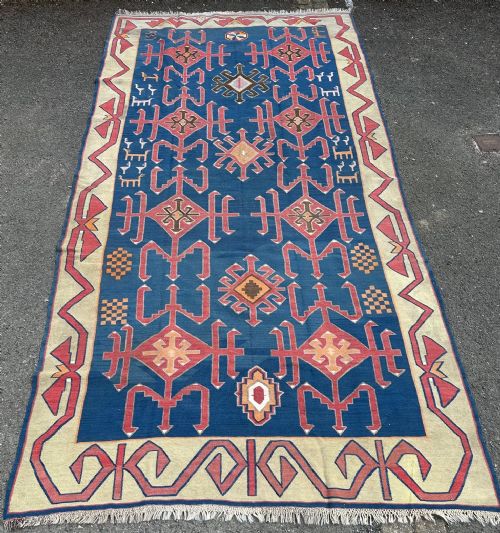


Geometric Kilim Rug
A geometric kilim rug brings flatweave nomadic textiles into a room, offering sharp tribal patterns and flat structures shaped by tribal weavers.
Geometric Kilim Rug
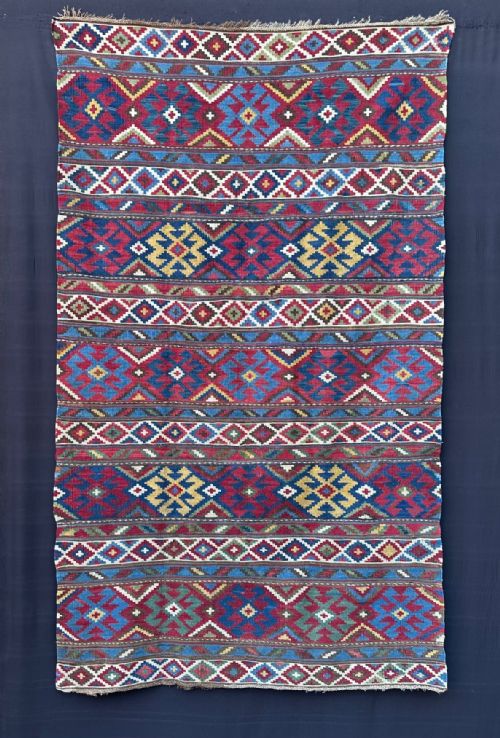
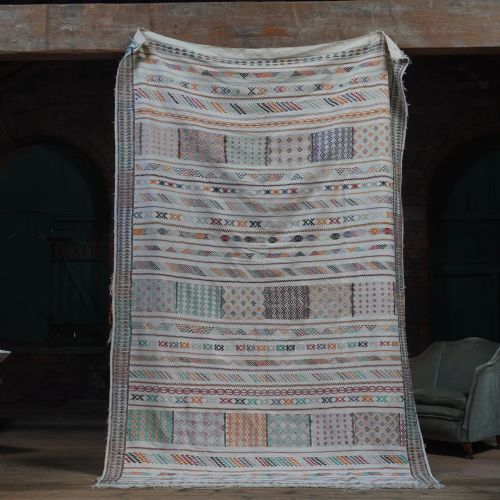
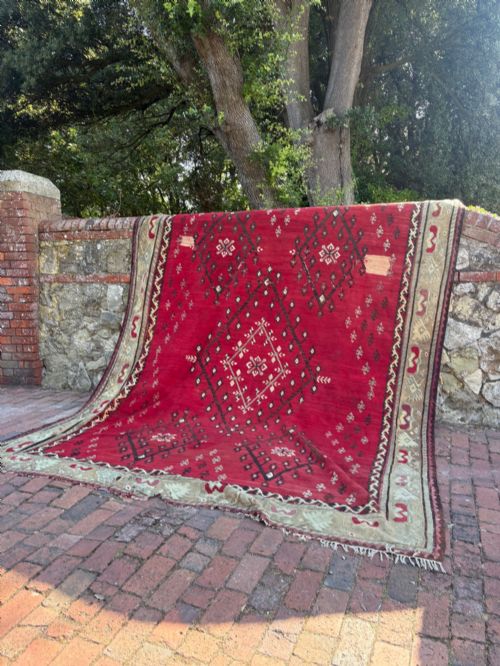
A geometric kilim rug is a flatwoven textile created by nomadic and village weavers across Anatolia, the Caucasus, Persia, and Central Asia. These pieces function as floor coverings, wall hangings, and utilitarian bread spreads or storage bags adapted into home decor.
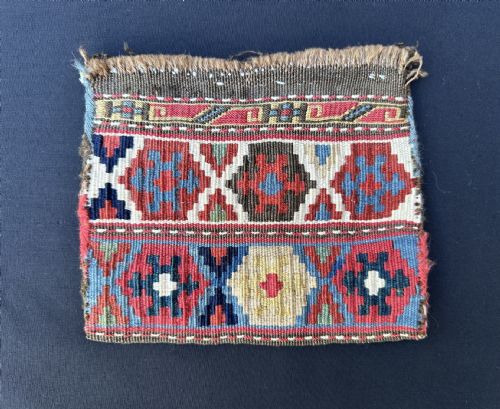
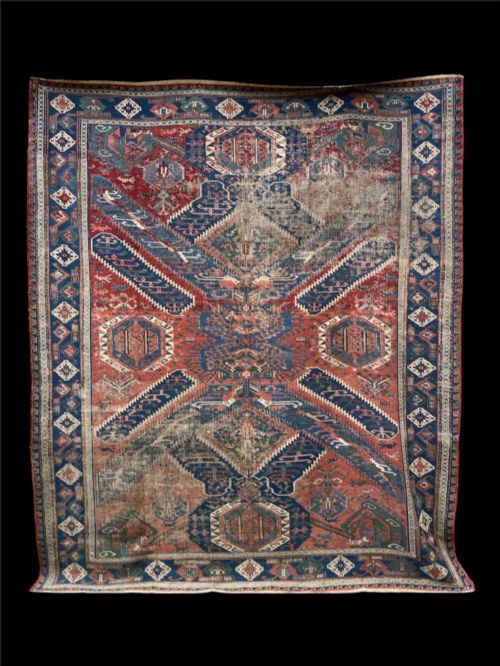
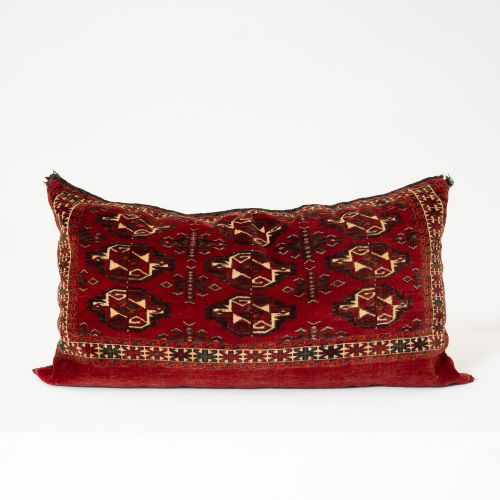
The selection on this page centres on flatweaves from the nineteenth and early twentieth centuries. Pieces span regional types including Anatolian, Caucasian, Qashqai, and Afghan work, alongside cushions fashioned from older textile fragments.
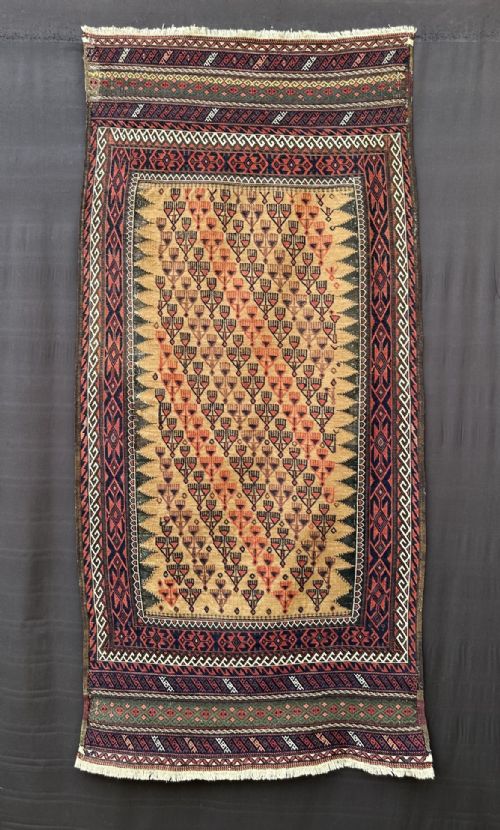
Buyers encounter everything from large room-sized carpets to narrow runners and small tribal bag faces. Each item demonstrates the distinct visual vocabulary of specific tribal groups working within traditional formats.
How they were made
Weavers constructed these flatweaves using hand-spun wool and cotton, occasionally incorporating sabra cactus silk into specific regional pieces. Slit-taperting techniques created the sharp vertical edges characteristic of geometric motifs.
Natural dyes provide the palette for older examples, yielding soft colours that mellow over decades of use. Skilled hands interlaced warp and weft threads without pile, resulting in a thin, flexible textile designed for portability.
Geometric Kilim Rug Retail Price Guide 2026
Typical asking prices for geometric kilim rug among the pieces listed under this phrase on Sellingantiques today, from the lower quarter to the upper quarter. They describe what is for sale here now, not the wider market.
Nomadic weavers occasionally embedded tiny protective amulets directly into the geometric borders to ward off the evil eye.
What varies in quality
The fineness of the weave dictates structural integrity, with tightly packed wefts creating denser, more durable textiles. Superior examples display precise symmetry in complex geometric layouts and expert handling of colour transitions.
Condition and originality dictate standing among similar pieces. Intact borders and minimal historical repairs preserve the integrity of the original tribal design.
The Geometric Kilim Rug Glossary
- Kilim
- A flatwoven carpet or rug produced without a pile by interlocking warp and weft threads. This technique creates a lightweight textile with identical patterns visible on both sides.
- Sofreh
- A utilitarian cloth used by tribal groups for dining, kneading bread, or serving food. These flatweaves often feature striking central medallions and minimal field designs.
- Soumak
- A brocade-like flatweaving technique where supplementary weft threads wrap around the warp yarns. This method produces a textured face and leaves loose floats on the reverse.
- Mafrash
- A large rectangular storage bag used by nomads for bedding and household goods during migration. Individual panels from these containers often enter the market as flatweaves.
- Warp
- The stationary vertical threads stretched onto a loom before weaving begins. Wefts pass alternately over and under these foundational yarns to build the textile.
Geometric Kilim Rug: Frequently Asked Questions
How do I care for a kilim rug?
Vacuum gently without a rotating brush roll to remove dust from the flatweave structure. Professional cleaning designed for flat textiles preserves the natural dyes and wool.
Keep pieces out of direct sunlight to prevent fading. Rotate the rug periodically to ensure even wear across high-traffic areas.
Are these rugs suitable for high-traffic floors?
Flatweaves lack a pile, making them durable underfoot when placed over a quality rug underlay. Their thin profile works well beneath furniture and in hallways.
Entryways and heavy commercial spaces demand careful placement due to the delicate nature of nineteenth-century materials.
How can I tell regional styles apart?
Caucasian pieces tend to display crisp, angular medallions and bold primary colours. Anatolian examples often rely on earth tones and traditional village motifs.
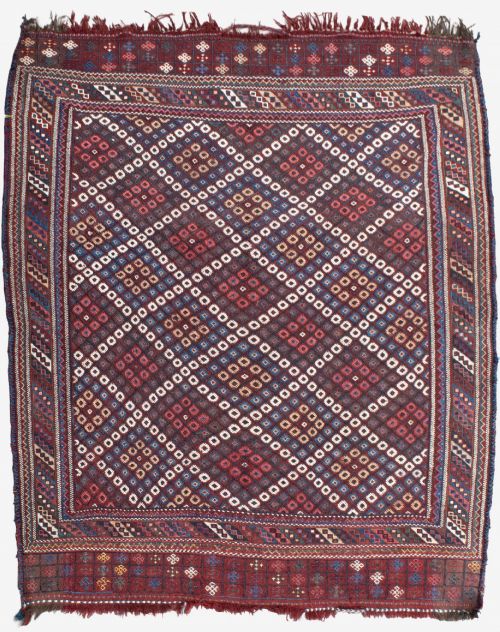
Persian tribal weavings like Qashqai work frequently incorporate intricate diamond lattices and multiple narrow borders.
What is the difference between a rug and a sofreh?
Rugs were woven primarily for floor placement or tent decoration. A sofreh served a specific domestic function related to food preparation and communal meals.
Sofreh designs focus heavily on central fields and ritual spacing rather than the repeating patterns found on standard floor coverings.