
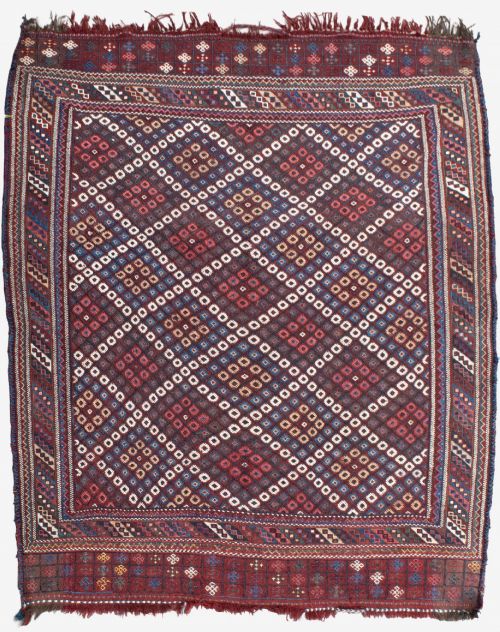


Wool Kilim Rug
A wool kilim rug brings nomadic craftsmanship and flatweave texture directly onto a floor.
Wool Kilim Rug
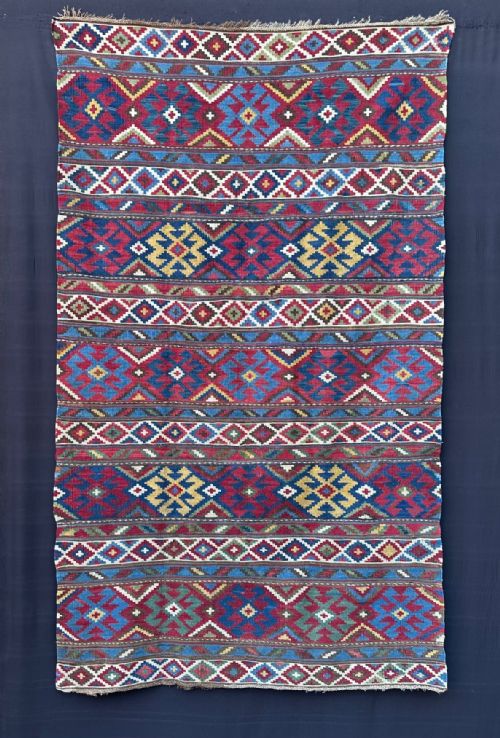
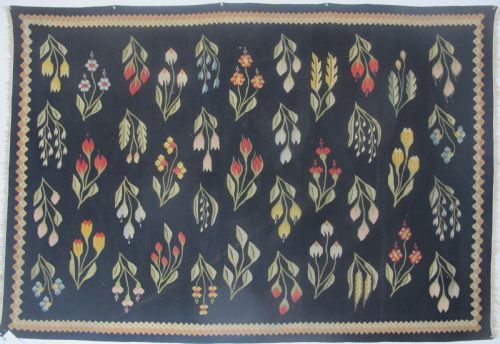
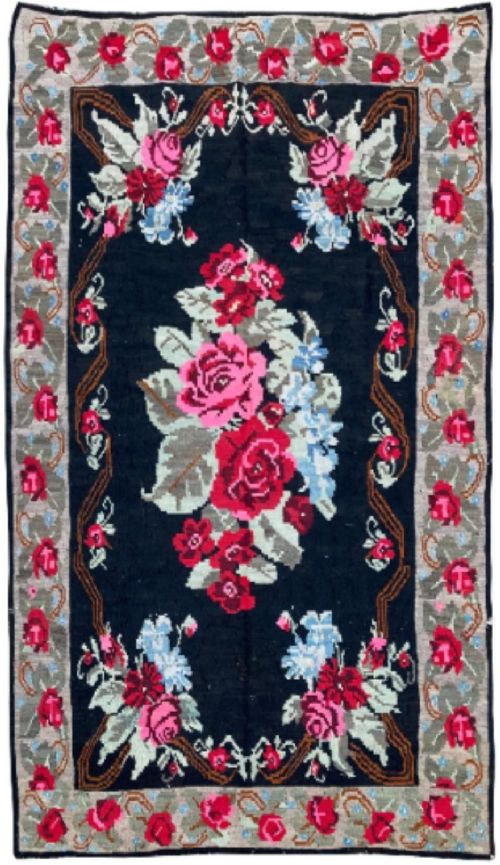
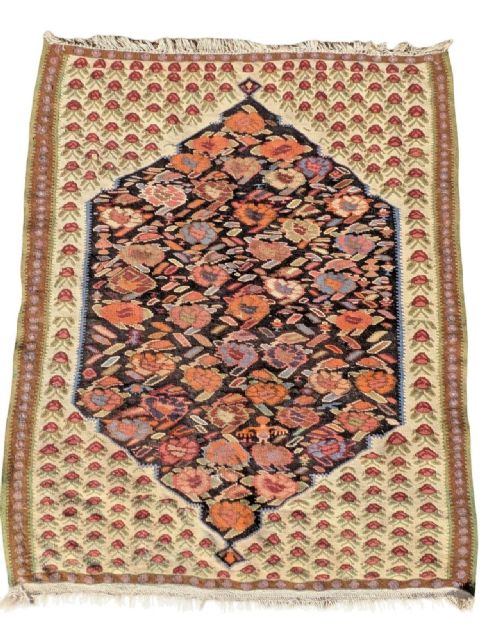
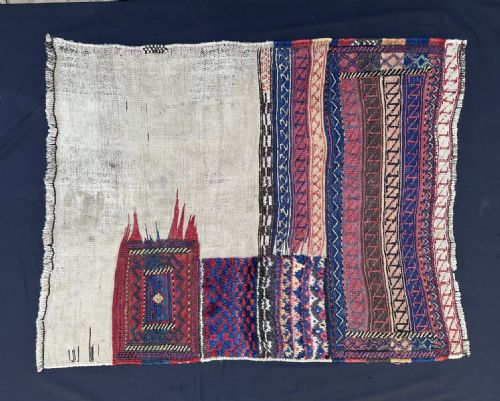
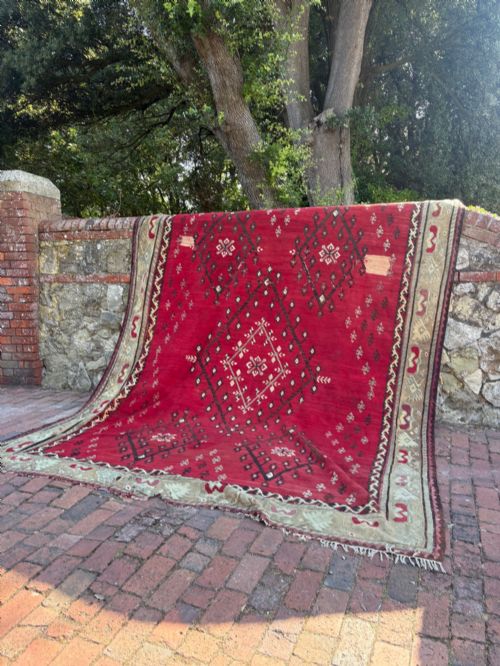
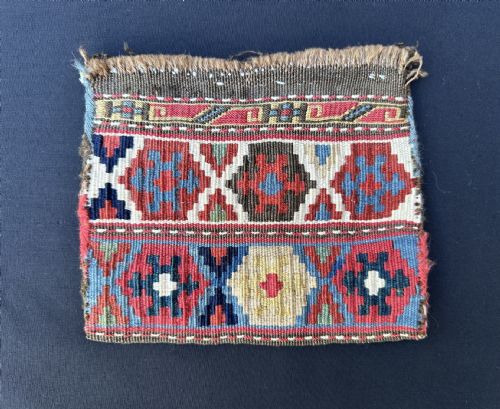
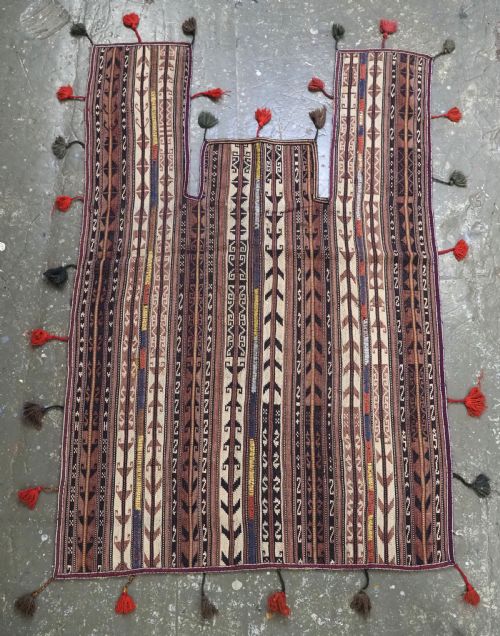
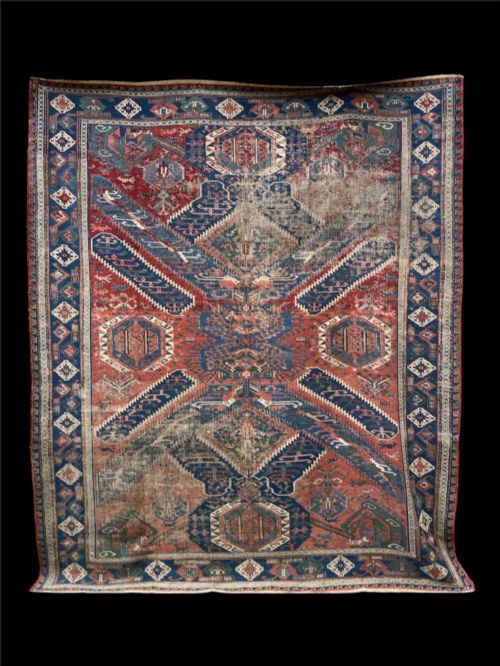
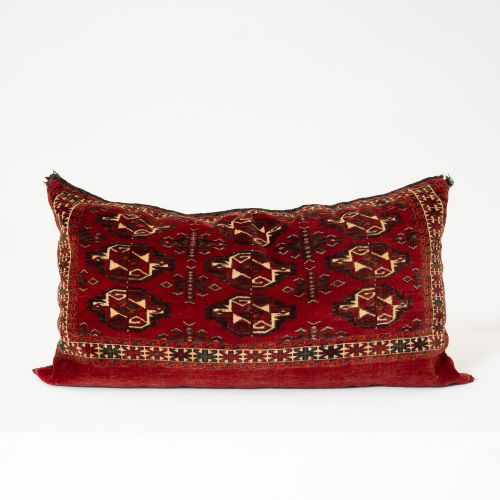
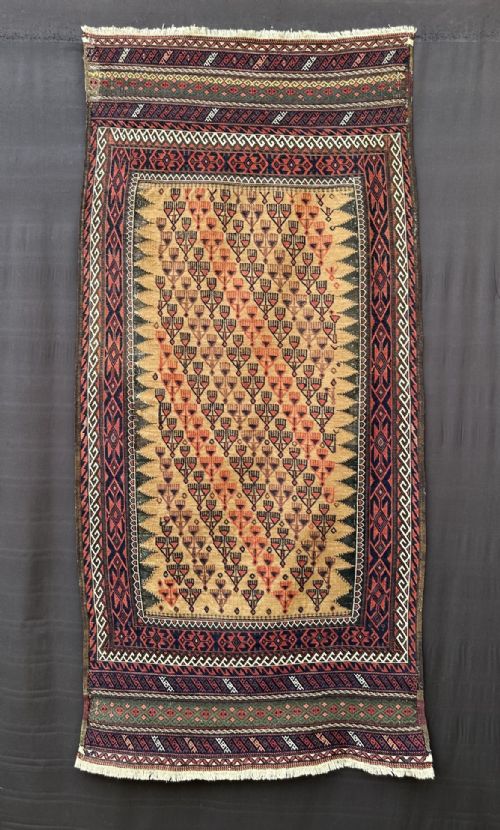
A wool kilim rug encompasses flatwoven textiles, bags, covers, and utilitarian cloths created by tribal and village makers across Persia, the Caucasus, Anatolia, and Eastern Europe. These items range from large room-sized carpets and runners to smaller household pieces such as bread sofrehs, salt-bags, and cushions.
The pieces on this page originate predominantly from the late nineteenth and early twentieth centuries, reflecting traditional weaving methods passed down through nomadic confederacies and settled village communities. Common geographic attributions include the Qashqa'i, Afshar, Shahsevan, Yomut Turkmen, and various Caucasian and Anatolian groups.
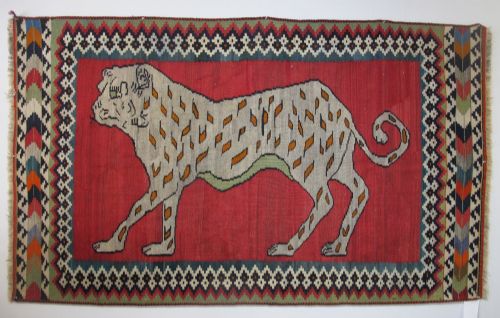
Buyers encountering this selection will find an array of geometric patterns, banded designs, and occasional pictorial elements like lions, executed entirely without a piled nap. Their flat structure makes them adaptable for placement in diverse interior settings.
The category also extends to related flatweave forms such as sumaks, tapestry weaves, and utility covers, all sharing the foundational characteristic of being woven on a vertical or horizontal loom using warp and weft interlacings.
Materials and construction
The primary material is wool, frequently hand-spun and combined with cotton foundations or occasional goat hair for structural durability in nomadic utility items. Natural dyes provide the palette, yielding soft tones that develop through exposure to light and time.
Construction relies on slit-tapery flatweaving techniques, where the weft threads are beaten down tightly to obscure the warps entirely and create sharp geometric colour transitions. Some examples incorporate supplementaryweft brocade or sumak wrapping to add textural relief and structural reinforcement to the fabric.
Wool Kilim Rug Retail Price Guide 2026
Typical asking prices for wool kilim rug among the pieces listed under this phrase on Sellingantiques today, from the lower quarter to the upper quarter. They describe what is for sale here now, not the wider market.
The listings span pieces dated from the 1870s to the 1940s, originating across Persian, Caucasian, and Anatolian tribal regions.
Factors that separate examples
Quality rests upon the tightness of the weave, the precision of the geometric design execution, and the fineness of the hand-spun wool used for the surface. Tighter packing of the weft threads produces a denser, more durable textile that maintains its structural integrity across decades of use.
The sophistication and saturation of the natural dye palette also define the upper tier of the range, alongside the complexity of tribal motifs and regional patterns. Original integrity, such as intact kilim ends and minimal historical repairs, further distinguishes superior survivals from heavily altered pieces.
The Wool Kilim Rug Glossary
- Kilim
- A flatwoven textile produced without a pile by tightly interweaving warp and weft threads. This technique creates a lightweight, reversible fabric with sharp geometric patterns.
- Sofreh
- A utilitarian spreading cloth used for kneading bread, dining, or serving food within nomadic and village households. These pieces often feature specific central medallions and border arrangements.
- Sumak
- A brocading technique where coloured weft threads are wrapped around warp threads in a continuous sequence, resulting in a textured surface that resembles embroidery.
- Warp
- The stationary vertical threads stretched across a loom that form the structural foundation of the textile. Weft threads are passed horizontally through these foundational strands.
- Weft
- The horizontal threads passed back and forth through the warp threads to build the pattern and colour of the flatweave. In kilims, these threads are tightly packed to conceal the warp entirely.
Wool Kilim Rug: Frequently Asked Questions
How were wool kilim rugs originally used?
These flatweaves served primarily practical functions within nomadic and village life, acting as floor coverings, blankets, horse covers, and storage containers for grain or salt.
Many examples functioned as dining or bread-making cloths, while smaller bags held personal possessions during seasonal migrations across Persia, the Caucasus, and Anatolia.
How do I care for a vintage flatweave?
Gentle vacuuming without a rotating brush roll prevents dust accumulation within the tight weave without pulling the wool fibres. Professional textile cleaning is recommended for heavier maintenance to protect natural dye stability.
Placing a breathable rug underlay underneath helps prevent slipping and reduces friction against hard flooring surfaces.
Are these pieces reversible?
Most traditional flatweaves display the pattern clearly on both sides because the weaving technique conceals the yarn ends neatly within the structure. This dual-sided nature allows the textile to be flipped periodically to distribute wear evenly over time.
Minor structural differences may appear on the reverse depending on how supplementary wrapping techniques were finished by the weaver.
What distinguishes tribal designs from village ones?
Nomadic tribal pieces typically exhibit asymmetrical layouts, memory-woven geometric motifs, and earthy palettes influenced by local flora and materials. Village pieces often display more structured symmetry, refined borders, and influences from regional market towns.
Both categories rely on vernacular design traditions passed down through generations rather than pre-drawn commercial cartoons.