





Turkish Tribal Kilim
These turkish tribal kilim pieces are flatwoven textiles that bring centuries of nomadic craftsmanship and geometric colour into a modern interior.
Turkish Tribal Kilim
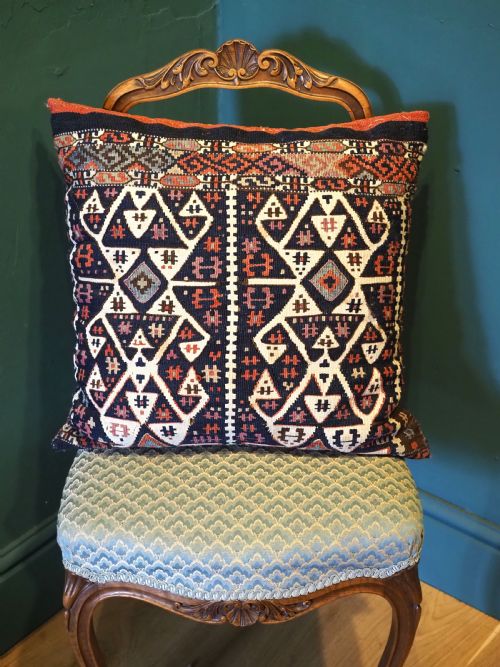
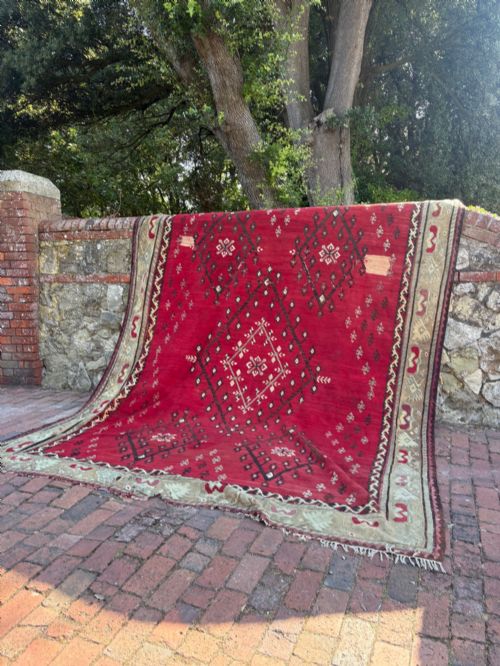
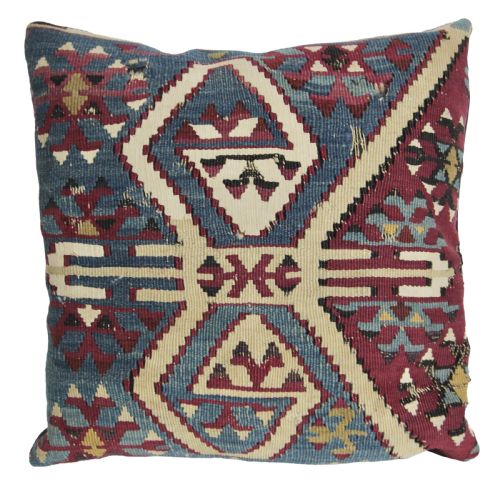
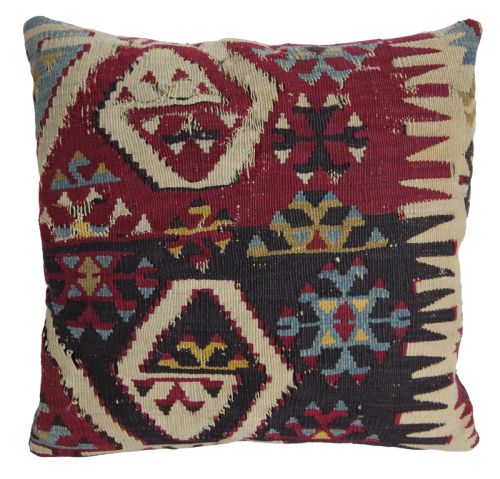
A turkish tribal kilim encompasses a range of flatwoven rugs, runners, and cushions originating from distinct regions and nomadic groups across Anatolia and the Balkans. Buyers will frequently encounter smaller formats such as cushions and saddle bag faces, alongside room-sized carpets and long runners.
The regional diversity covers pieces linked to towns and districts like Malatya, Konya, Ushak, Esme, Bergama, Reyhanli, Sarkoy, Pirot, Mut, Obruk, Kayseri, Afyon, and Thracian origins. Stylistic variations span Anatolian tribal, Balkan traditional, and nomadic designs often woven in two parts or featuring repeat medallions and banded layouts.
Materials and Technique
Makers utilised wool and cotton as the primary textile foundations, occasionally incorporating leather details on specific items like saddle bags. The technique relies on flatweaving without a pile, where coloured weft threads are tightly beaten against the warp to create crisp geometric patterns.
Many larger carpets and rugs are constructed by weaving two separate panels and joining them together down the centre. Surface decoration also includes embroidery techniques, such as cicim work, applied across specific regional panels and wall hangings.
The selection includes pieces dated across the nineteenth and twentieth centuries, spanning wool, cotton, and leather materials.
Factors of Quality
The standard of a flatweave is determined by the tightness of the weave and the precision of the geometric lines. Finer construction results in a firmer handle and sharper graphic clarity in the patterns.
Colour retention and the subtlety of natural dye palettes distinguish exceptional examples from standard production. The integrity of the original wool and the balance of regional designs dictate the overall visual weight.
Karakecili·Yuruk
The Turkish Tribal Kilim Glossary
- Kilim
- A flatwoven rug or carpet produced without a pile across Anatolia and the Balkans. This technique creates a lightweight textile suitable for floor coverings or wall hanging.
- Cicim
- An embroidery technique applied to the surface of a woven textile to add raised patterns. It often appears on specific regional panels and decorative bags.
- Flatweave
- A textile constructed by interweaving warp and weft threads directly without knotting yarn to form a pile. This method produces a thin, durable fabric.
- Saddle bag
- A paired utility pouch woven by nomadic groups for transport on animals. The faces are frequently separated and repurposed into cushions or small displays.
Turkish Tribal Kilim: Frequently Asked Questions
What is a kilim?
A kilim is a flatwoven textile made without a pile by tightly interweaving the weft threads over the warp. These pieces function as floor coverings, wall hangings, and decorative cushions.
Originating from nomadic and traditional weaving communities, they showcase distinct regional patterns and geometric layouts.
How were these textiles used?
Nomadic groups utilised these flatweaves as floor rugs, storage bags, tent dividers, and animal trappings. Their durable construction suited daily practical requirements.
Today, collectors use them as area rugs, runners, and decorative cushions within domestic interiors.
How do I care for a textile?
Gentle vacuuming without a rotating brush helps maintain the flatwoven surface and removes trapped dust. Professional textile cleaning is recommended for deeper maintenance.
Keeping pieces away from direct sunlight protects the wool fibres and natural dyes from fading over time.
How are regional styles identified?
Regional attribution relies on the specific combination of geometric motifs, colour palettes, and weaving structures. Districts such as Konya, Sarkoy, and Malatya each developed distinct design vocabularies.
Structural details like two-part panel construction also provide clues to the origin and weaving group.