


Patterned Flatweave Rug
When you search for a patterned flatweave rug, you find textiles built without pile, crossing cultures from Anatolia to Persia and the Balkans.
Patterned Flatweave Rug
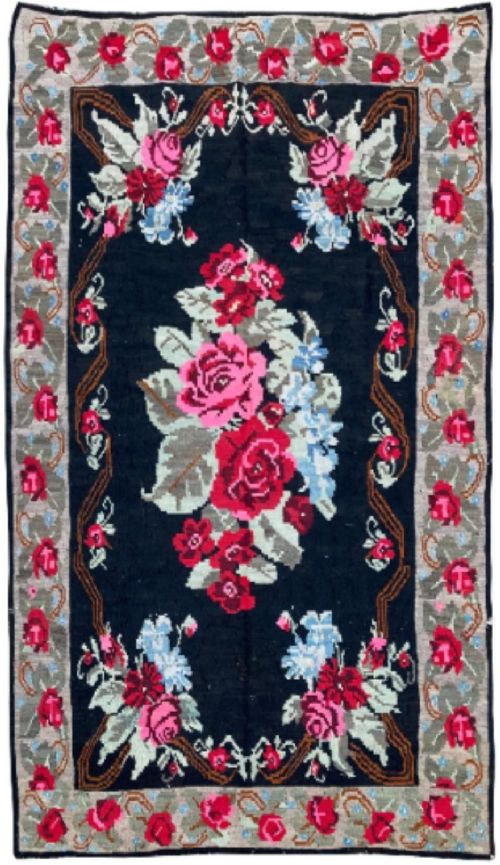
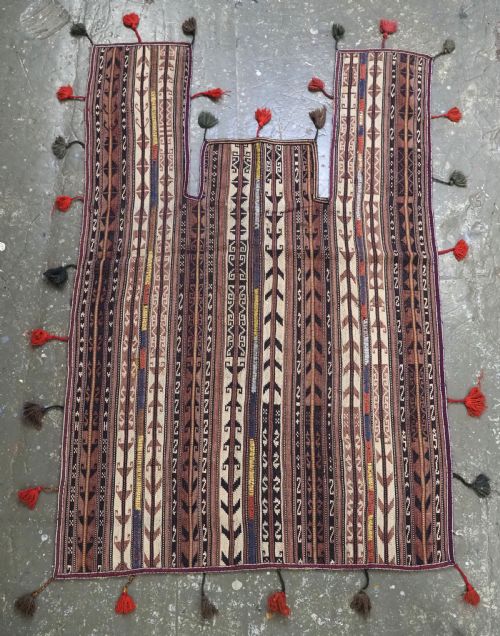
A patterned flatweave rug brings together nomadic and traditional floor coverings, wall hangings and utility textiles created across regions like the Caucasus, Persia, and Central Asia. These textiles take the form of kilims, runner rugs, and larger carpets, alongside related utilitarian objects such as bread sofrehs and storage bags.
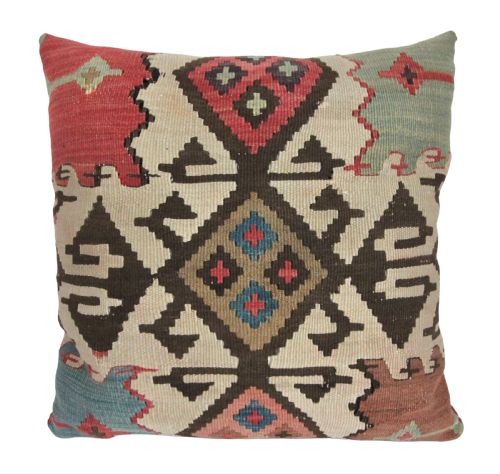
The selections span from the mid-nineteenth century through the early twentieth century, originating from tribal groups including the Qashqa'i, Afshar, and Yomut Turkmen, as well as European and Balkan workshops like Bessarabian and Pirot. Buyers encounter everything from large ceremonial horse blankets and multi-part kilims to smaller domestic cushions adapted from larger woven pieces.
These items reflect distinct regional weaving traditions, employing geometric medallions, lattice patterns, and floral motifs. The flat construction means they lack the raised pile of traditional carpets, resulting in a smooth, durable surface suited to both functional floor use and display.
Judging quality and integrity
Quality rests in the precision of the weave, the clarity of the design motifs, and the depth of the natural dyes. Pieces with tight, even tension across the flat surface demonstrate higher technical skill from the weaver.
The choice and preservation of natural dye colours dictate the visual impact of each textile. Variations in quality arise from how evenly the dyes have aged and whether the original contrast of the geometric or floral layout remains distinct.
The listings feature wool and cotton materials dyed with natural sources, spanning production dates from the 1850s to the 1930s.
The Patterned Flatweave Rug Glossary
- Kilim
- A pileless textile woven flat using a tapestry technique. These pieces function as rugs, wall hangings, and covers across the Middle East and Eastern Europe.
- Sofreh
- A type of spread or cloth used traditionally for laying out meals or handling bread. In nomadic contexts, these textiles often feature bold geometric field designs.
- Soumak
- A flatweave technique involving wrapping weft threads over and around the warp threads in a herringbone pattern. This method adds structural weight and durability to the finished textile.
- Palas
- A traditional term applied to certain flatwoven tribal rugs and covers. They exhibit utilitarian durability alongside regional decorative patterns.
- Chain stitch
- An embroidery technique using looped stitches to form a continuous chain line. It appears on specific decorative rugs and carpets in the collection.
Patterned Flatweave Rug: Frequently Asked Questions
How do I clean a flatweave rug?
These pileless textiles require gentle care, typically involving regular light vacuuming without a rotating brush to remove grit. Professional cleaning suited to antique wool and natural dyes preserves the fibres.
Water and harsh chemical detergents damage natural colourings and weaken the wool foundation. Surface marks benefit from prompt, gentle blotting with mild soap by a specialist.
Where were these rugs made?
The pieces originate across a broad geographic span covering Anatolia, Persia, the Caucasus, Central Asia, and parts of Eastern Europe. Specific nomadic confederations and towns developed distinct weaving vocabularies.
Tribes such as the Qashqa'i and Afshar worked in Persia, while workshops in Bessarabian and Pirot produced characteristic European and Balkan designs.
Can I use them on the floor?
Many of these textiles functioned originally as floor coverings, horse blankets, or storage pieces, making them durable enough for modern foot traffic. A quality underlay helps prevent slipping and reduces friction against hard floors.
Frail or lighter items, such as smaller storage bags or delicate cushions, suit low-traffic areas or wall display better than heavy corridors.
What is the difference between a kilim and a rug?
A kilim is specifically a flatweave textile constructed without knotted pile, relying on the interlacing of warp and weft threads. Traditional rugs often feature a raised pile surface created by tied knots.
Both categories include runners and large carpets, but the flat construction of a kilim results in a lighter, reversible textile with a smooth finish.