



Bilston Patch Box
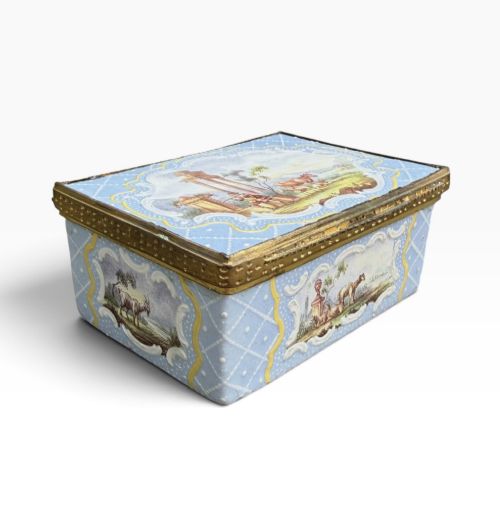
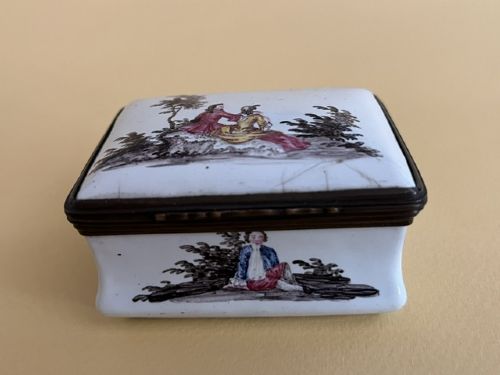
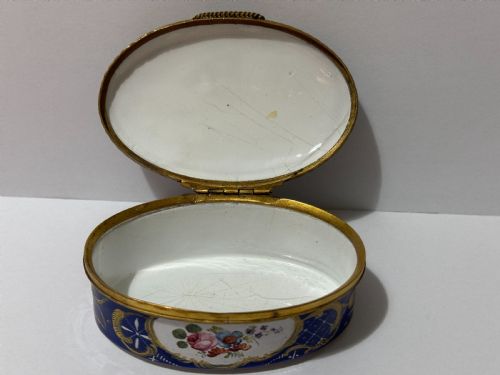
These small, hinged containers known as a bilston patch box were designed to hold artificial beauty spots.
Bilston Patch Box
A bilston patch box is a small, portable container originating from the eighteenth century, commonly taking oval, rectangular, or novelty shapes. These pieces served to hold the small fabric patches worn on the face during the Georgian period.
The versions most frequently met on this page date from the eighteenth century and the Georgian era, originating from South Staffordshire. They often feature hinged lids, mirror inserts, and detailed enamel work across various geometric and figural forms.
Makers produced these objects primarily as functional trinket and snuff containers in addition to their use for patches. Surviving examples demonstrate diverse topographical inscriptions, sentimental mottoes, and pictorial scenes painted directly onto the enamel surface.
Materials and construction
Artisans constructed these boxes using a copper base coated in opaque enamel. The metal body received layers of vitreous enamel fused by heat, providing a smooth canvas for subsequent hand-painting.
Mounts and hinges utilise brass, gilt metal, or copper gilt to secure the lid to the base. Gilded metal accents frequently frame the rims and define the closure mechanisms of the better examples.
Listings demonstrate pieces spanning the eighteenth century, the Georgian era, and the nineteenth century, executed in enamel, copper, and gilt metal.
Variations in quality
Quality rests primarily in the execution and preservation of the hand-painted enamel decoration on the lid and sides. Finely detailed pictorial scenes, legible inscriptions, and delicate polychrome palettes elevate certain pieces above plain or simply patterned counterparts.
The precision of the metal mounts and the integrity of the hinge mechanism also distinguish superior examples. Retaining the original interior mirror and showing minimal crazing or restoration places an object higher in the surviving range.
The Bilston Patch Box Glossary
- Patch box
- A small container used in the eighteenth century to hold cosmetic patches. These receptacles typically include an internal mirror fitted inside the lid.
- Enamel
- A glassy substance fused to a metal substrate through firing. This technique allowed artisans to create durable, brightly coloured surfaces for small decorative objects.
- Navette-shaped
- An oval form with pointed ends resembling a little boat. This silhouette appears frequently among late eighteenth-century enamel boxes.
- Bonbonniere
- A small ornamental container made for holding sweets or confectionary. These pieces often took whimsical or figural shapes rather than standard geometric forms.
- Gilt metal
- Metal treated with a thin layer of gold applied to the surface. This material provided a bright, decorative border for the hinged lids of enamel boxes.
Bilston Patch Box: Frequently Asked Questions
What did people keep in a bilston patch box?
These containers held small fabric patches cut from silk, velvet, or taffeta. Georgian society wore these cosmetic spots on the face to hide blemishes or signal social intentions.
Over time, owners also utilised the same receptacles for snuff, pills, or small trinkets. The inclusion of an interior mirror allowed users to check the placement of their patches.
How old are most bilston patch boxes?
The vast majority originate from the eighteenth century, particularly the Georgian period between seventeen-sixty and eighteen-hundred. Staffordshire workshops produced the peak of this enamelling craft during those decades.
Later nineteenth-century examples do occur, but eighteenth-century production dominates the surviving record. Stylistic cues and inscriptions usually help anchor the date of manufacture.
Were these boxes only made in Bilston?
While the name Bilston remains closely associated with the craft, production spanned the wider South Staffordshire region including factories in other nearby towns. Contemporaries often referred to these items under broader regional designations.
Regardless of the exact workshop location within Staffordshire, the manufacturing techniques and enamel compositions share identical traditions.
How should I display a bilston patch box?
Display these items in a secure cabinet away from direct sunlight to protect the hand-painted enamel pigments. Keeping them on a stable shelf prevents accidental drops that could damage the delicate copper and glass composition.
Opening the hinged lid carefully helps preserve the original brass or gilt metal mounts. Ambient indoor environments without excessive humidity suit enamel objects best.