



Antique Enamel Patch Box
These antique enamel patch box examples are small, hinged containers crafted for holding cosmetic face patches, and collectors prize them for their delicate painted scenes.

Antique Enamel Patch Box
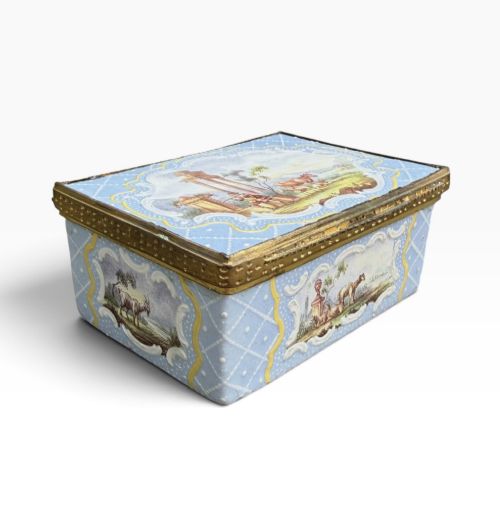
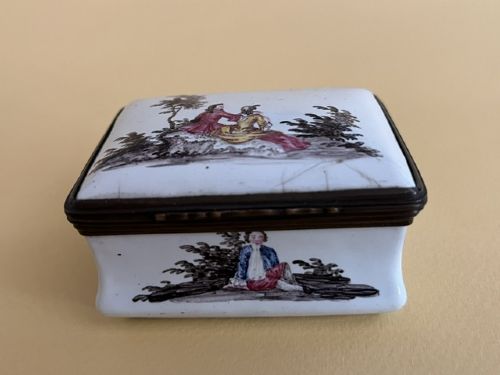
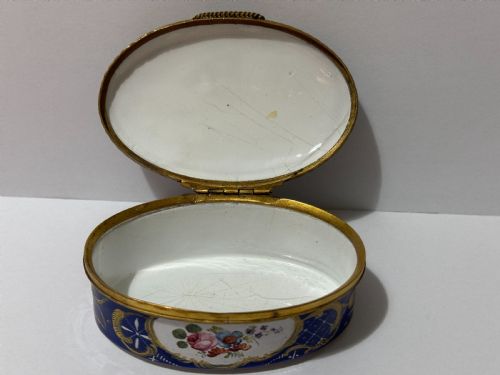
When you examine an antique enamel patch box, you are looking at a small receptacle originally designed for holding the fabric beauty spots worn during the eighteenth century. These pieces appear primarily in eighteenth-century and Georgian forms, including oval and rectangular shapes along with novelty designs.
The versions met most frequently on this page originate from English production centres such as Bilston and South Staffordshire. Makers also produced these items as snuff boxes, bonbonnieres, and trinket boxes, frequently decorated with inscribed sentiments or topographical views.
How they were made
Artisans constructed the foundation of an antique enamel patch box using hammered copper or brass metals. They then fused vitreous enamel to the metal surfaces through firing, creating a smooth white or coloured ground ready for hand-painting.
Workers mounted the hinged lids and bases using gilded metal or gilt metal mounts. Painters applied fine polychrome enamels to depict parkland musicians, commemorative inscriptions, or specific locations like Cheltenham Wells.
The listings span the eighteenth century and the nineteenth century, featuring materials such as copper, brass, gilt metal, and vitreous enamel.
What varies in quality
Quality in an antique enamel patch box rests upon the crispness of the hand-painted decoration and the preservation of the vitreous surface. Finer examples display detailed miniature painting without extensive restoration to the fused glass layer.
The precision of the metal hinge mounts and the clarity of any inscribed motto or landscape further distinguish finer specimens. Boxes retaining their interior mirrors or retaining vibrant powder pink ground colours represent the upper tier of production.
The Antique Enamel Patch Box Glossary
- Patch box
- A small lidded container designed to hold cosmetic beauty patches made of silk, velvet, or taffeta. These boxes frequently incorporated interior mirrors for positioning the patches.
- Vitreous enamel
- Glass powder fused to a metal base through high-temperature firing. This technique created the smooth, glossy coloured surfaces characteristic of these small containers.
- Bonbonnieres
- Small ornamental boxes used for holding sweets, sugar-plums, or small delicacies. They share identical construction methods with patch boxes.
- Bilston
- An English town in Staffordshire noted for the production of enamelled copper trinket boxes and snuff boxes during the eighteenth century. Workers there specialised in hinged metal containers with painted lids.
Antique Enamel Patch Box: Frequently Asked Questions
What did people keep in patch boxes?
These containers held small fabric patches cut into shapes like stars, crescents, or dots. Ladies and gentlemen applied these cosmetic spots to the face using adhesive.
The interior mirror often fitted inside the lid allowed users to check their placement during social gatherings or journeys.
How can I tell an eighteenth century box apart?
Eighteenth-century specimens typically feature copper bases coated in opaque white or coloured vitreous enamel, joined by simple metal hinges. The hand-painted scenes on the lids often depict romantic landscapes, mottoes, or commemorative subjects.
Later nineteenth-century pieces display different colour palettes and heavier metal mounts, reflecting changing manufacturing methods in the decorative arts.
Were these boxes used for snuff?
Many boxes served multiple purposes, functioning interchangeably for dry tobacco snuff, pills, or cosmetic patches depending on the owner's needs. The tight-fitting hinged lids kept aromatic powders and delicate items secure.
In contemporary catalogues, makers' intended uses often overlap across snuff box, patch box, and trinket box categories.
How should I clean my enamel box?
Enamel surfaces require only gentle dusting with a soft, dry cloth to remove surface particles. Moisture can seep into hairline fractures or damage exposed copper and gilt metal mounts.
Avoid chemical cleaning agents or submersion in water, as these substances harm the historic fused glass and metal components.