
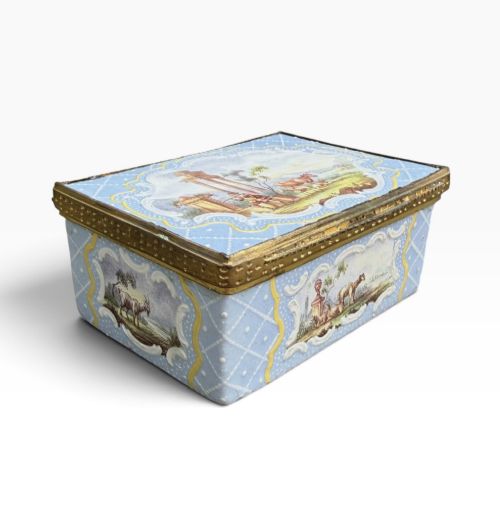
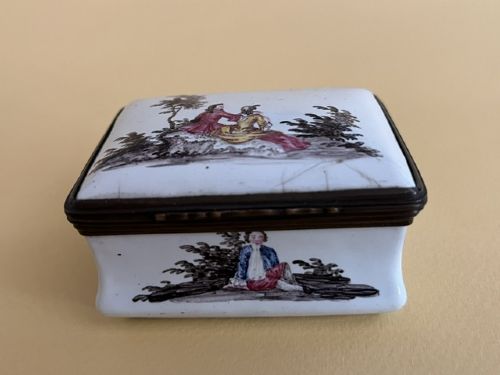


Georgian Enamel Bonbonniere
A georgian enamel bonbonniere is a small, decorated container made for carrying sweet treats or small personal items, prized for its miniature painted surface.

Georgian Enamel Bonbonniere
A georgian enamel bonbonniere belongs to a group of small decorative containers that includes patch boxes and snuff boxes. These items appear primarily from the eighteenth century, with occasional nineteenth century examples.
The version most commonly met on this page is the Bilston enamel box originating from Staffordshire. These pieces take rectangular forms and frequently feature hinged lids decorated with detailed painted scenes.
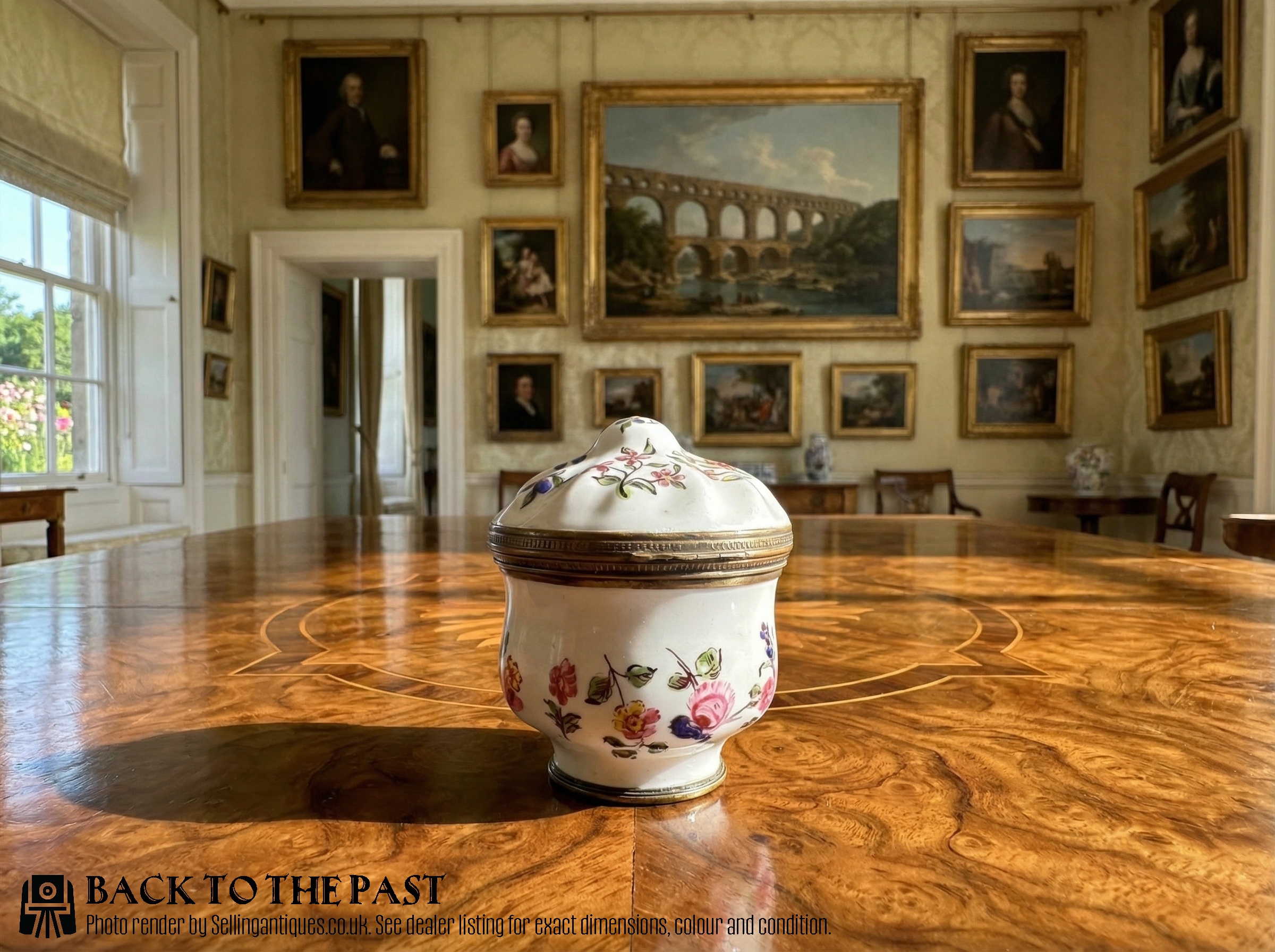
Materials and construction
These boxes are constructed using enamel fused over a copper base. Metal mounts, often brass or gilt metal, secure the hinged lids and protect the edges.
The exterior surfaces receive hand-painted enamel decoration, occasionally incorporating specific figurative subjects such as animals.
Materials recorded in current inventory include enamel, copper, brass, and gilt metal formed into rectangular patch and snuff boxes.
Assessing quality in enamel boxes
Quality rests upon the execution of the hand-painted decoration on the lid and sides. Finer examples display precise brushwork and well-defined figurative details.
The condition of the fused enamel surface and the integrity of the metal mounts determine the overall standard of an individual piece.
The Georgian Enamel Bonbonniere Glossary
- Bonbonniere
- A small ornamental box designed for holding sweets or bonbons. These containers date predominantly to the Georgian period.
- Patch box
- A small box utilised for holding cosmetic patches made of silk or velvet. Ladies wore these patches on their faces during the eighteenth century.
- Bilston enamel
- Enamelware produced in the town of Bilston in Staffordshire during the eighteenth century. This production centre specialised in small luxury boxes.
- Gilt metal
- Metal that has been treated with a thin layer of gold or gold-coloured wash. This material frequently forms the mounts and bezels of enamel boxes.
- Snuff box
- A small container built to hold powdered tobacco for inhalation. These objects share similar construction methods with patch boxes.
Georgian Enamel Bonbonniere: Frequently Asked Questions
What is a georgian enamel bonbonniere used for?
These small boxes served to hold sweet confections or sugarplums carried by affluent individuals during social occasions.
They functioned as fashionable pocket accessories that displayed miniature artwork.
How do you date an enamel box?
Dating relies on stylistic clues, manufacturing techniques, and the characteristic colours and mounts of the period. Eighteenth-century pieces typically exhibit specific Staffordshire enamel work.
Later nineteenth-century versions show variations in the thickness and brilliance of the enamel coating.
Where were these boxes manufactured?
The primary production centre for these English enamel boxes was Staffordshire, particularly the town of Bilston.
Workshop production during the Georgian era focused on small decorative containers with copper bases.
How should I care for a bonbonniere?
Keep the piece away from direct sunlight and excessive moisture to protect the delicate painted enamel surface. Handle the metal mounts gently to preserve the original hinge.
Clean the exterior only with a soft, dry cloth without chemical agents.
Are patch boxes and bononnieres the same?
They belong to the same family of small eighteenth-century enamel containers with hinged lids. Patch boxes were specifically made to hold cosmetic face patches.
Bonbonniere containers were intended for sweet treats, though their physical forms overlap significantly.