
Bentwood Hat Tree
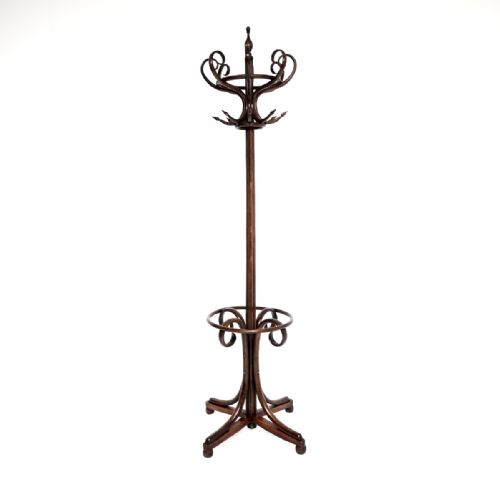
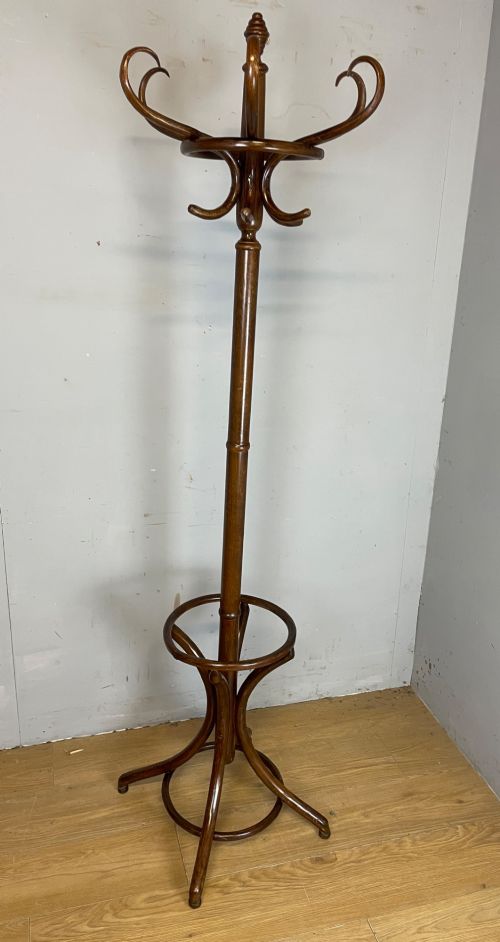
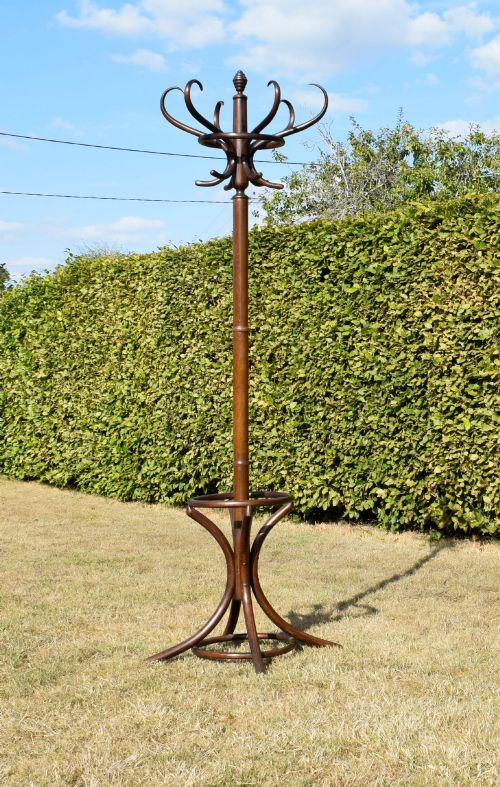
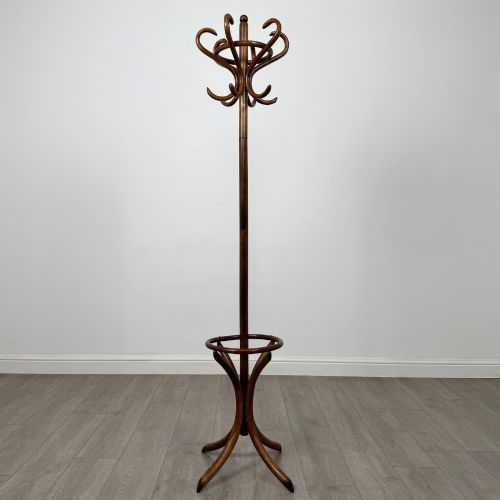
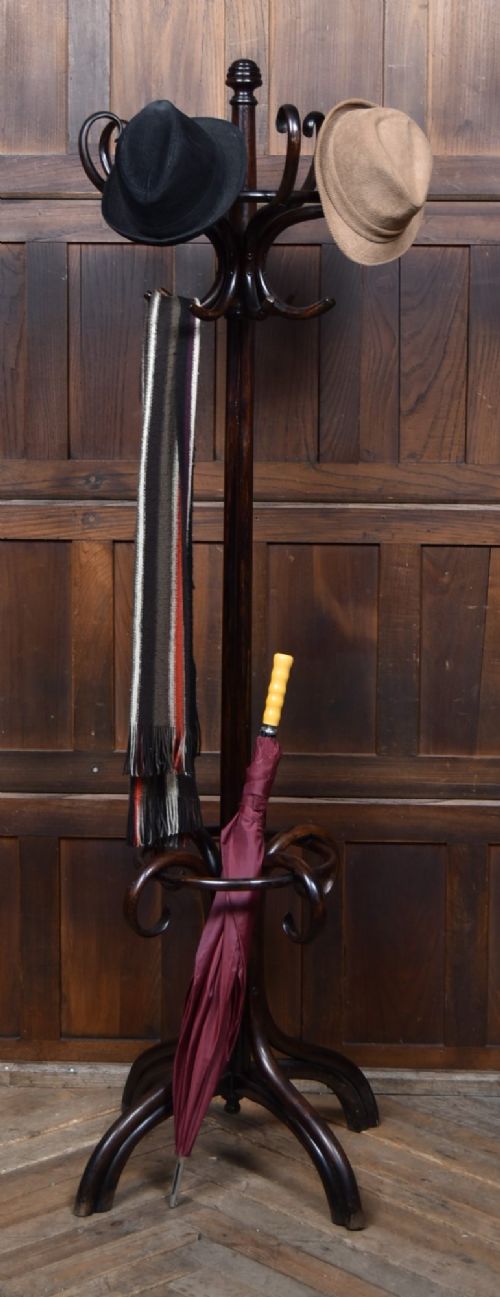
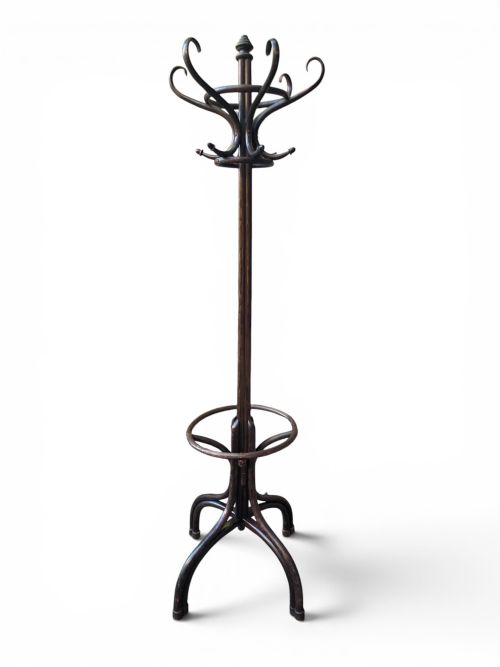
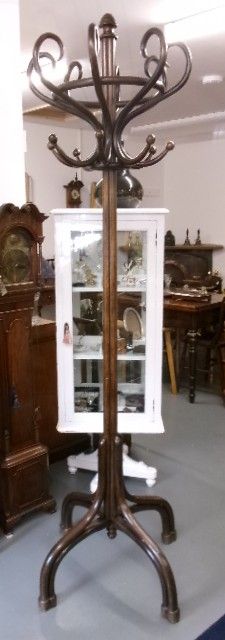
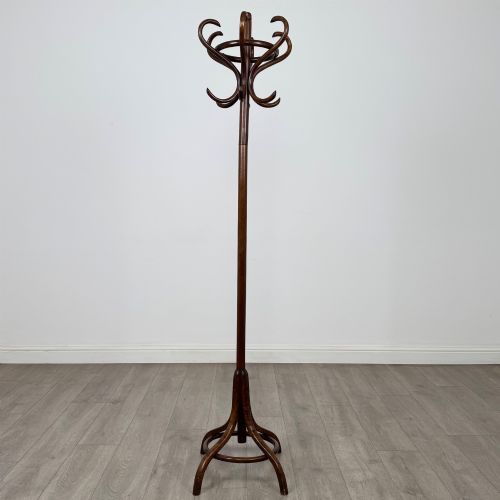
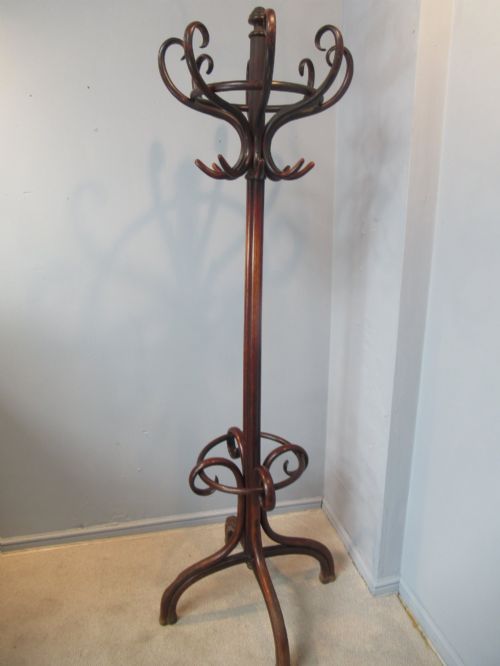
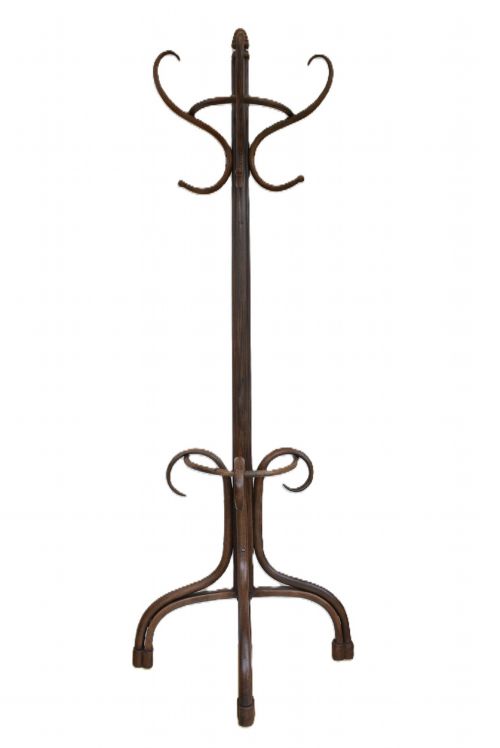
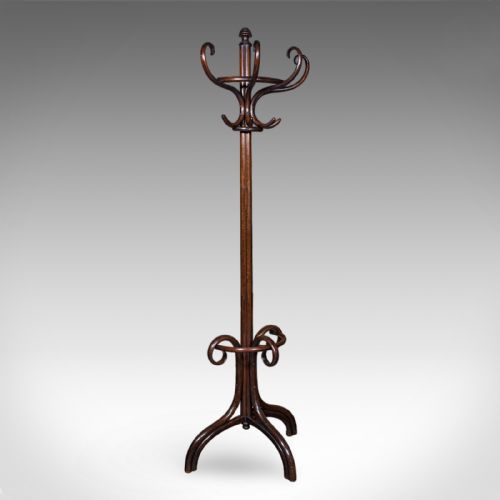
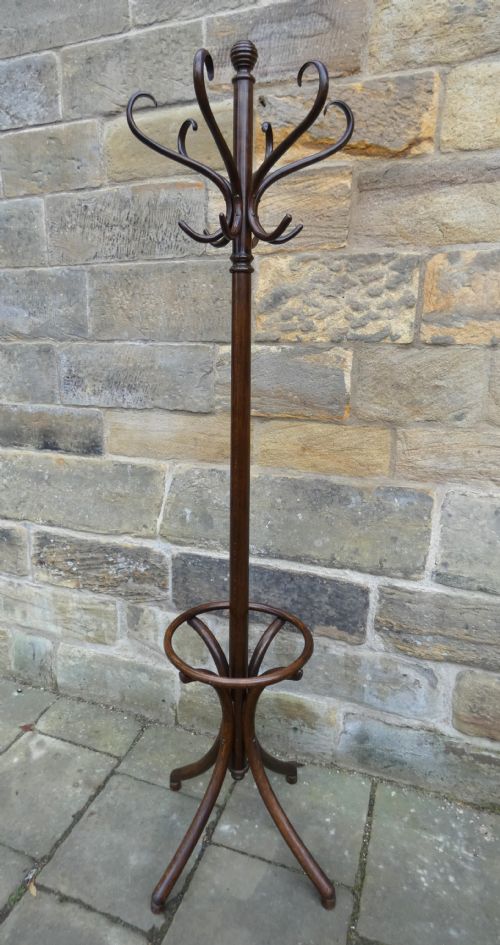
A bentwood hat tree is a clever piece of steam-formed furniture designed to hold outerwear neatly in a hallway.
Bentwood Hat Tree
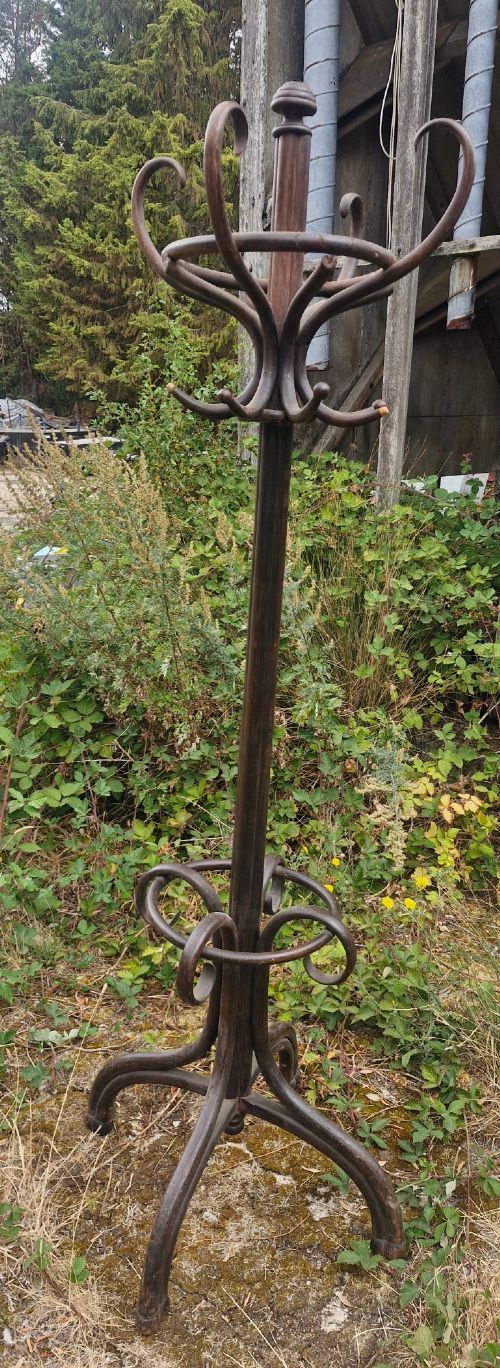
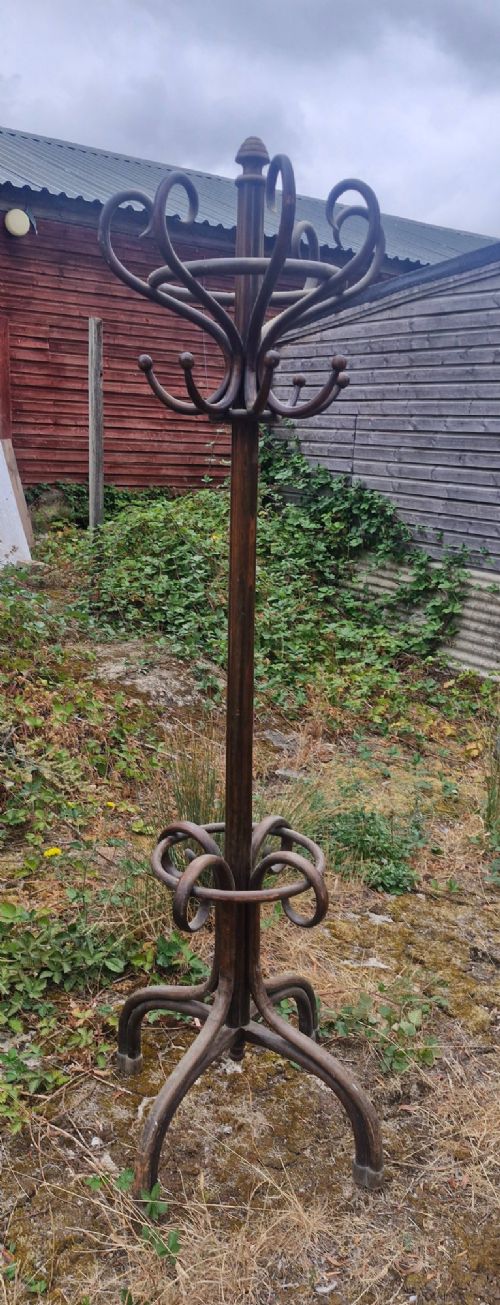
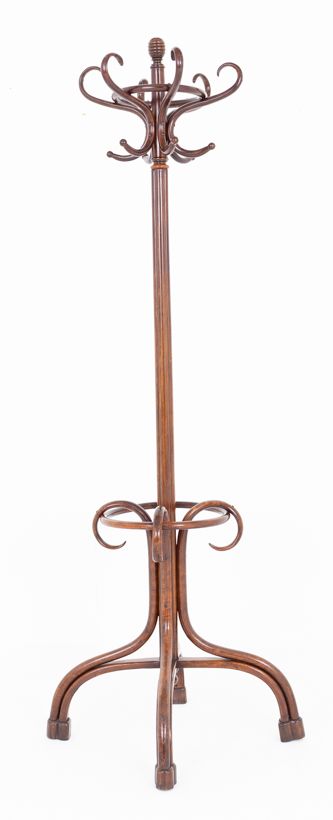
A bentwood hat tree stands vertically in hallways to organise coats, hats, and sticks upon curved wooden hooks. These pieces appear in forms such as coat stands, hall stands, and revolving designs.
The versions met most frequently on this page date from the Victorian and Edwardian eras through to the early twentieth century, spanning periods from eighteen eighty to nineteen thirty. Pieces arrive in various configurations, including half-round demi-lune shapes and wall-standing options.
Originating largely from Austrian and Thonet traditions, these functional items serve domestic entryways with tall, slender profiles. They combine utility with the flowing lines characteristic of early industrial furniture design.
How they were made
Craftsmen utilised beech and beechwood, chosen specifically for its cellular structure which responds well to the steaming process. Lengths of wood were subjected to moisture and heat inside steam boxes until they became pliable.
Workers then bent the softened timber manually around metal or wooden forms to create the characteristic sweeping curves of the hooks and circular frames. Once dried and cooled, the wood retained its new shape permanently without losing structural strength.
Finished stands typically received a wood stain, honey-coloured treatments, or clear protective coatings to highlight the natural grain of the beech. Individual components were joined with screws or metal brackets, sometimes incorporating glass elements.
Early morning hall dashes grew considerably smoother once revolving hat stands allowed owners to spin their garments into place.
What varies in quality
Quality rests upon the execution of the steam-bending and the gauge of the timber selected for the central column and the hanging loops. Denser, heavier beech sections provide superior stability against the weight of heavy winter overcoats.
Makers varied the complexity of the design, producing simple single-tier racks alongside multi-tiered revolving models with double tops and integrated stick stands. Labelled pieces from notable workshops command greater interest among collectors due to documented production provenance.
Thonet·Fischel
The Bentwood Hat Tree Glossary
- Bentwood
- Wood shaped by applying moisture and heat until pliable, allowing it to be curved into structural forms. This technique revolutionized furniture production in the nineteenth century.
- Demi Lune
- A half-moon shape used for hall stands designed to sit flush against a wall. This profile saved valuable floor space in narrow Victorian and Edwardian entryways.
- Revolving
- A top section that rotates on a central axis to provide easy access to multiple garments. This mechanical feature appears on specific hat stand variants from the early twentieth century.
- Thonet Style
- Furniture manufactured using the steam-bent beech techniques pioneered by Michael Thonet and his firm. It is defined by minimal ornamentation and flowing, organic curves.
Bentwood Hat Tree: Frequently Asked Questions
What is a bentwood hat tree used for?
These pieces serve primarily in hallways and entryways to store outdoor garments such as coats, hats, scarves, and walking sticks. The upward-pointing wooden curves secure items without stretching the fabric.
Their vertical orientation allows them to hold numerous garments while occupying a minimal amount of floor space in narrow corridors.
How do I date a bentwood hat tree?
Dating relies upon examining construction methods, joining hardware, catalogue markings, and paper labels adhered to the underside of the base. Pieces from the nineteenth century often exhibit heavier timber dimensions and distinct manufacturer stamps.
Edwardian and later twentieth-century iterations frequently display lighter honey-coloured finishes and alternative configuration styles like revolving tops.
Are bentwood hat stands sturdy enough for daily use?
Solidly constructed beech stands engineered during the Victorian and Edwardian periods remain entirely practical for modern everyday use. The inherent elasticity of steam-bent wood provides natural resilience against regular loading.
Proper weight distribution across the upper hooks ensures the tall vertical column remains balanced on its weighted or splayed base.
What is the difference between a hall stand and a hat tree?
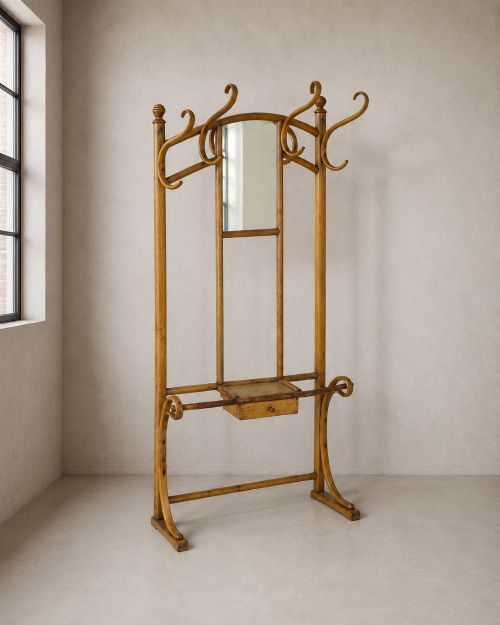
A hat tree typically refers to a slender, vertical pole with branching hooks specifically for hats and coats. A hall stand often incorporates additional functional elements such as mirror panels, umbrella wells, and small glove drawers.
Both forms utilise bentwood construction techniques, though hall stands generally present a broader visual footprint in an entryway.