


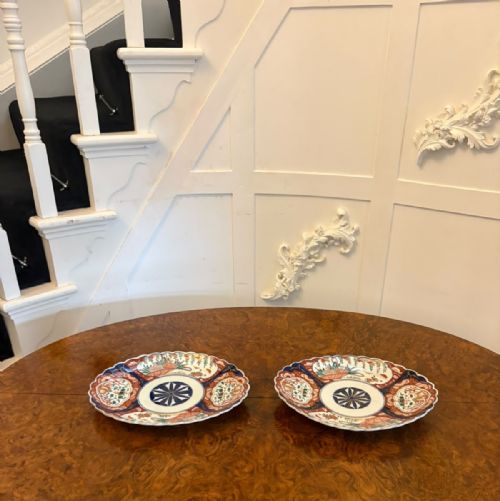


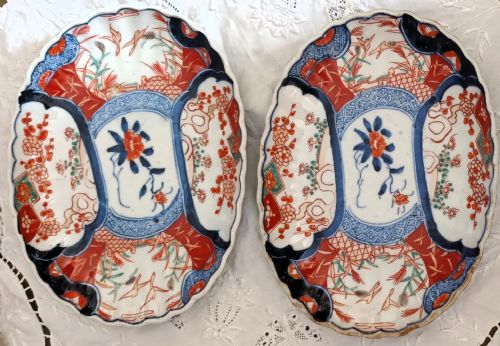
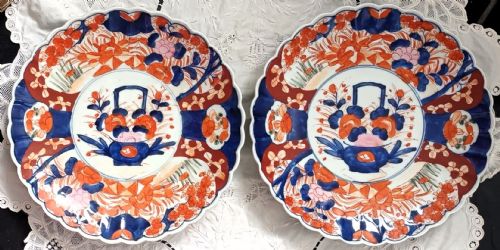
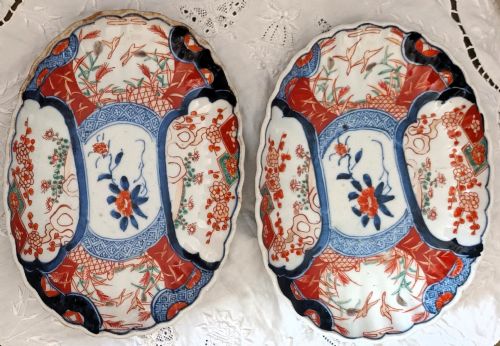


Arita Imari Ceramic Wall Dish
When you search for an arita imari ceramic wall dish, you enter a colourful world of blue and white porcelain chargers and decorative plates shaped by Japanese tradition.
Arita Imari Ceramic Wall Dish
An arita imari ceramic wall dish is a decorative plate or charger originating from Japan, commonly encountered in forms such as circular chargers, square plates, and scalloped dishes. The selections available on this page span several periods, including the Meiji period, the Victorian era, and earlier centuries.
Buyers will find a variety of distinct shapes, from traditional round plates to unusual ribbon, fan, and hexagonal formats. Many of these pieces were made for display on walls or surfaces, showcasing characteristic patterns and forms associated with Japanese Arita and Imari traditions.
How they were made
The foundation of these works is porcelain, decorated with cobalt underglaze, enamel, and sometimes gold leaf or gilt. Artisans applied hand-painted details to ceramic surfaces, combining rich pigments and metallic highlights.
Firing techniques in kilns established the durability of the porcelain and set the cobalt blue tones beneath the glaze. Enamel colours and gold details were frequently added in subsequent stages to complete the decorative scheme.
Current listings demonstrate a strong representation of Meiji period pieces alongside Victorian era examples and nineteenth century items.
What varies in quality
The distinction between standard examples and the finest pieces lies in the precision of the hand-painted brushwork and the complexity of the design. Plates depicting intricate motifs such as koi carp or exotic birds demonstrate a higher tier of artisan skill.
Unusual shapes, including square, hexagonal, octagonal, and fan formats, command attention alongside large chargers. The richness of the enamel palette and the careful integration of gold leaf or gilt further elevate the standing of an individual piece.
The Arita Imari Ceramic Wall Dish Glossary
- Arita
- A Japanese town and the centre of porcelain production in the Hizen province where these wares originated. Pieces attributed to Arita represent centuries of ceramic expertise.
- Imari
- A style of Japanese export porcelain named after the port from which the wares were shipped to the West. It typically incorporates a palette of cobalt blue, iron red, and gold.
- Charger
- A large decorative plate intended for display on a wall or sideboard rather than for dining use. These substantial pieces provide a wide surface for complex painted scenes.
- Meiji Period
- The era in Japanese history spanning from eighteen sixty-eight to nineteen twelve. Many decorative plates and dishes on this page date from this prolific manufacturing period.
- Cobalt Underglaze
- A blue pigment applied to the raw porcelain body before glazing and firing. This technique protects the vibrant blue colour beneath a glossy protective layer.
Arita Imari Ceramic Wall Dish: Frequently Asked Questions
What is an arita imari ceramic wall dish?
An arita imari ceramic wall dish is a decorative porcelain plate or charger made in Japan, featuring traditional hand-painted designs in cobalt blue, enamel, and gold.
These items were historically produced for both domestic use and export, combining functional ceramic forms with elaborate artistic decoration suitable for display.
How were these wall dishes used?
While originally created as functional ceramics or export wares, these large plates and chargers were frequently hung on walls or exhibited on surfaces as decorative art.
Their striking colour palettes and detailed pictorial motifs made them popular centrepieces in domestic interiors across different periods.
How do I tell different periods apart?
Differentiating periods relies on observing stylistic traits, potting techniques, and the complexity of the enamel and cobalt underglaze decoration. Pieces from the Meiji period often exhibit distinct pictorial elements and refined hand-painted finishes.
Earlier examples from the Edo period or seventeenth century display specific potting characteristics and regional painting styles rooted in Japanese kiln traditions.
What shapes do these ceramic dishes come in?
These pieces appear in a wide variety of formats, including standard round plates, deep chargers, and oval dishes. Artisans also produced plates with unconventional outlines such as square, hexagonal, octagonal, fan, and ribbon shapes.
Scalloped edges and structured borders are frequently encountered across the selection, offering different visual geometries for display.