




Arita Export Porcelain
These pieces of arita export porcelain bring together centuries of skilled Japanese firing and painting traditions for collectors of fine ceramics.
Arita Export Porcelain
Arita export porcelain comprises decorative plates, bowls, dishes, and vases created in Japan for international markets across multiple periods. The selection on this page leans heavily toward 19th-century and Meiji period examples, alongside earlier pieces from the 17th and 18th centuries in the Edo period style.
Buyers encounter distinct forms ranging from large charger plates and scalloped dishes to lidded vases and garnitures. These items reflect the long-standing tradition of ceramic production centred around the town of Arita in Hizen province.
Materials and Techniques
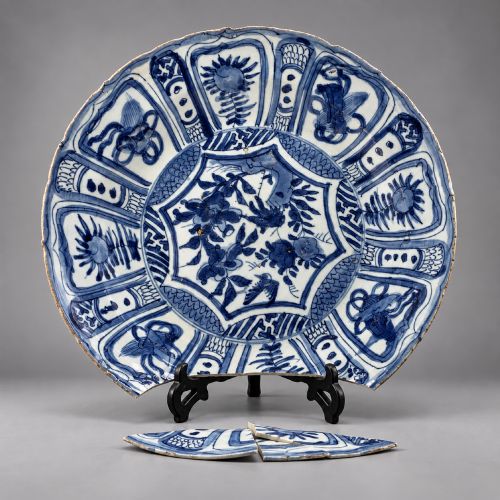
The pieces utilise hard-paste porcelain clay bodies shaped into vessels and plates, then fired to high temperatures. Cobalt blue underglaze provides the foundational tones on many traditional blue and white items.
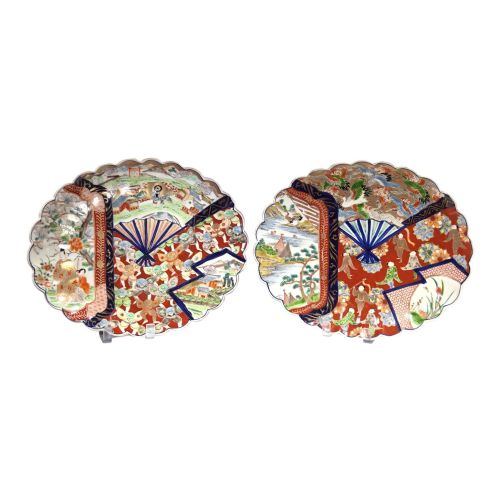
Makers layered enamel pigments, glaze, and gold leaf or gilt details over the fired porcelain. This technique defined the characteristic Imari palette and the intricate Aka-e designs seen on plates and vases.
Some plates feature black ship decoration, recording historic maritime encounters between Japanese artisans and foreign traders.
Distinctions in Quality
Quality rests in the crispness of the cobalt underglaze painting and the precision of the enamel and gold leaf application. Earlier pieces from the 17th century often display a vigorous, spontaneous brushwork, whereas later 19th-century items may show a denser, more formal decorative program.
The complexity of the form also separates standard production from finer output, such as octagonal plates, scalloped edges, or large matched pairs and garnitures. The depth of the glaze and the refinement of the porcelain paste further distinguish the tiers of craftsmanship.
The Arita Export Porcelain Glossary
- Imari palette
- A traditional colour scheme featuring cobalt blue underglaze combined with iron red and gold overglaze. This combination dominates many exported plates and chargers.
- Edo period
- The historical era in Japan spanning from 1603 to 1867. Pieces from this time often exhibit classic regional motifs and early export styles.
- Meiji period
- The era of Japanese history lasting from 1868 to 1912. Many decorative plates and vases on the market originate from this prolific manufacturing time.
- Underglaze
- A method of decorating pottery before the final glaze application and firing. Cobalt blue is the most common pigment used in this technique.
- Garniture
- A set of matching vases or vessels designed to be displayed together on a mantelpiece or shelf. These sets typically comprise three or more pieces.
- Aka-e
- Red picture style featuring iron-red enamel painting over the glaze. This technique frequently appears alongside gold accents on export dishes.
Arita Export Porcelain: Frequently Asked Questions
What is arita export porcelain?
Arita export porcelain refers to ceramic wares produced in the Hizen province of Japan, primarily for overseas markets. These goods include plates, bowls, and vases created across the Edo, Meiji, and Victorian eras.
The town of Arita became the cradle of Japanese porcelain production following the discovery of suitable raw materials. Kilns in the region produced wares ranging from delicate blue and white pieces to polychrome Imari designs destined for European and domestic homes.
How do I date an imari plate?
Dating an Imari plate involves examining the potting style, the quality of the cobalt blue, and the characteristics of the overglaze enamels. Earlier 17th and 18th-century examples often exhibit a softer body and looser brushwork, while 19th-century Meiji pieces tend to feature brighter gilding and crisper forms.
Changes in trade regulations and shifting international tastes also influenced the motifs used over time. Comparing the weight, glaze pooling, and foot ring finish helps place a piece within its historical period.
How were these vases used?
Large vases and lidded jars served primarily as decorative focal points in grand interiors during the 17th, 18th, and 19th centuries. Pairs and garniture sets were arranged on mantelpieces, tables, or cabinets to display wealth and taste.
While some vessels held dried botanicals or flowers, many served purely as ornamental objects. Their robust porcelain bodies and striking colour palettes made them ideal for catching the light in formal reception rooms.
How do I clean antique porcelain?
Cleaning antique porcelain requires gentle handling using lukewarm water and a mild, non-abrasive soap. Submerging pieces with old repairs or fragile gold leaf should be avoided to prevent damage to the historic materials.
Soft cloths or natural bristle brushes help remove dust from textured surfaces and recessed areas without scratching the glaze. Thorough air drying on a padded towel ensures the ceramic remains safe after washing.