


Vintage Imari Tableware
When you search for vintage imari tableware, you are looking at richly patterned ceramics that bring striking red and blue decoration to the table.
Vintage Imari Tableware
Vintage imari tableware spans decorative plates, dessert services, tureens, sauceboats, and serving dishes produced across the nineteenth and twentieth centuries. These forms reflect both Japanese origins and European adaptations, particularly the heavy ironstone vessels and bone china sets created by English potteries in the Georgian and Victorian eras.
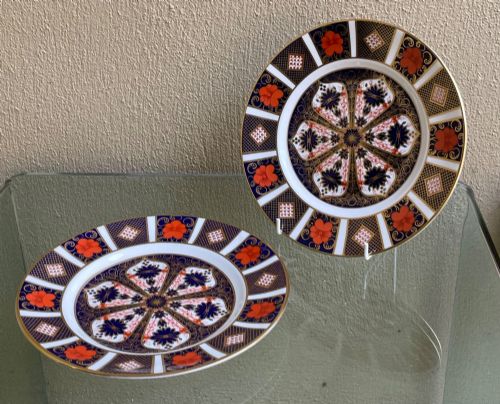
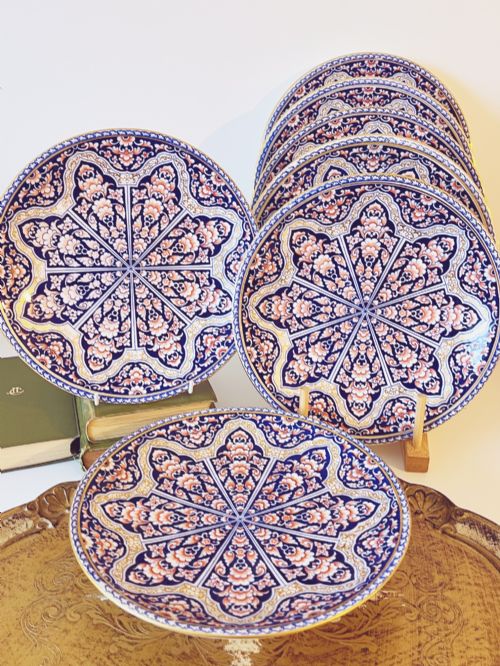
The objects on this page range from modest nineteenth-century plates to extensive dinner and dessert services featuring characteristic Imari style patterns. Buyers frequently encounter nineteenth-century Masons ironstone pieces alongside Royal Crown Derby bone china and Japanese examples dating around nineteen hundred.
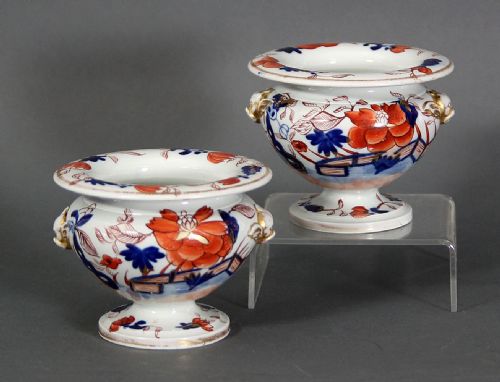
Whether selecting a pair of sauce tureens or an eighteen-eighty dessert service comprising a comport and six plates, these items provide functional service and display value. The aesthetic relies on the traditional palette of iron red, underglaze blue, and gilt highlights seen across Regency, Victorian, and Japanese imari styles.
How they were made
Makers relied on durable ceramic bodies including ironstone, porcelain, and bone china to form heavy dinner services, tureens, and delicate dessert plates. Ironstone provided a robust, thick fabric suited to large serving dishes and sauceboats, while bone china and porcelain formed finer cabinet plates and dessert sets.
Decoration involved a combination of underglaze blue painting, overglaze enamel colours, and gold leaf gilding applied over a clear glaze. Artisans hand-painted complex motifs onto the fired ceramic before applying a secondary firing to set the enamels and gold leaf.
Materials recorded on this page include enamel, ironstone, gold leaf, glaze, ceramic, porcelain, bone china, and gilt.
What varies in quality
The standard of painting and the crispness of the underglaze blue transfer or hand-brushwork determine the visual impact of each piece. Finer examples display precise alignment between the blue outlines and the superimposed enamel colours, whereas simpler items show looser brushwork.
The preservation of the gold leaf gilding and enamel surface integrity distinguishes high-grade items from those worn through heavy use. Complete services and matching pairs demonstrate greater consistency in body thickness, glaze clarity, and pattern registration than assembled groups.
Royal Crown Derby·Masons Patent Ironstone
The Vintage Imari Tableware Glossary
- Imari Style
- A decorative scheme imitating Japanese export wares, typically featuring a palette of rich iron red, cobalt blue, and gilt highlights. This aesthetic was widely adopted by English factories during the Georgian and Victorian periods.
- Ironstone
- A heavy, durable type of earthenware patented in the nineteenth century to rival true porcelain. It forms the robust body of many nineteenth-century tureens, sauceboats, and dinner plates.
- Comport
- A raised dish or pedestal bowl used for serving fruit or sweet dishes as part of a formal dessert service. They often form the centrepiece of nineteenth-century ceramic sets.
- Sauceboat
- A vessel designed for holding and pouring gravies or sauces, usually featuring a shaped lip and a handle. In nineteenth-century dining, these were frequently accompanied by matching ladles and under-dishes.
- Enamel
- Opaque glass-like pigments applied over the glazed and fired ceramic body to add bright surface colours such as iron red and green. These are fixed in a subsequent low-temperature kiln firing.
Vintage Imari Tableware: Frequently Asked Questions
Can I use these antique services for dining?
Many nineteenth-century ironstone and bone china pieces remain structurally sound for occasional serving use. However, older enamels and gilding can be sensitive to acidic foods and frequent thermal shock.
Most collectors prefer to reserve these items for special occasions or display rather than daily family meals. Hand washing immediately after use preserves the historic decoration.
How do I identify nineteenth-century pieces?
Examine the base of the ceramic for maker marks, patent stamps, or impressed symbols associated with nineteenth-century potteries. The weight and thickness of the ironstone body also offer clues to the period of manufacture.
Stylistic shifts between Georgian Regency designs and later Victorian patterns help narrow the date of production. Comparing the hand-painting style with documented factory examples confirms the origin.
What is the difference between Japanese and English imari?
Japanese imari pieces generally date from the Meiji era or earlier, featuring specific native clay bodies and characteristic potting techniques. English imari represents European interpretations created by factories like Royal Crown Derby and Masons using local porcelain and ironstone.
English versions often incorporate Regency or Victorian shape profiles while adopting the traditional Japanese red, blue, and gold colour palette. Examining the foot ring and paste helps distinguish the imported originals from domestic reproductions.