

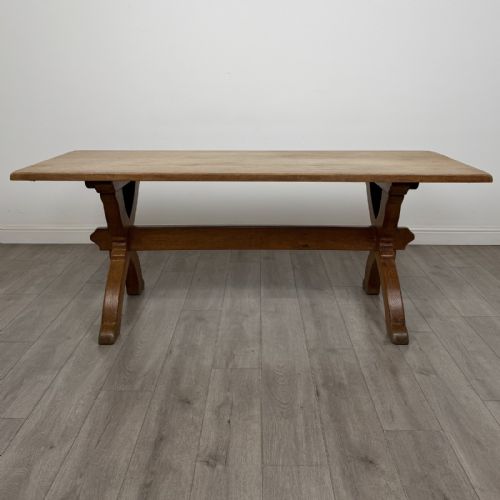

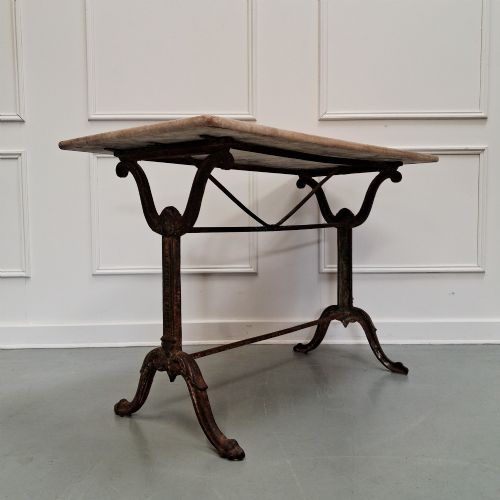
Antique X Frame Table
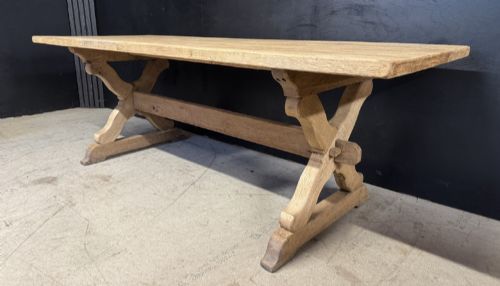
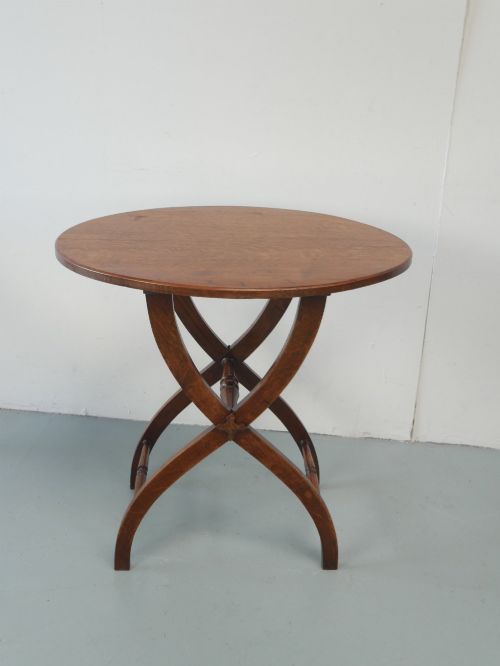
An antique x frame table offers a distinctive architectural base that supports robust dining, tavern, and library forms across pine, oak, and mahogany.
Antique X Frame Table
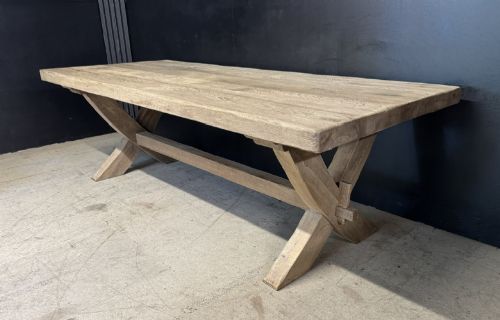
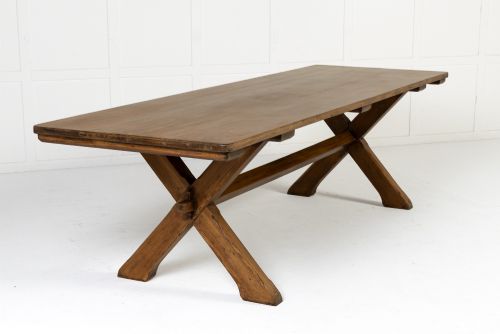
When searching for an antique x frame table, buyers encounter sturdy seating and serving furniture defined by intersecting stretcher supports rather than standard vertical legs. The archive and current selections show these pieces spanning rigorous tavern dining formats, narrow side consoles, and library desks.
The dominant varieties on this page are substantial pine and oak tavern or refectory tables from the nineteenth century, alongside refined mahogany library and side variants. These forms combine utilitarian strength with the geometric clarity of the crossed trestle base.
How they were made
Makers constructed these tables predominantly using solid timbers such as native pine, English oak, and Cuban mahogany, often selecting woods for structural resilience under heavy daily use. Construction relied on pegged joints and substantial cross-braced timber frames that distributed weight evenly across the floor.
Surfaces frequently display original painted finishes, wax patination, or polished mahogany grains that reflect period workshop traditions. Joinery techniques prioritize functional longevity, utilising visible dowels and sturdy cross-members to anchor the characteristic intersecting leg geometry.
Antique X Frame Table Retail Price Guide 2026
Typical asking prices for x frame table among the pieces listed under this phrase on Sellingantiques today, from the lower quarter to the upper quarter. They describe what is for sale here now, not the wider market.
Some tavern tables still bear the faint, permanent ghost rings of long-forgotten ale tankards.
What varies in quality
Quality in these tables rests upon the integrity of the timber framing and the preservation of original surfaces, such as untouched historical paint or deep wax patination. Superior examples retain their original structural timber without extensive board replacement, maintaining the balanced proportions intended by the maker.
Lesser pieces often suffer from over-restoration, unstable base joints, or unsympathetic timber replacements that obscure the historical character of the frame. The distinction lies in how honestly the piece preserves its working life, from the tightness of the intersecting joints to the natural wear on the top boards.
Heals·P & MA Nicholson·Mallett·William Comyns·Mappin Bros
The Antique X Frame Table Glossary
- X-frame
- A structural furniture base formed by two intersecting diagonal members that create a cross shape when viewed from the side. This design provides robust load-bearing support without requiring conventional corner legs.
- Tavern table
- A utilitarian wooden table designed for heavy commercial use in public houses and inns. These pieces typically feature thick timber tops and durable underframes.
- Refectory table
- A long dining table traditionally used in communal dining halls and monastic refectories. They are characterised by elongated proportions and reinforced stretcher systems.
- Patina
- The surface sheen and coloration developed by wood, metal, or paint over decades of handling, exposure, and polishing. It serves as a key indicator of genuine age and continuous use.
Antique X Frame Table: Frequently Asked Questions
What is an x frame table?
An x frame table utilises intersecting diagonal wooden supports for its base rather than standard vertical corner legs. This architectural configuration provides exceptional stability and maximises legroom along the length of the top.
Historically utilised in taverns, libraries, and dining halls, these tables range from rustic painted pine workhorses to formal mahogany library pieces. The design distributes weight efficiently, making it enduringly practical for daily use.
How do I date an oak x frame table?
Dating an oak x frame table involves examining the construction marks, timber preparation methods, and joint types. Hand-sawn board marks, pegged mortise and tenon joints, and the natural oxidation of the oak offer reliable chronological clues.
Earlier examples often display uneven board widths and peg construction consistent with Georgian or early nineteenth-century workshop practices. Later pieces from the Edwardian period or around nineteen hundred show more standardised machining while retaining traditional forms.
Where were x frame tables used?
These tables historically served demanding environments such as public taverns, convent dining rooms, and domestic libraries where sturdy surfaces were essential. Their robust construction allowed them to withstand heavy daily traffic and communal gatherings.
Today, their versatile footprint suits them well as dining surfaces, writing desks, or narrow console tables in hallways. Their architectural silhouette adds a grounded focal point to both traditional and contemporary interiors.
How do I care for antique pine and oak?
Caring for antique pine and oak requires maintaining stable indoor humidity levels to prevent timber shrinkage or splitting. Regular dusting with a soft cloth and occasional application of traditional beeswax preserves the surface sheen without building up harmful residues.
Avoiding direct placement near heat sources or bright sunlight protects the natural patination and painted finishes. Gentle treatment ensures the historic wood continues to age gracefully through daily use.