

Antique Walnut Slanted Desk
An antique walnut slanted desk brings deep timber grain and fitted compartments to a room, offering a tactile writing space rooted in centuries of cabinetmaking.
Antique Walnut Slanted Desk
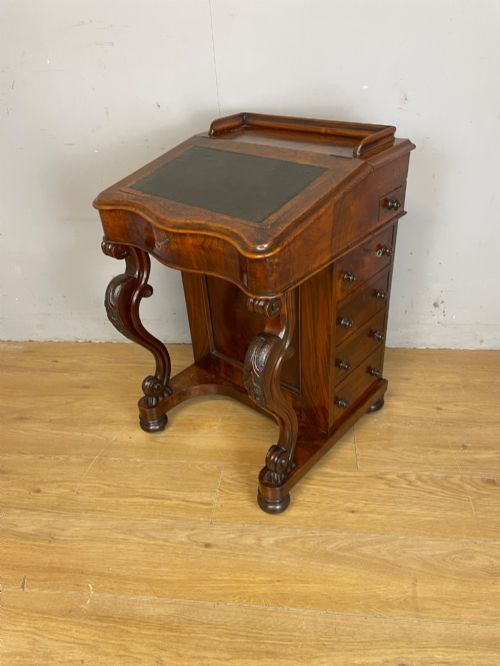
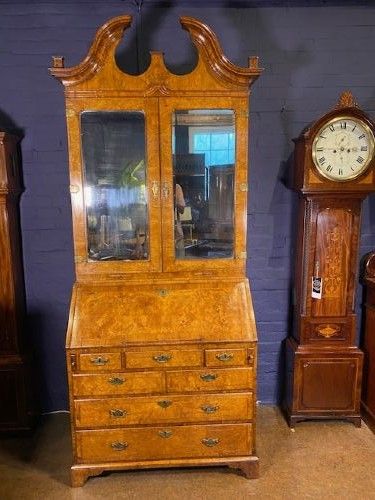
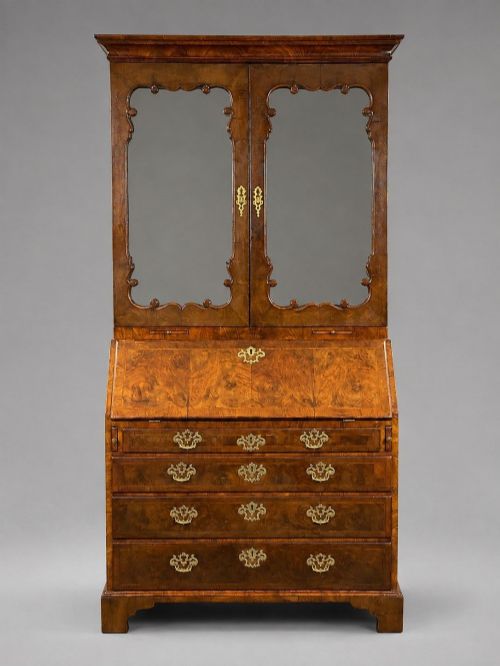
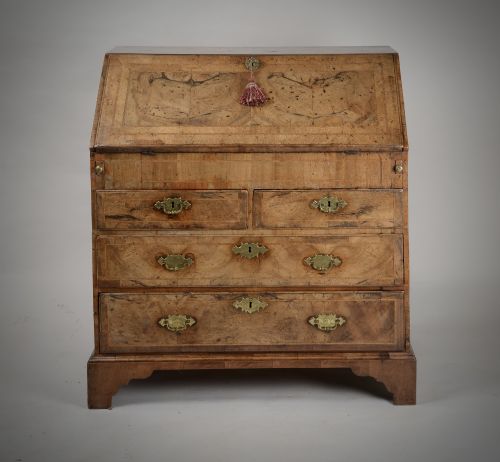
An antique walnut slanted desk encompasses various writing furniture forms, including fall-front bureaux, bureau bookcases, and compact Davenport desks. These pieces appear across periods from the seventeenth century through to the Edwardian era and the 1930s, reflecting shifts in domestic writing habits.
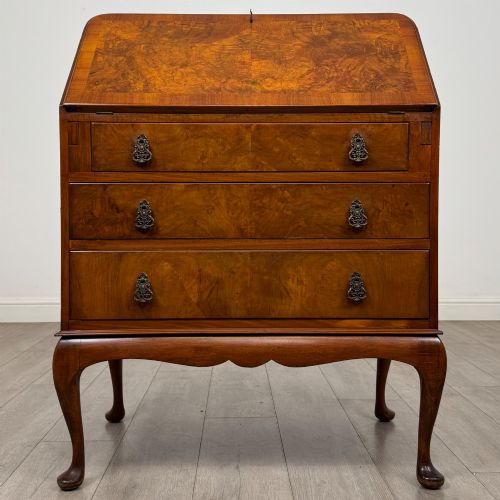
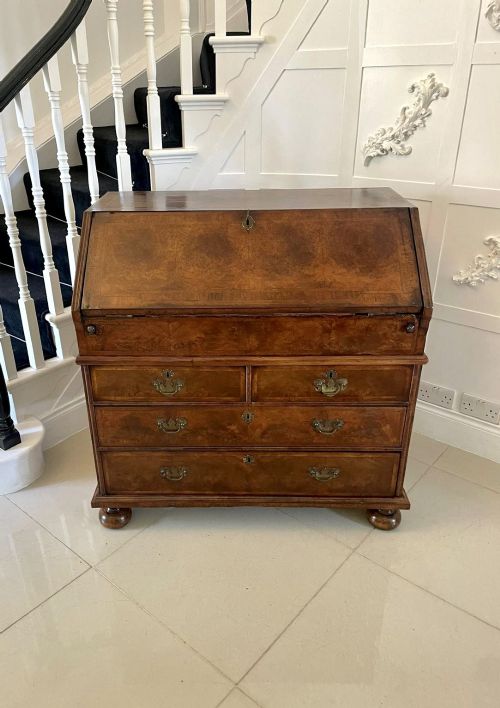
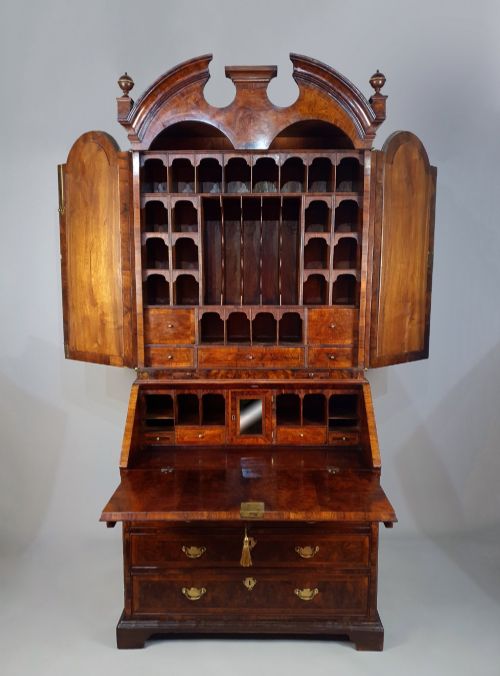
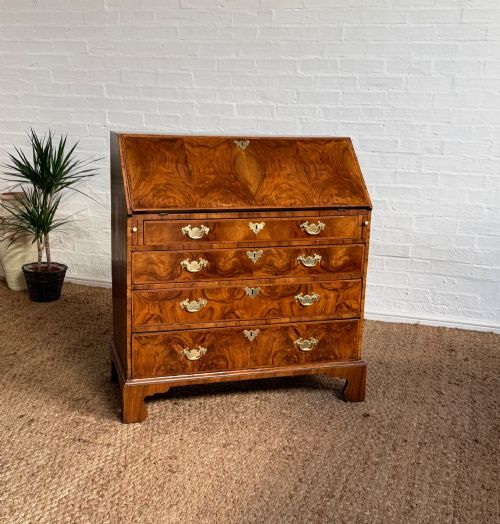
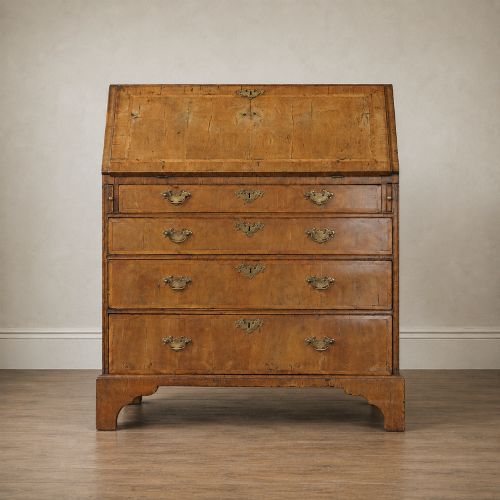
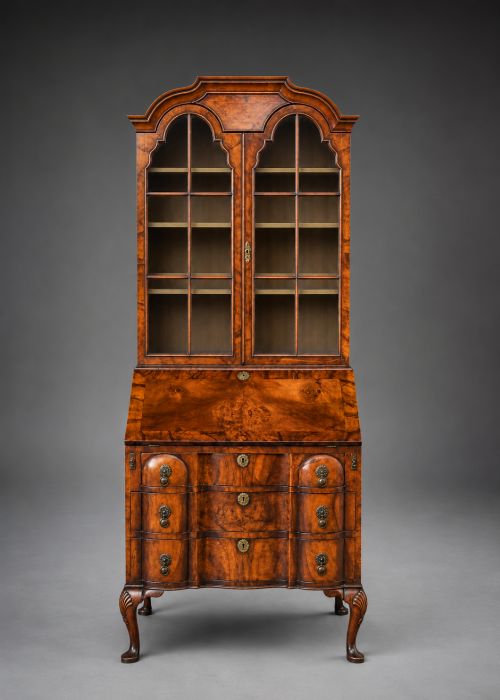
The most common formats on this page are standard bureaux featuring a sloping fall-front that opens to reveal internal pigeonholes and small drawers. Alongside these, larger bureau bookcases combine upper display shelving with lower writing cabinets, while smaller Davenport desks offer upright profiles with side-opening drawers.
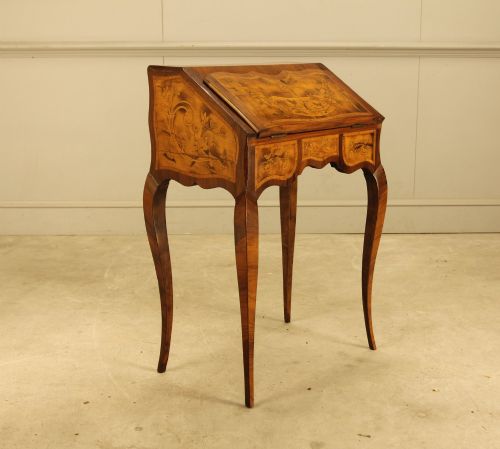
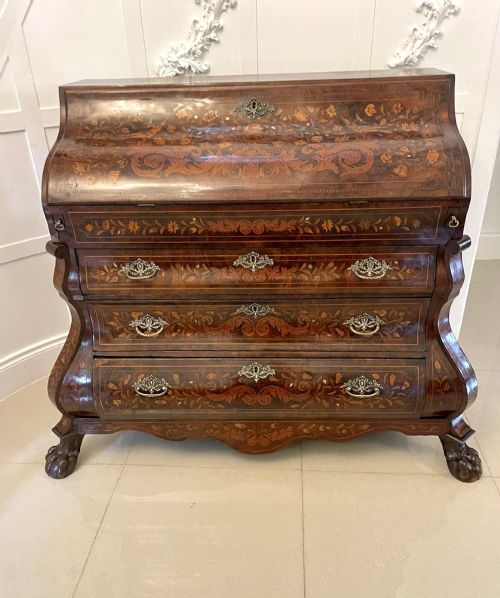
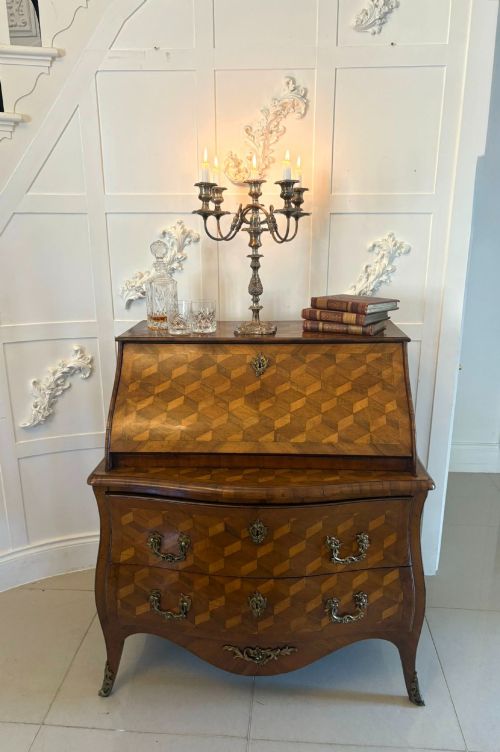
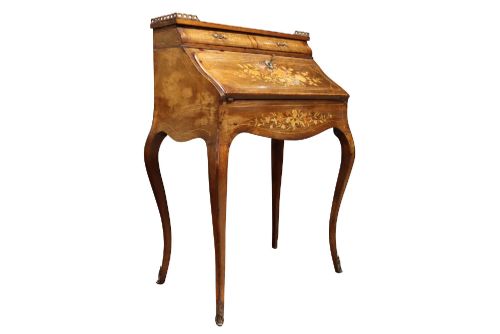
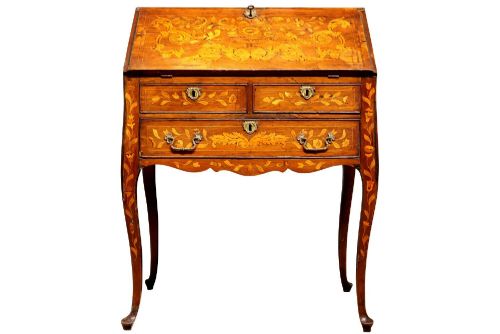
Origin and styling vary widely, spanning English Georgian examples, Dutch Baroque pieces, and French Louis XV style creations. Makers utilised regional aesthetic preferences, pairing straightforward English proportions with elaborate continental marquetry and parquetry.
Materials and construction methods
Cabinetmakers relied on solid walnut and figured veneers such as burr walnut to cover primary surfaces, often accentuating grain patterns with herringbone inlay or floral marquetry. Secondary timbers like oak provided internal strength for drawer linings and carcase structures.
Brass hardware, including escutcheons, drop handles, and hinges, fastened functional elements securely while contrasting against the dark timber tones. Leather writing inserts frequently lined the falling flap or writing surface, providing a smooth plane for ink work.
Specialised techniques such as bombe shaping and multi-part construction allowed makers to build complex, curved profiles on eighteenth-century pieces. Glazed doors on bookcase sections utilised individual glass panes set within slender timber framing.
Several desks conceal secret compartments behind sliding partitions, built for hiding private letters and coin purses from prying eyes.
Distinctions in craftsmanship and design
Quality rests upon the selection and matching of the timber veneer, where dense burr patterns and symmetrical grain alignment separate exceptional examples from plain surfaces. The complexity of the internal fittings, such as secret drawers, sliding wells, and pigeonhole configuration, also distinguishes finer pieces.
Structural harmony defines upper-tier examples, particularly in how the fall-front aligns with the fitted interior and how base stands support heavier upper sections. The precision of inlaid marquetry work and the retention of original brass handles contribute significantly to an item's standing.
Gillow & Co
The Antique Walnut Slanted Desk Glossary
- Bureau
- A writing cabinet featuring a sloping lid that drops down to form a desk surface. It usually encloses a fitted interior of small drawers and pigeonholes.
- Burr walnut
- Timber taken from a tree growth or burl, yielding a swirling, highly figured grain pattern prized for decorative veneer work.
- Marquetry
- The art of applying pieces of veneer to a structure to form decorative patterns and pictorial designs. Artisans often combined different woods and tinted veneers.
- Bonheur-du-jour
- A light ladies' writing desk featuring a small cabinet or set of shelves upon the upper surface. This form gained popularity during the nineteenth century.
- Davenport desk
- A compact Victorian writing desk featuring a sloping top and a bank of drawers opening to one side. The design maximised workspace in smaller rooms.
Antique Walnut Slanted Desk: Frequently Asked Questions
What is the difference between a bureau and a Davenport desk?
A bureau typically uses a sloping fall-front lid that opens downward toward the user to expose a fitted stationery interior. It stands on legs or a bracket base and offers a wide writing area.
In contrast, a Davenport desk is a compact Victorian invention featuring a slanted writing top that remains fixed while the drawers pull out from the side. This smaller footprint suited nineteenth-century drawing rooms.
How do I identify a piece from the Queen Anne period?
Queen Anne style walnut pieces, dating largely around the early eighteenth century, often showcase simple, elegant lines that rely on the beauty of figured wood rather than heavy carving. They frequently feature cabriole legs ending in pad feet and compact proportions.
Internal compartments in these pieces commonly include stepped pigeonholes and central well slides that conceal secret storage spaces beneath.
What are candle slides on a bureau bookcase?
Candle slides are thin pull-out boards located directly beneath the bookcase doors on tall bureau cabinets. In dimly lit rooms, owners pulled them forward to hold candlesticks, illuminating the working area below.
Their presence indicates an earlier Georgian or seventeenth-century origin where artificial lighting needed to be positioned close to the writing surface.
How should I care for an antique walnut writing surface?
Maintain walnut surfaces by applying microcrystalline wax sparingly to nourish the timber and protect the finish from moisture. Avoid placing items in direct sunlight or near heat sources to prevent veneer lifting.
If the desk has a leather writing insert, treat the hide with appropriate leather dressings and keep sharp metal objects away from the writing plane.