

Antique Upholstered Sofa
An antique upholstered sofa brings character to a room through traditional upholstery methods and rich nineteenth-century timber frames.
Antique Upholstered Sofa
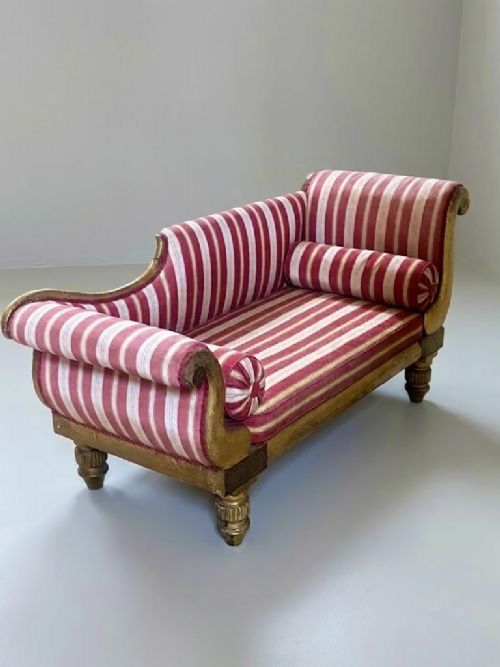
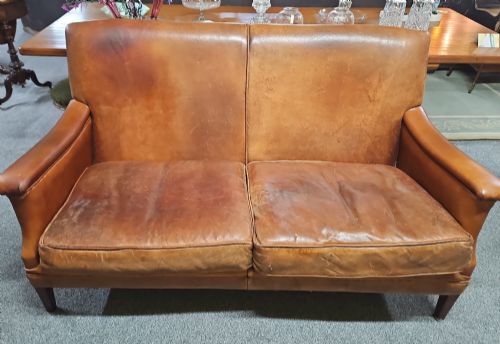
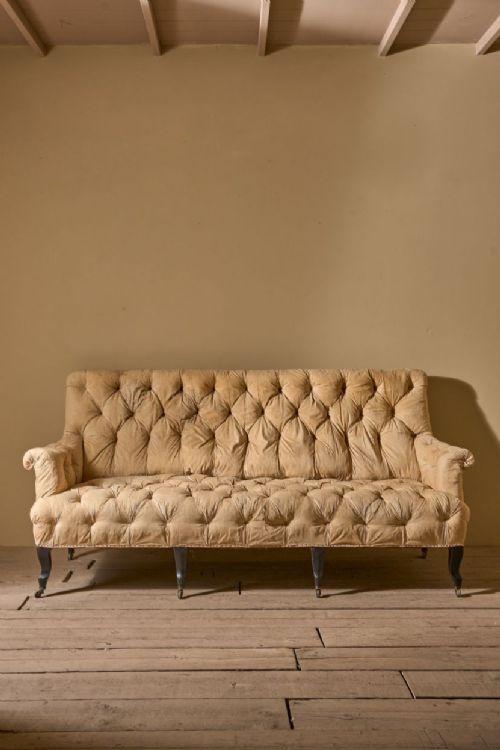
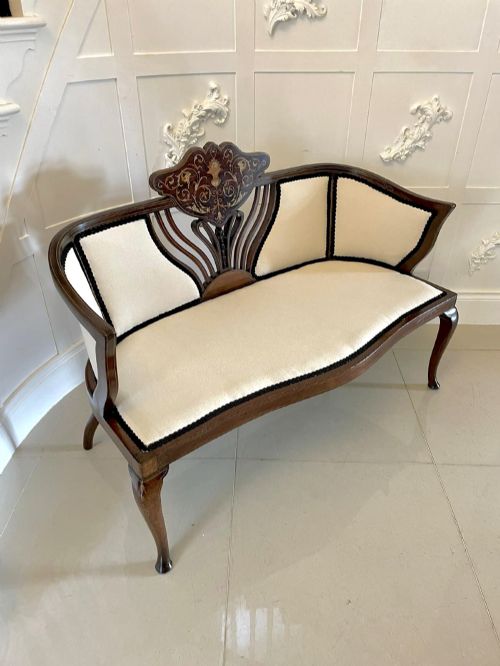
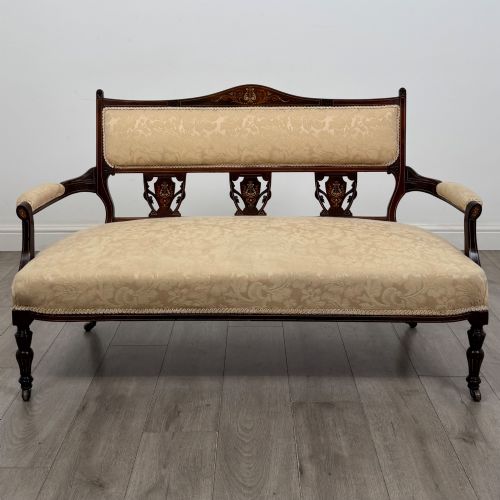
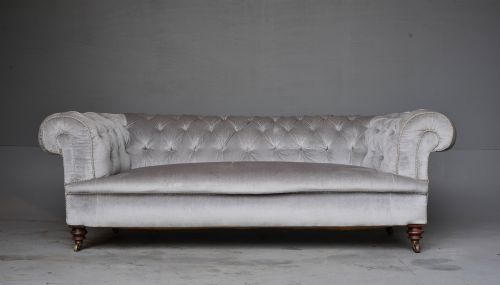
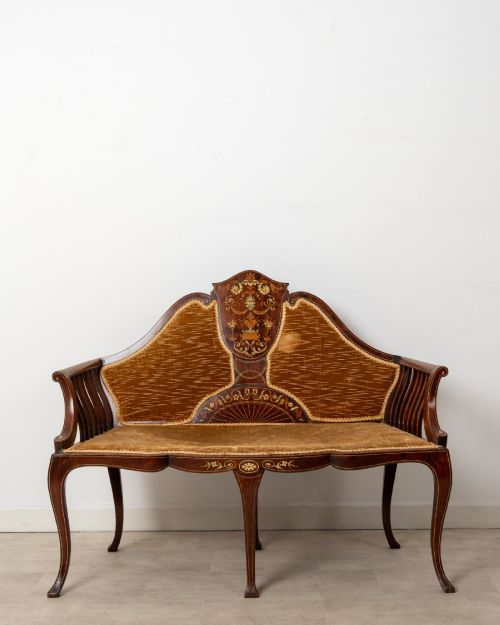
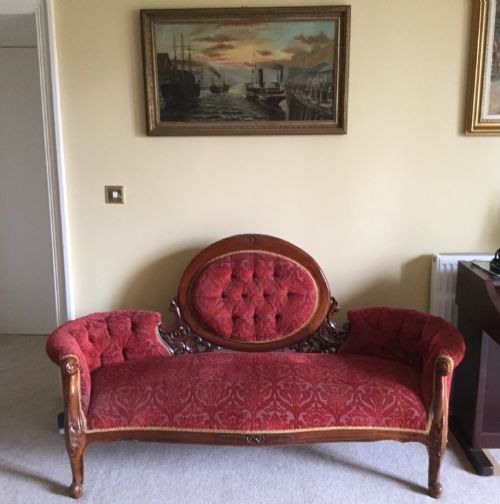
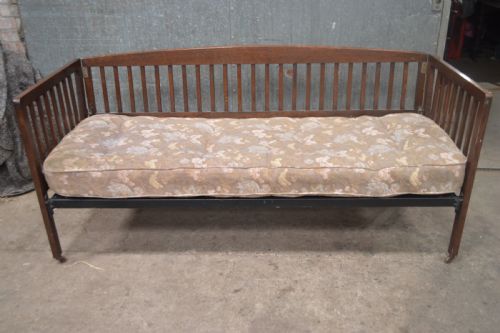
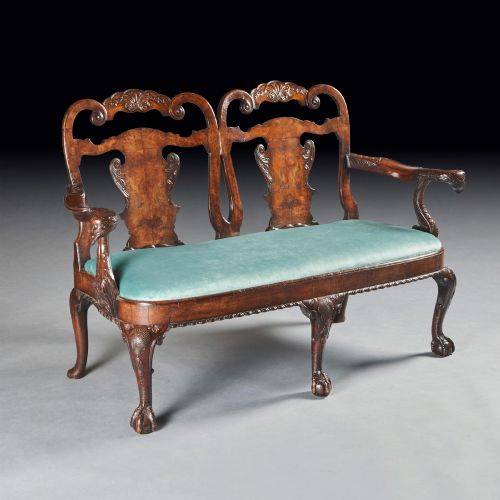
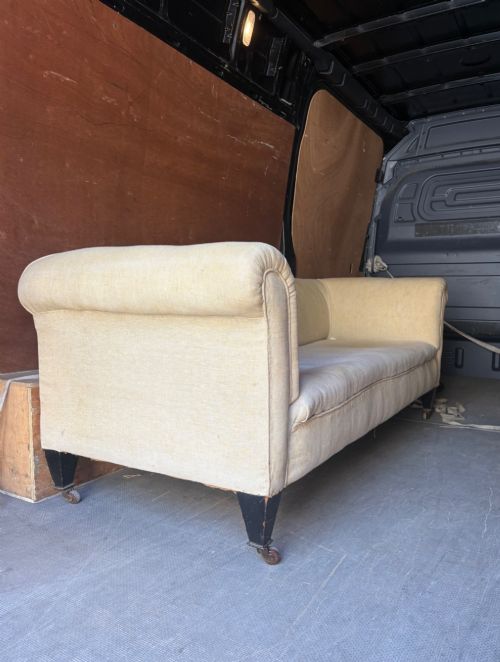
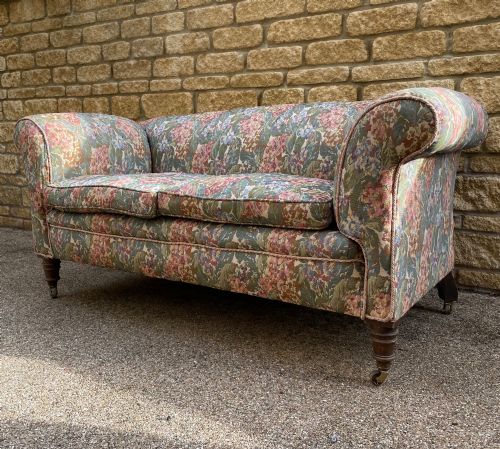
When searching for an antique upholstered sofa, buyers encounter a variety of forms including large Chesterfields, salon settees, and chaise longues originating predominantly from the nineteenth century and the Edwardian era. Victorian and Regency examples dominate the selection, showing carved mahogany, walnut, and rosewood frames beneath diverse textile coverings.
The category spans intimate two-seater couches and daybeds alongside substantial buttoned parlour suites. Frames often reflect specific historical revivals, ranging from Rococo curves to restrained George II and Georgian style proportions.
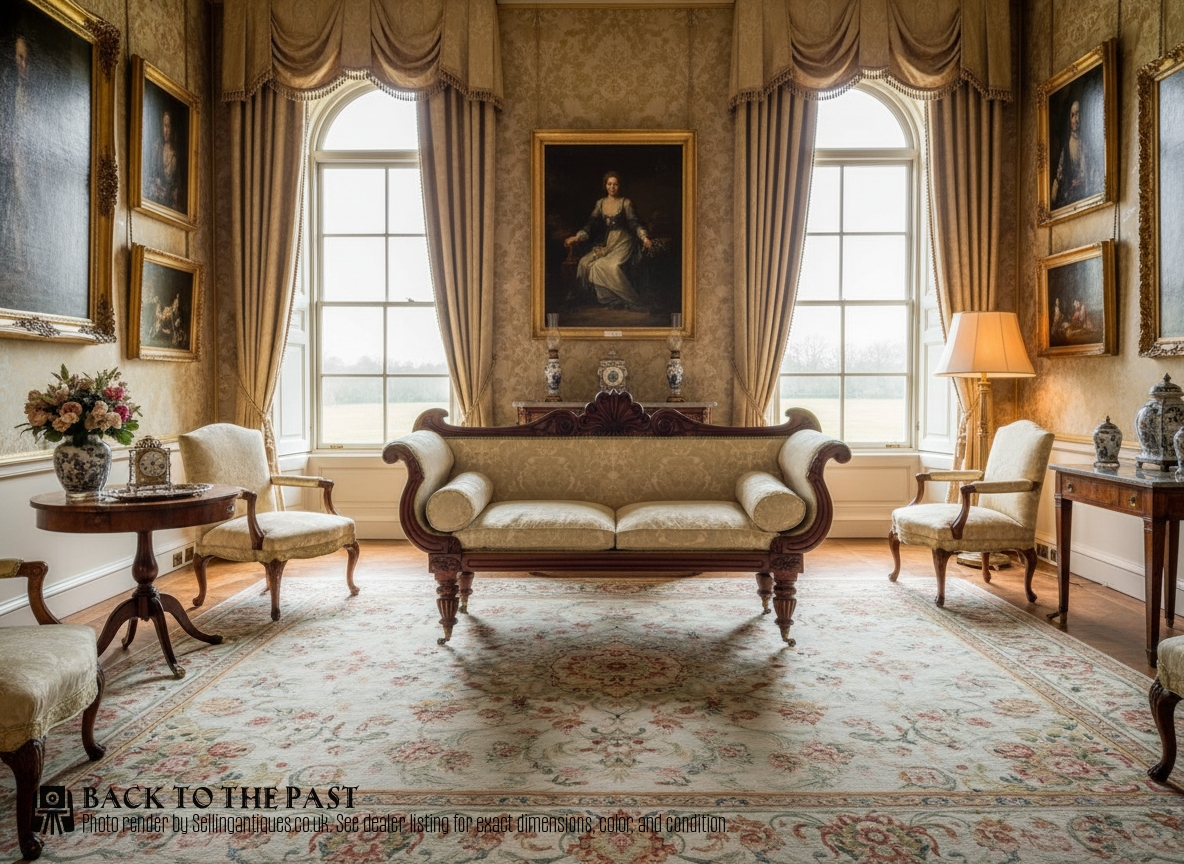
Materials and construction
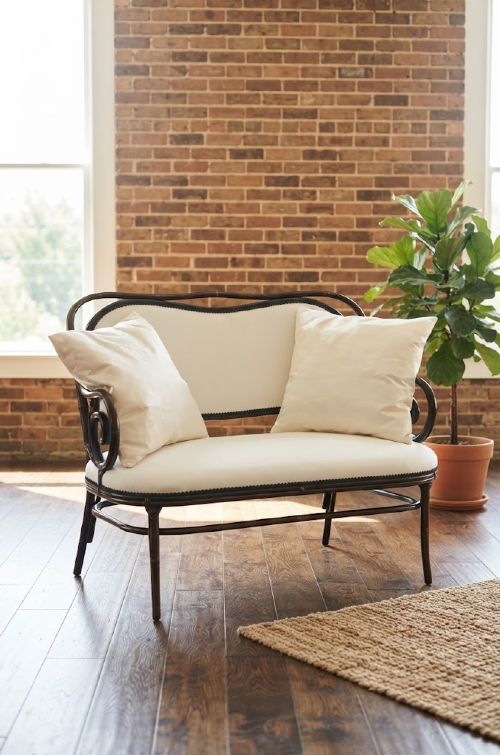
Frames rely on dense hardwoods such as mahogany, walnut, oak, and rosewood, frequently shaped with hand-carving or delicate marquetry inlay. Brass fittings and castors often support the timber legs, while bentwood and cast iron appear in specific late-period pieces.
Traditional upholstery builds up layers using sprung bases, horsehair, and calico lining before finishing with silk, velvet, brocade, or leather. Many pieces arrive re-upholstered in contemporary decorative fabrics while retaining their original internal framing.
Antique Upholstered Sofa Retail Price Guide 2026
Typical asking prices for upholstered sofa among the pieces listed under this phrase on Sellingantiques today, from the lower quarter to the upper quarter. They describe what is for sale here now, not the wider market.
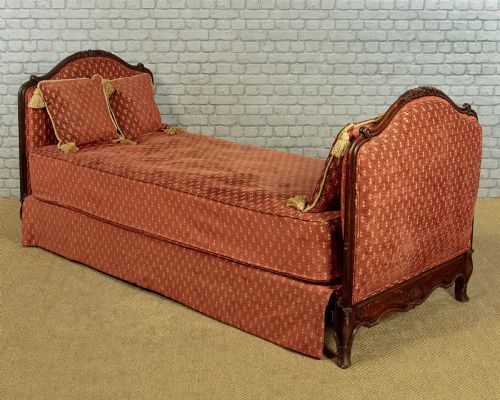
Some nineteenth-century daybeds include clever drop-down mechanisms designed for a quick afternoon nap without disturbing the parlour.
Evaluating craftsmanship
Quality rests in the rigidity of the timber frame and the depth of the carving, where crisp execution distinguishes workshops of high repute from standard provincial output. Superior joinery ensures the sofa remains structurally sound under weight over generations.
The integrity of the internal springing and the precision of the hand-stitched upholstery build determine the comfort and longevity of the piece. Maker attribution, through stamped signatures or documented design lineage, elevates certain examples significantly.
Howard and Sons·Gillows·Hampton and Sons·C. Hindley and Sons·Liberty London
The Antique Upholstered Sofa Glossary
- Chesterfield
- A deep-buttoned upholstered sofa traditionally featuring arms and back of the same height. This form offers formal upright seating supported by dense internal padding.
- Chaise Longue
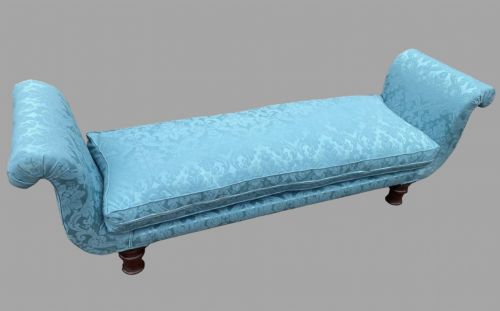
- An elongated upholstered chair designed for reclining, often featuring a single raised end and an open side. Originating in French fashion, it serves as a daybed or salon seat.
- Brocade
- A rich shuttle-woven fabric featuring raised decorative patterns, frequently utilised in historical upholstery. It adds texture and visual depth to period seating.
- Calico
- A plain-woven cotton fabric used historically as an underlying lining or inner cover for stuffing. It holds internal padding securely before the decorative top fabric is applied.
- Marquetry
- The art of applying decorative pieces of veneer to a structure to form intricate designs. This technique embellishes the mahogany and rosewood frames of many Edwardian and Victorian settees.
Antique Upholstered Sofa: Frequently Asked Questions
How do I date an antique upholstered sofa?
Dating relies on timber choice, frame style, and the underlying construction methods visible beneath the upholstery. Regency and Victorian eras display distinct leg shapes, carving styles, and wood selections that anchor each piece to a specific decade.
Examining secondary woods and hardware such as brass castors provides further clues. Comparative study of known maker signatures helps narrow the timeframe of manufacture.
Are these sofas comfortable for daily use?
Period sofas offer firm support due to traditional sprung bases and dense stuffing materials like horsehair. Many retain their original seating tension while providing adequate support for daily relaxation.
Re-upholstered examples often combine historical frame integrity with modern interior comfort. Buyers can expect a firmer sit compared to contemporary foam-filled furniture.
Can I reupholster a historic sofa?
Re-upholstery is a common practice that preserves the antique timber frame while updating the exterior fabric to suit modern interiors. Skilled craftspeople strip the piece down to the webbing and springs before applying new coverings.
Retaining the traditional internal layers ensures the sofa maintains its authentic profile and structural balance. Choosing appropriate period textiles maintains the historical character of the piece.