
Antique Tribal Trappings
Antique tribal trappings comprise woven and embroidered saddle covers, horse blankets, and storage bags created by nomadic groups across Central Asia and Persia.
Antique Tribal Trappings
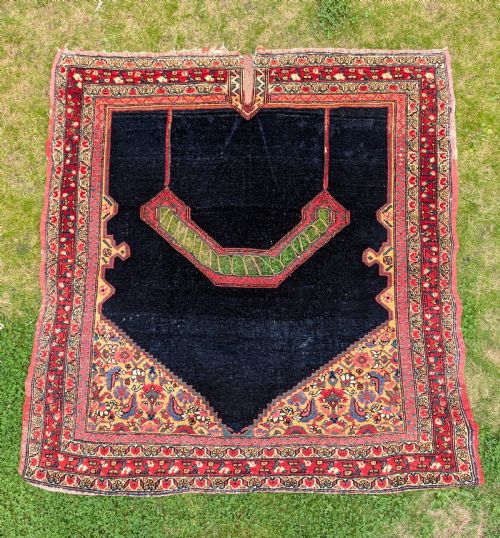
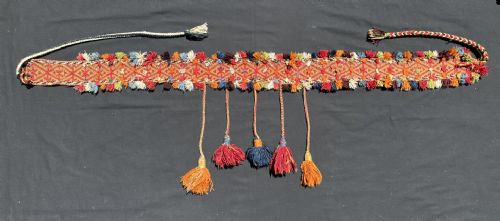
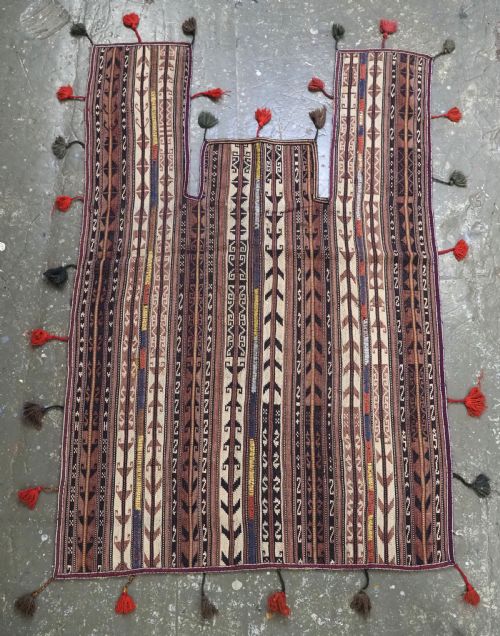
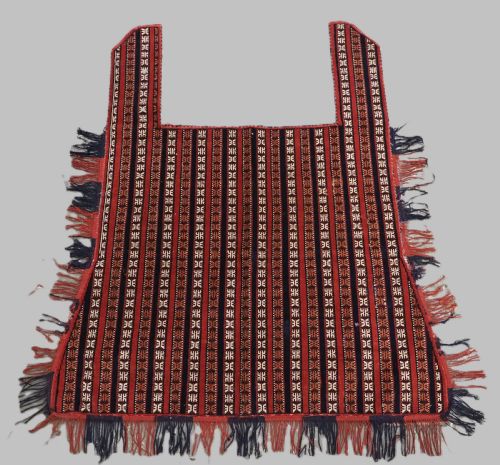
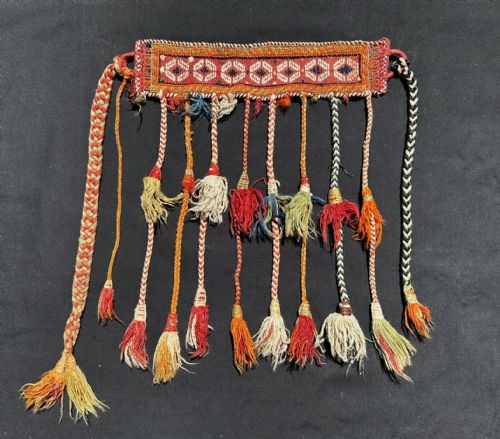
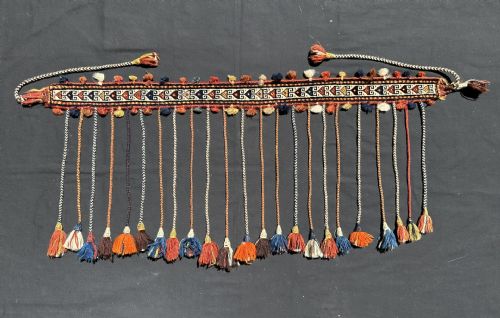
When searching for antique tribal trappings, collectors encounter functional items made by nomadic and village weavers for daily use or ceremonial occasions. The selection centres on nineteenth and early twentieth-century pieces, including horse covers, saddle rugs, storage bags, and tent trappings.
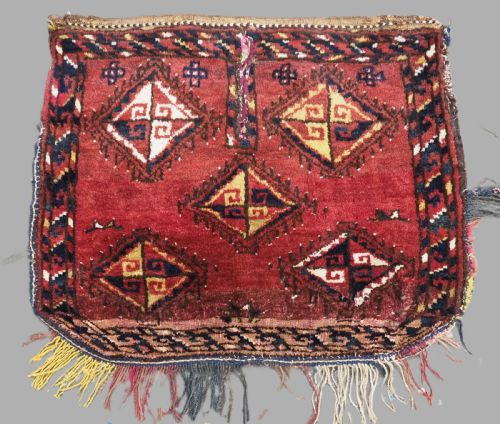
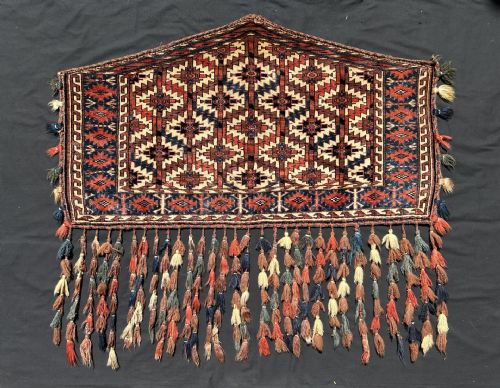
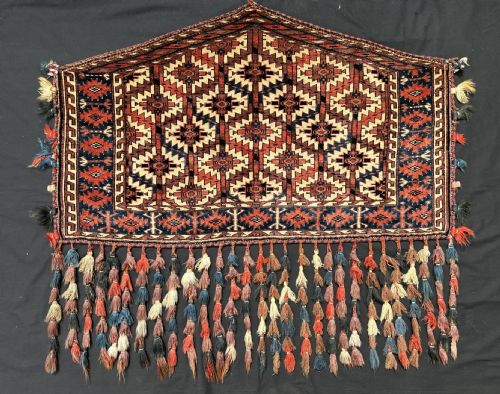
The most common forms on this page originate from Turkmen groups, such as the Yomut, Tekke, Ersari, and Saryk tribes, alongside Qashqa'i and Baluch nomads. These textiles served practical roles in camp life and transport, while specific items accompanied weddings and animal processions.
Materials and construction methods
Weavers relied principally on wool spun by hand, supplemented by cotton and silk foundations or decorative highlights. Natural dyes provided the palette, producing deep reds, browns, and ivory grounds across the woven and embroidered surfaces.
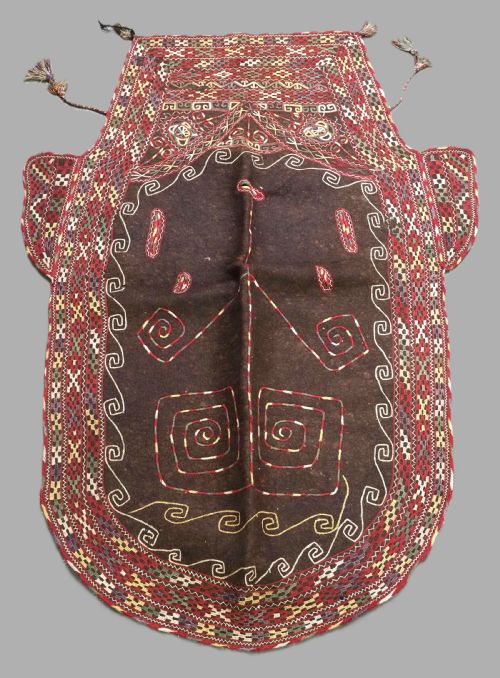
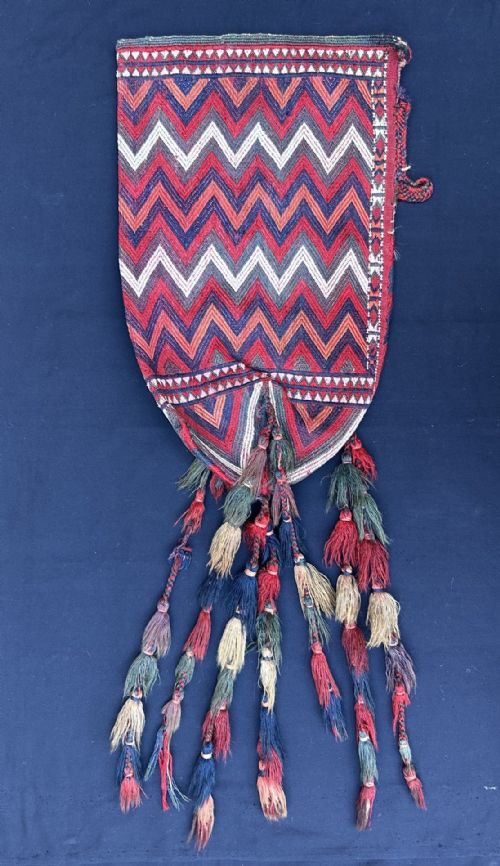
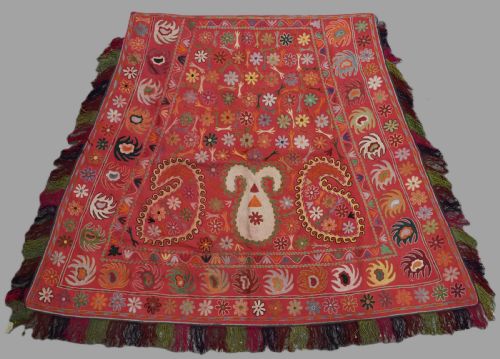
Techniques varied between piled knotting for rugs and torbas, flatwoven structures for utility bags, and detailed needlework on felted wool. Silk and cotton thread frequently added contrast to embroidered horse blankets and ceremonial tent trappings.
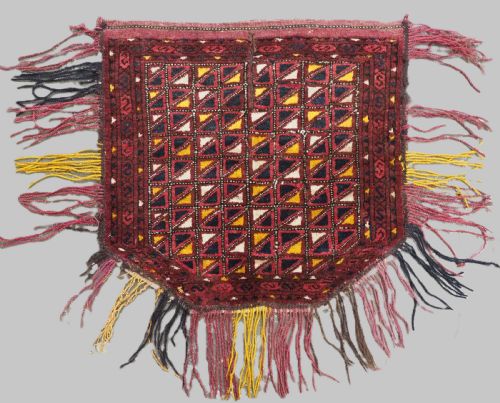
Listings feature wool, cotton, silk, and felted wool shaped into saddle covers, torbas, and asmalyks from the nineteenth and early twentieth centuries.
Factors determining quality
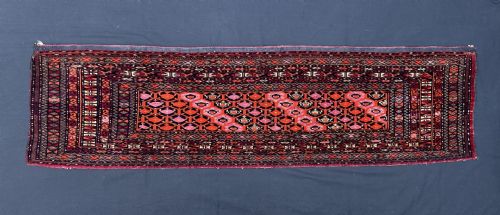
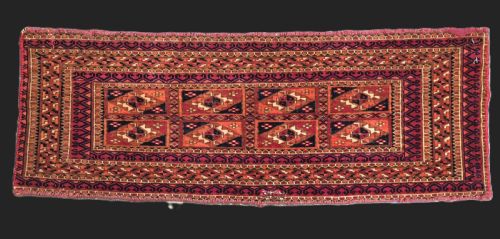
Quality rests on the precision of the weave, the clarity of tribal guls or motifs, and the depth of the natural dyes. Finer knot densities and balanced proportions elevate certain torbas and asmalyks above standard utility pieces.
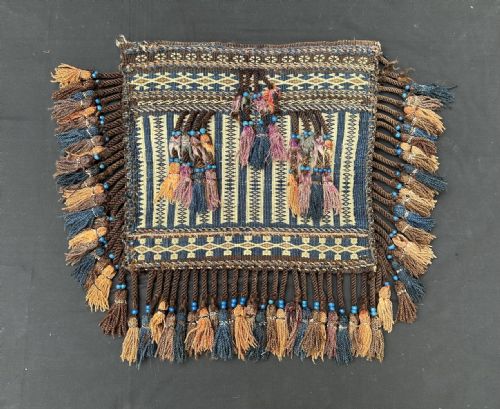
The survival of original backs, tassels, and selvedges marks superior examples. Pieces retaining their structural integrity and complete design fields demonstrate the skill of the original maker.
The Antique Tribal Trappings Glossary
- Asmalyk
- A large pentagonal trapping traditionally mounted on the flanks of a bride's camel during Turkmen wedding processions. These decorative textiles display distinct tribal motifs.
- Torba
- A small storage bag used inside nomadic tents for household possessions. They frequently feature repeating guls across the face.
- Gul
- A medallion pattern repeated across Turkmen rugs and trappings to identify specific tribes or clans. Each design variation holds traditional significance.
- Jollar
- A long, horizontal storage bag hung on the interior lattice walls of a yurt. They combine utility with decorative weaving.
- Mafrash
- A rectangular storage bag face or complete pouch used for bedding and household goods during nomad migrations.
Antique Tribal Trappings: Frequently Asked Questions
What are antique tribal trappings?
Antique tribal trappings are woven and embroidered textiles created by nomadic groups for animals, tents, and storage.
These items include horse blankets, camel trappings, saddle covers, and storage bags originating from Central Asian and Persian tribes during the nineteenth and early twentieth centuries.
How were horse covers used?
Nomadic groups placed ceremonial horse covers on animals during tribal gatherings, processions, and weddings.
Such pieces displayed the status and weaving skill of the tribe through intricate embroidery and specific symbolic designs.
How do you identify tribal groups?
Tribal attribution relies on specific design structures, colour palettes, and repeating motifs such as guls.
Weavers from groups like the Yomut, Tekke, Ersari, and Qashqa'i utilised distinct structural traits and wool qualities unique to their regions.
Where should these textiles be placed?
Smaller torbas and storage bags suit wall display or placement on flat surfaces where the weave remains protected.
Saddle rugs and larger covers require stable conditions away from direct sunlight to preserve natural dyes and wool fibres.