





Handwoven Wool Tassel Hanging
These handwoven wool tassel hanging pieces are nomadic tribal trappings and bags brought onto walls, offering tactile warmth and cultural history.
Handwoven Wool Tassel Hanging
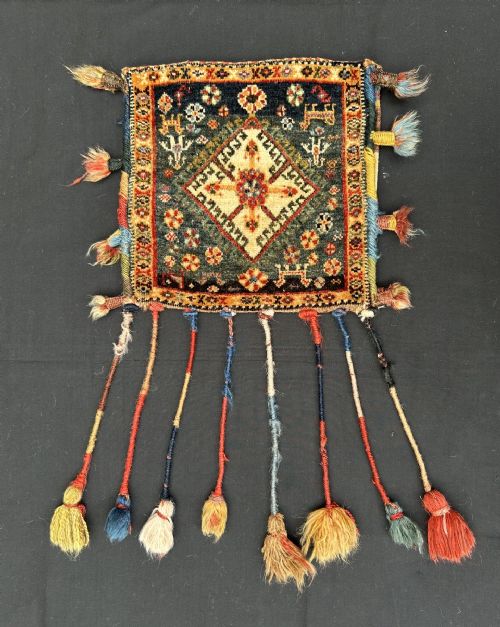
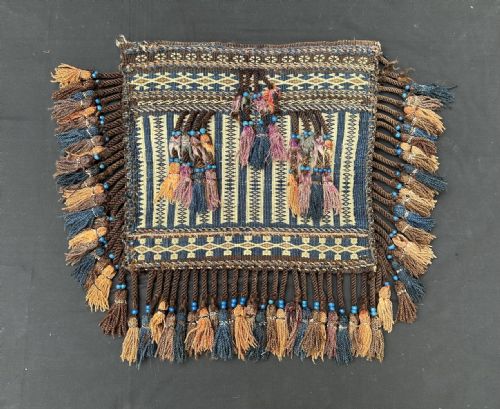
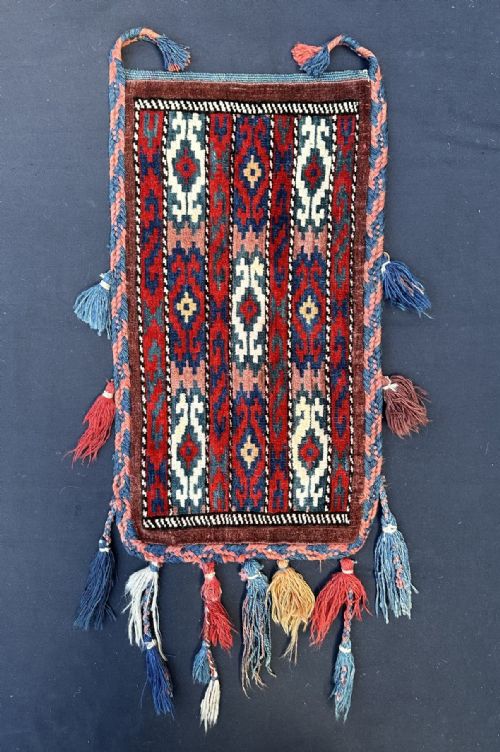
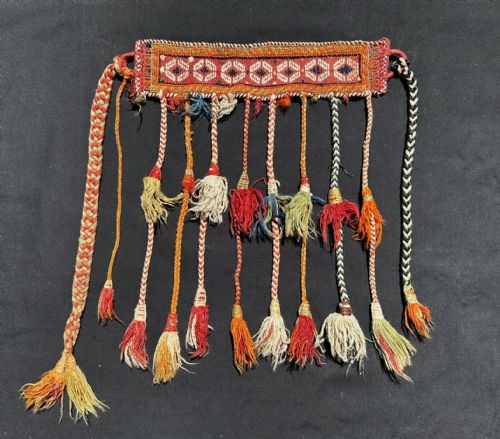
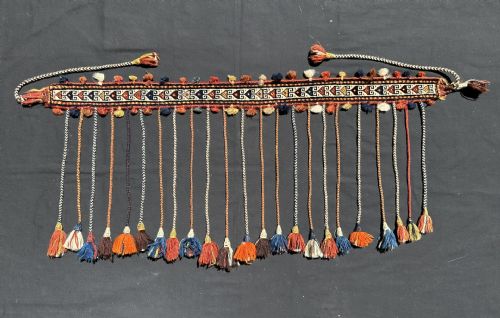
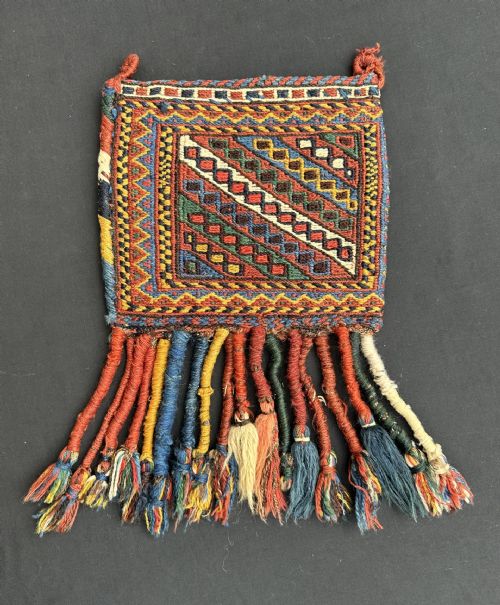
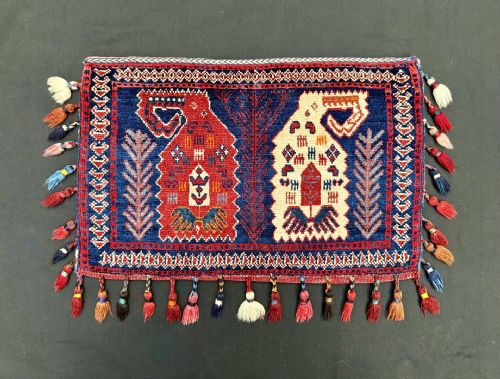
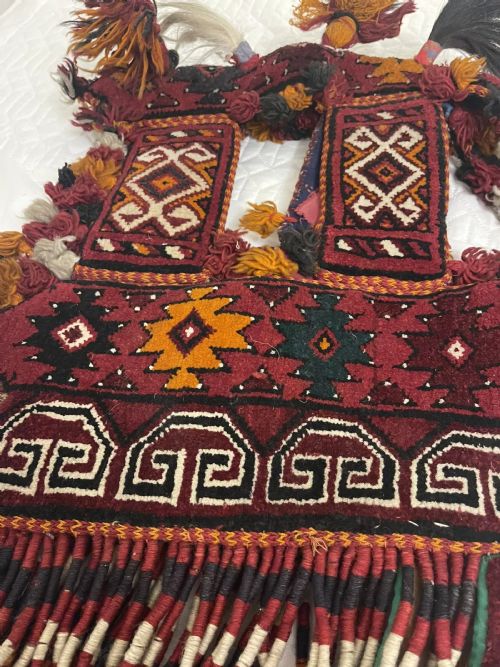
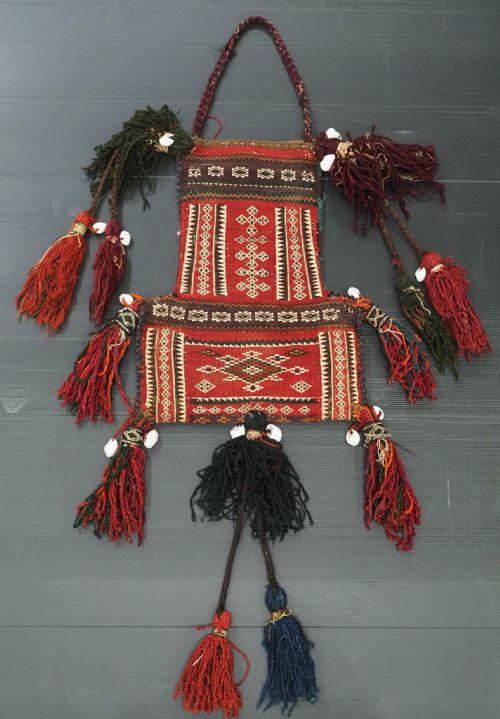
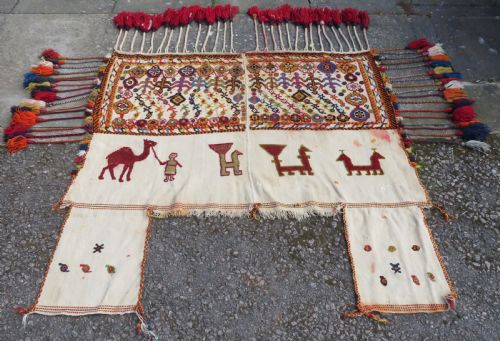
A handwoven wool tassel hanging brings nomadic tribal artistry directly onto interior walls, originating primarily from Persian, Afghan, and Central Asian regions. These pieces take various historical forms, including vanity bags, spindle bags, salt bags, animal decorations, and tent door hangings.
The objects stem from distinct tribal groups such as the Qashqai, Baluch, Yomut, and Afshar, spanning production dates from the late nineteenth century into the early twentieth century. Most examples function as repurposed storage pouches, horse trappings, and wedding garments that feature elaborate wool weaving and suspended tassels.
Tribal and nomadic styles dominate this selection, reflecting the utilitarian and ceremonial lives of makers across Persia, Afghanistan, and Turkmenistan. Each textile preserves specific regional patterns, weaving structures, and decorative flourishes characteristic of its originating tribe.
How they were made
These textiles rely on handwoven wool foundations, frequently combined with cotton elements for structural stability. Artisans utilise natural dyes to colour the wool, producing deep, enduring hues across the ground weaves and geometric motifs.
Decoration incorporates physical embellishments integrated directly into the textile structure, including glass beads and cowrie shells. Tassels are securely anchored to the edges and corners, completing the traditional nomadic trappings.
Some hanging pieces started life storing salt or horse gear before finding a quiet retirement on a modern wall.
What varies in quality
The refinement of the wool spinning and the tightness of the weave set individual pieces apart. Finer examples display precise geometric execution and complex structural patterning across the bag faces and hanging borders.
The condition and completeness of original embellishments, such as cowrie shells, glass beads, and wool tassels, influence the character of each piece. Intact structures and rich natural dye variations distinguish the most compelling nomadic items.
The Handwoven Wool Tassel Hanging Glossary
- Namakdan
- A traditional tribal salt bag used by nomadic groups for storage, often featuring a narrow neck and decorated face suitable for hanging.
- Kapunuk
- A doorway tent hanging or portiere produced by Turkoman tribes, designed to frame the entrance of a nomadic dwelling.
- Cowrie Shells
- Small marine shells sewn onto tribal textiles as protective amulets and decorative ornaments.
- Natural Dyes
- Colourants derived from plant and mineral sources, utilised by weavers to achieve rich, light-fast wool shades.
Handwoven Wool Tassel Hanging: Frequently Asked Questions
What is a handwoven wool tassel hanging?
It is a repurposed nomadic textile, such as a storage bag or animal trapping, adapted for wall display.
These objects originate from tribal groups in Persia, Afghanistan, and Central Asia during the late nineteenth and early twentieth centuries.
How were these tribal bags used originally?
Nomadic communities used them inside tents to store personal items, salt, or spindle equipment.
Others served as ceremonial horse trappings, camel decorations, or doorway portieres during weddings and daily migrations.
How do I hang a textile safely?
Mount the piece using a custom sleeve or non-damaging textile clips that distribute the weight evenly.
Avoid direct sunlight to protect the natural dyes and wool fibres from fading over time.
Which tribes made these hanging pieces?
Weavers from the Qashqai, Baluch, Yomut, and Afshar groups produced the majority of these decorated textiles.
Each tribe applied distinct regional patterns, colour palettes, and weaving techniques to their utilitarian objects.