



Nomadic Woven Tassels
Nomadic woven tassels are tactile fragments of tribal life, bringing organic texture and history into a modern interior.
Nomadic Woven Tassels
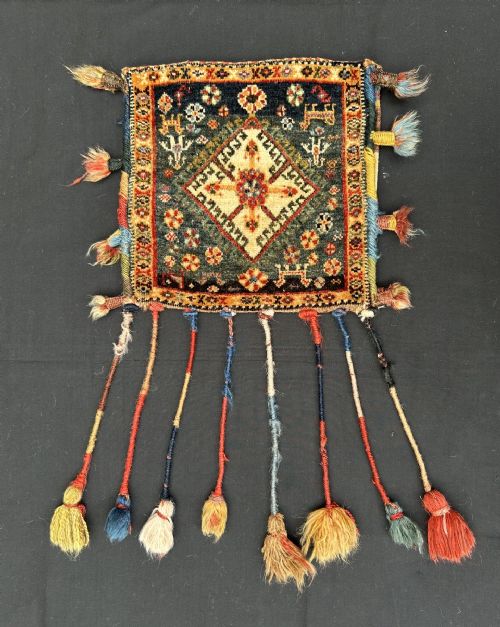
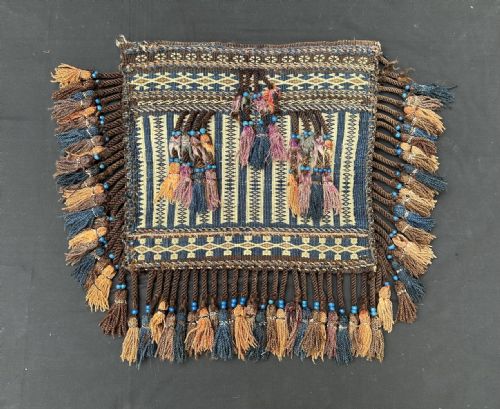
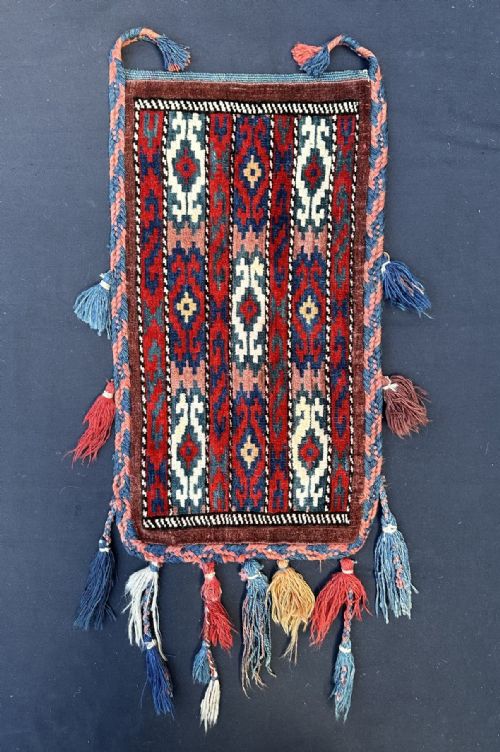
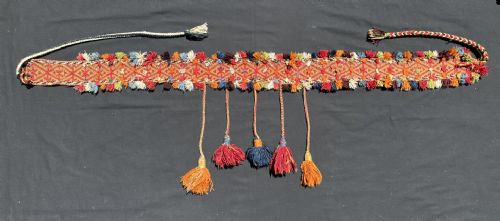
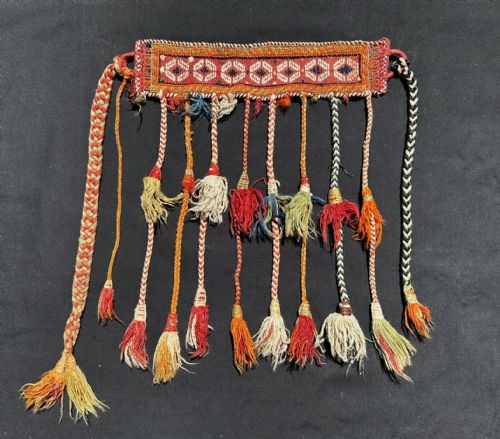
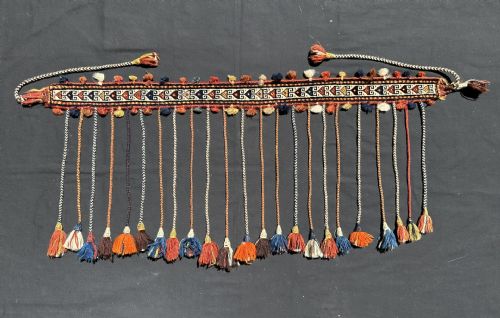
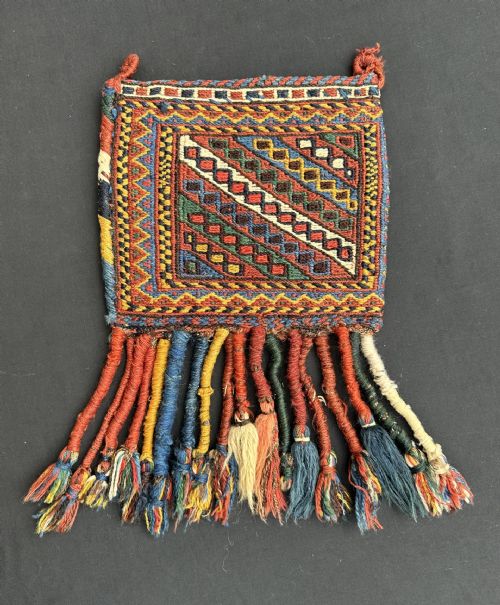
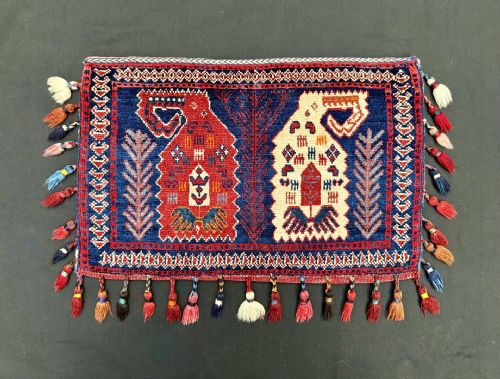
Nomadic woven tassels appear primarily on functional animal trappings, storage pouches, and tent furnishings originating from Persian, Turkmen, and Afghan tribal groups. These pieces date from the late nineteenth century through to the early decades of the twentieth century, reflecting the material culture of pastoral communities.
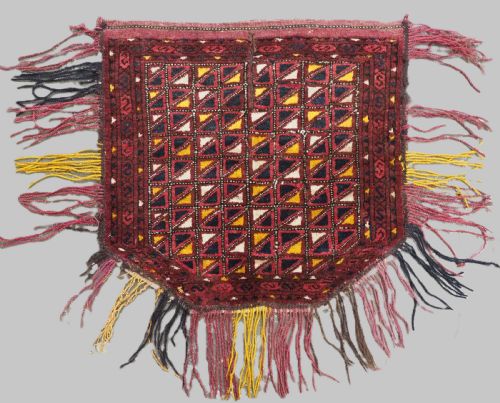
The objects carrying these textile elements include vanity bags, saddle covers, horse decorations, and camel headdresses. Buyers most frequently encounter these items preserved as fragments or complete bag faces and trappings rather than standalone decorative ornaments.
Originating from regions such as the Fars Province of Persia, the Trans-Caspian Steppes, and Afghanistan, these items carry the distinct weaving traditions of specific confederacies and tribes. Each piece serves as a physical record of utilitarian household and animal ornamentation from nomadic societies.
Materials and construction
The construction relies fundamentally on hand-spun wool and cotton, providing a durable foundation for both flat-weave and pile structures. Artisans incorporated natural dyes to achieve rich colour palettes across the textile surfaces.
Additional decorative elements such as glass beads, leather, wood, and cowrie shells are frequently integrated into the weaving and tassel structures. These supplementary materials provide textural contrast and cultural significance to the trappings and bags.
Listings span the decades from 1870 to 1930, originating from Persian, Turkmen, and Afghan tribal groups.
Assessing the pieces
Quality rests heavily on the integrity of the weave and the preservation of the original tassels, trims, and hanging attachments. Complete examples retaining their original structural components hold greater documentary value than isolated fragments.
The vibrancy and depth of the natural dyes, alongside the fineness of the wool work, dictate the visual strength of the piece. Superior examples demonstrate skilled tribal execution and careful retention of secondary materials like shells and beads.
The Nomadic Woven Tassels Glossary
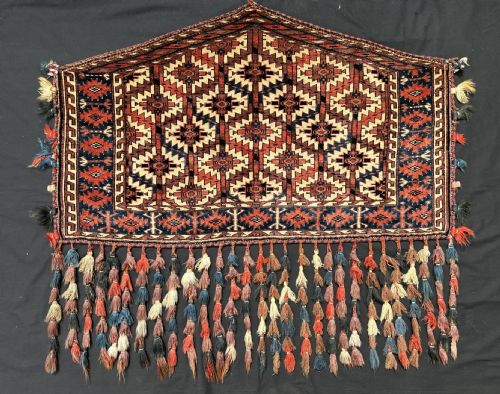
- Asmalyk
- A pentagonal trapping traditionally used in Turkmen weddings, often hung on the flanks of a bride's camel. These textiles frequently feature elaborate geometric patterns and tassel fringes.
- Torba
- A small storage bag produced by Turkmen and other Central Asian tribes for domestic use inside a tent. They are typically wider than they are tall and display characteristic tribal motifs.
- Namakdan
- A specialised salt bag woven by nomadic groups, notable for its bottleneck shape designed to prevent rock salt from spilling during migration. They often feature intricate flat-weave or pile surfaces.
Nomadic Woven Tassels: Frequently Asked Questions
What are nomadic woven tassels attached to?
These tassels are typically attached to utilitarian tribal items such as saddle covers, horse blankets, camel headdresses, and storage bags.
Nomads created these trappings for domestic use and animal ornamentation during migrations across Persia, Central Asia, and Afghanistan.
How old are these woven pieces?
The pieces seen here generally date from the late nineteenth century through to the early twentieth century, spanning periods from the eighteen-seventies to the nineteen-thirties.
This era captures the active period of traditional tribal weaving before sedentary influences fully altered local craftsmanship.
Which tribes made these textiles?
Production is attributed to various tribal groups including the Qashqa'i confederacy, Yomut and Ersari Turkmen, Afshar nomads, and Baluch communities.
Each group utilised distinct weaving structures, dye palettes, and decorative additions like cowrie shells and glass beads.
How can I display them at home?
Smaller items like vanity bags and hanging ornaments work well mounted on walls as textile art or displayed on flat surfaces.
Larger trappings and covers can be integrated into interiors as cushion arrangements, draped over furniture, or hung as distinct decorative wall textiles.