


Antique Table Salt Pots
These antique table salt pots bring tactile history to the dining table, offering miniature craftsmanship in silver, glass and plate.
Antique Table Salt Pots
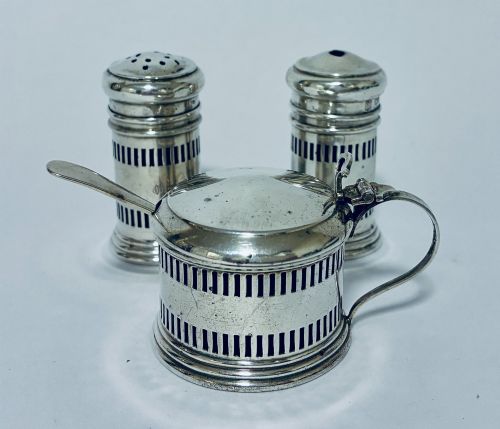
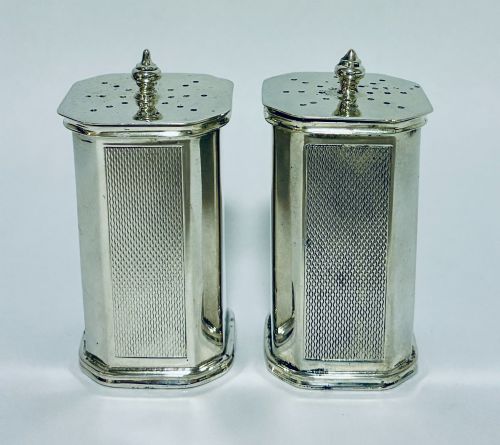
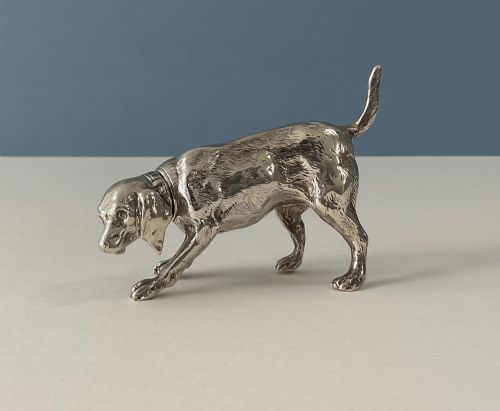
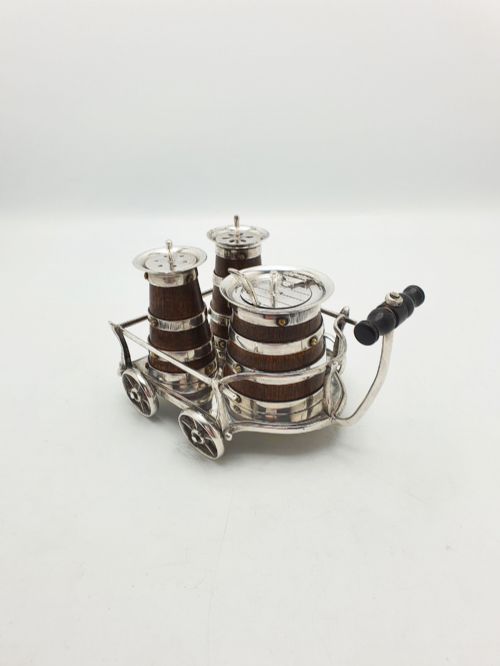
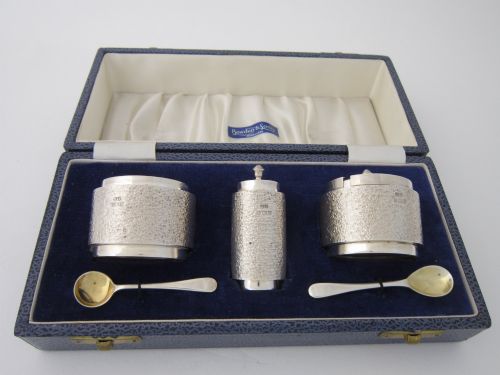
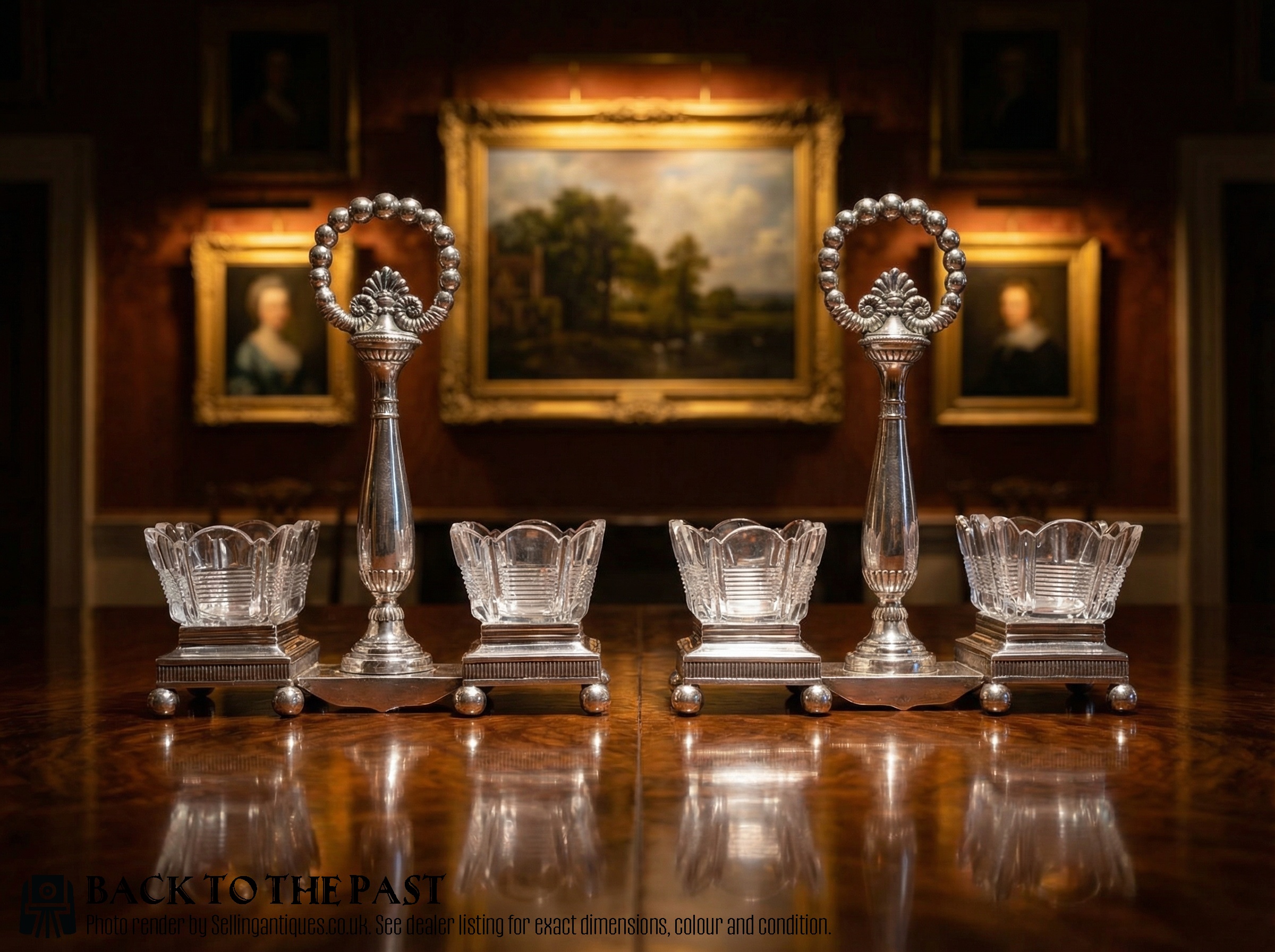
When you search for antique table salt pots, you encounter a specialised domain of dining table accessories spanning the Victorian, Edwardian and Art Deco periods. These items range from simple open salt cellars paired with spoons to elaborate multi-bottle cruet stands and playful figural novelties.
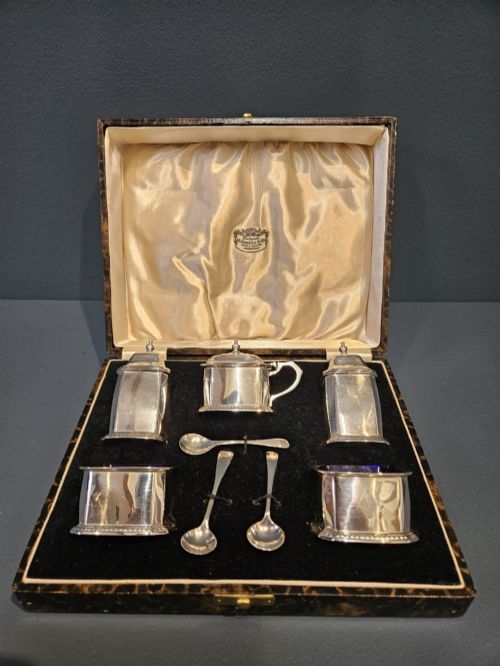
The pieces on this page heavily reflect late nineteenth and early twentieth century manufacturing, with Victorian and Edwardian examples dominating the selection. You will frequently find them grouped in matched condiment sets alongside mustard pots and pepper shakers.
Standards of Craftsmanship
Quality rests upon the crispness of the casting in figural pieces and the depth of hand-cut facets in the glassware. Heavier gauge silver and well-preserved hallmarks indicate superior workshops.
The integrity of the original glass liners and the crisp execution of engraved details distinguish finer sets from standard production pieces.
Current listings feature sterling silver, silver plate, cut glass and cobalt glass spanning the Victorian, Edwardian and Art Deco periods.
Goldsmith & Silversmith's·Bricks & Sons·Sampson Mordan·Wilmot Manufacturing Co.
The Antique Table Salt Pots Glossary
- Cruet set
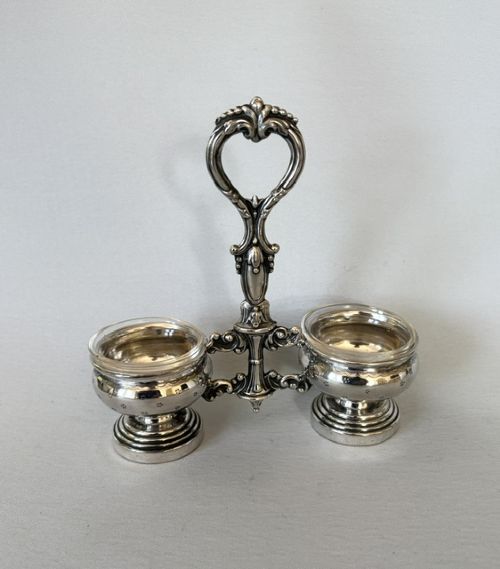
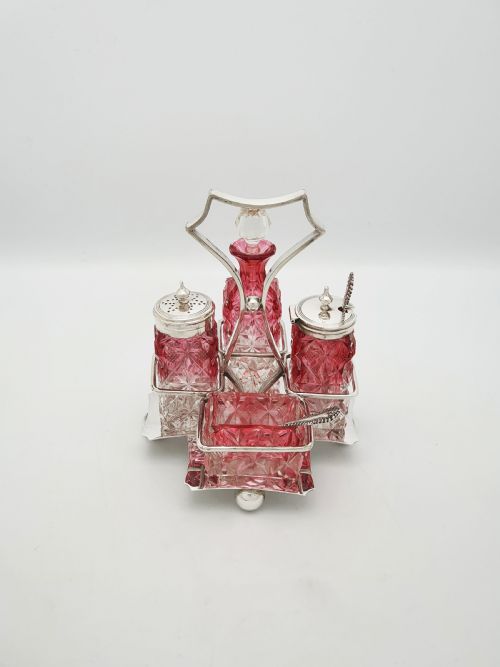
- A fitted stand holding multiple condiment bottles or pots for the dining table. These frames often utilise silver plate or solid silver.
- Open salt
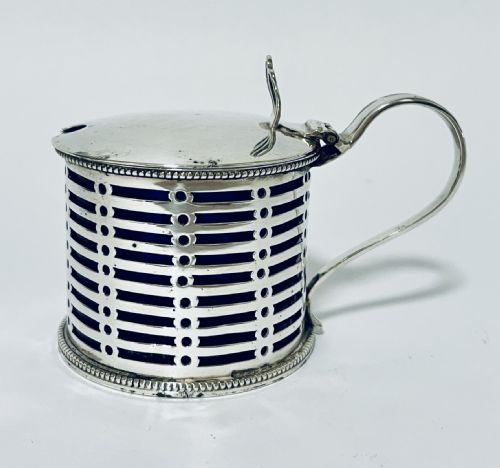
- A small open bowl designed to hold loose salt, typically used with a miniature spoon before the invention of the salt shaker. They frequently feature blue glass liners.
- Pepperette
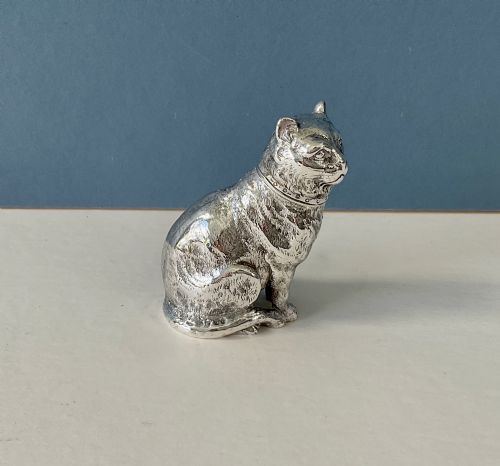
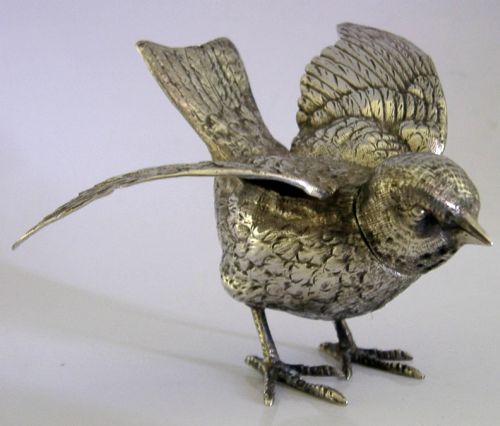
- A small shaker designed for dispensing ground pepper. Victorian examples frequently took the form of birds and animals.
- Cranberry glass
- A rich red glass created by adding gold chloride to the molten batch. It appears frequently in Edwardian cruet sets.
Antique Table Salt Pots: Frequently Asked Questions
What is an antique salt cellar?
An open salt cellar is a small vessel designed to hold salt on the dining table before free-flowing salt and shakers became common. Diners used a miniature spoon or pinched the salt directly from the dish.
These pieces usually date from the Victorian and Edwardian eras and often feature removable glass liners in cobalt or clear cut glass.
How do I clean antique silver salt pots?
Clean sterling silver and silver plate gently with a dedicated silver cloth and warm soapy water. Avoid harsh dips that strip the natural age and patina from the metal.
Take care to remove glass liners before cleaning so moisture does not become trapped against the metal or lining fabrics.
What is a cruet set?
A cruet set is a collection of condiment containers held within a metal frame or stand. They typically house bottles for oil and vinegar alongside pots for mustard, pepper and salt.
These sets were centrepieces for formal dining tables during the nineteenth and early twentieth centuries.
Why do salt pots have blue glass liners?
Salt is highly corrosive and will pit or damage silver over time if left in direct contact with the metal. Cobalt blue glass liners provided a protective barrier while adding a decorative flash of colour.
Craftsmen fitted these removable inserts snugly inside open silver salt cellars to preserve the metalware.