


Pair Salt Dips
Pair salt dips are miniature vessels for the dining table, and finding a matching duo brings both period character and traditional elegance to a formal setting.
Pair Salt Dips
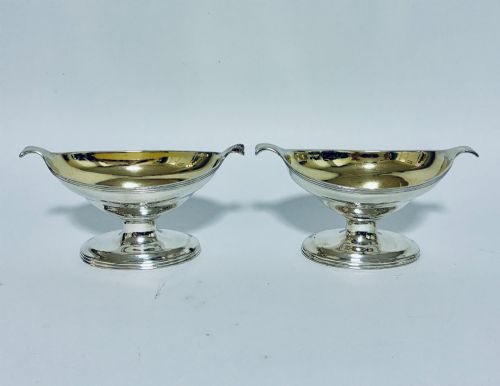
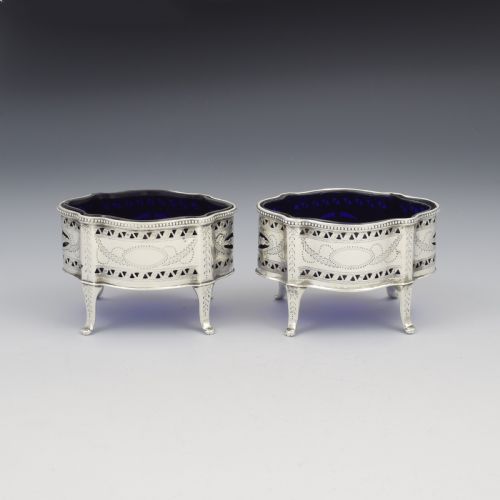
Pair salt dips, commonly catalogued as salt cellars or table salts, are small vessels designed to hold loose salt at the dining table before the widespread use of table shakers. When you search for pair salt dips on this page, you encounter matching duos spanning the Georgian, Victorian, and Edwardian eras.
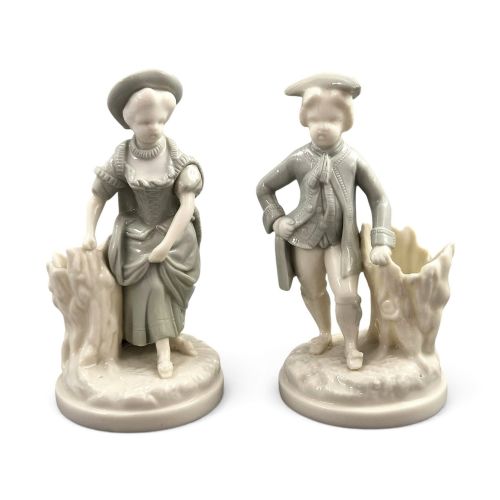
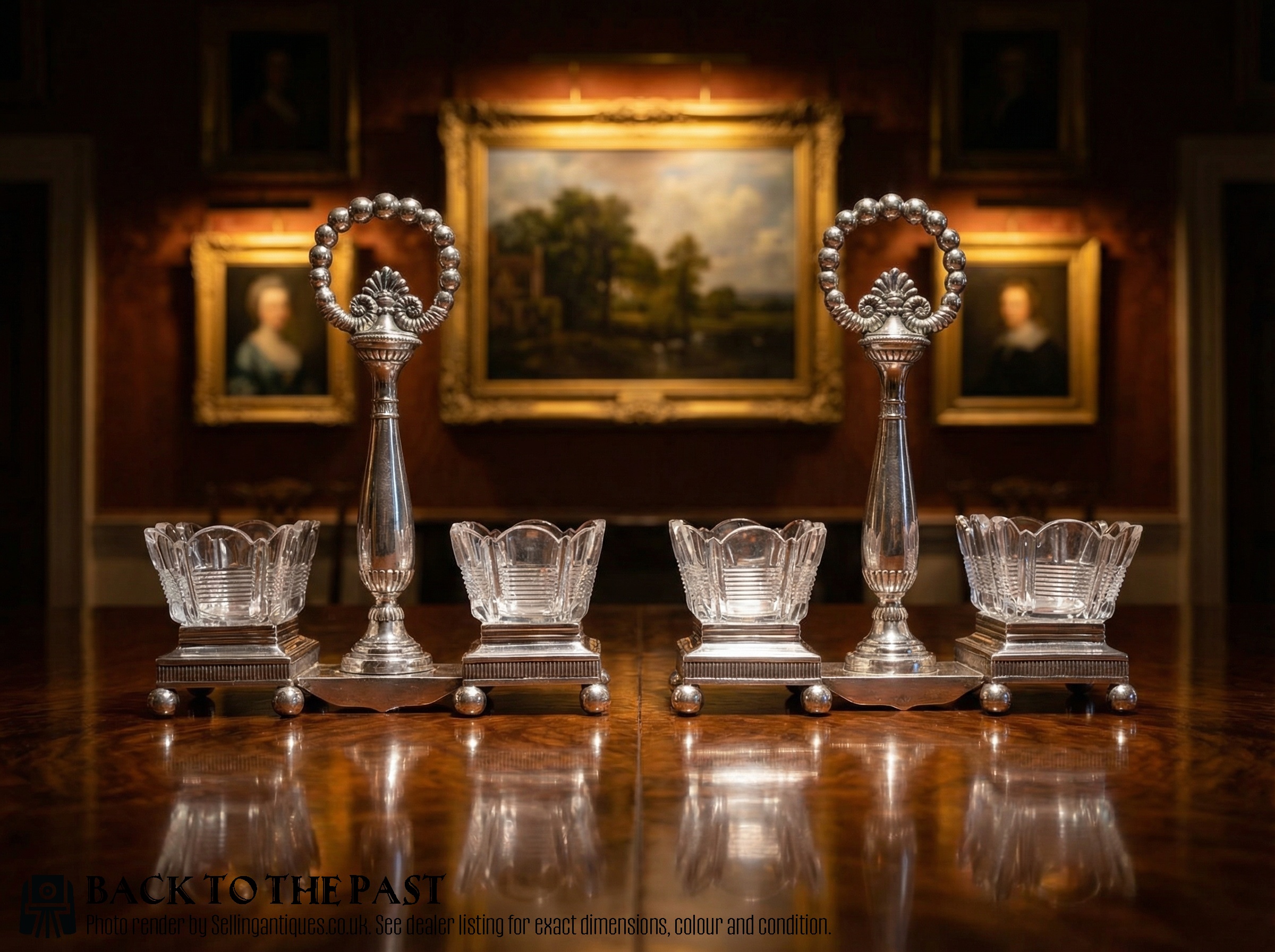
The selections range from simple open glass forms to elaborate silver pieces featuring coloured liners and figural designs. These items reflect the shifting dining habits across the eighteenth and nineteenth centuries, moving from heavy silver trenchers to delicate pierced and moulded vessels.
The examples gathered here demonstrate the variety of forms produced by silversmiths and potteries over successive centuries. Most pieces date from the Georgian and Victorian periods, showing both standard domestic tableware and novelty designs.
What varies in quality
Quality in pair salt dips depends heavily on the crispness of the casting, the precision of any pierced silver work, and the presence of original components. Pieces featuring crisp hallmarks, substantial metal weight, and matching maker marks occupy the upper tier of craftsmanship.
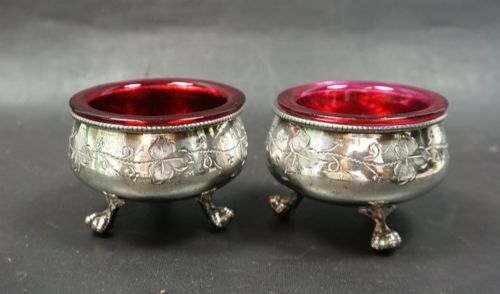
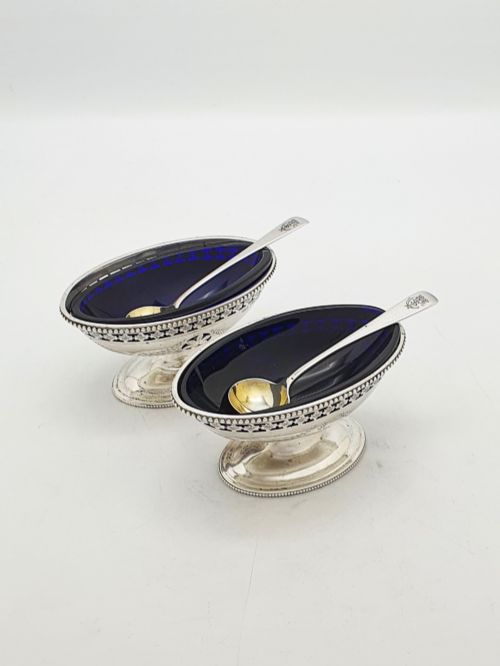
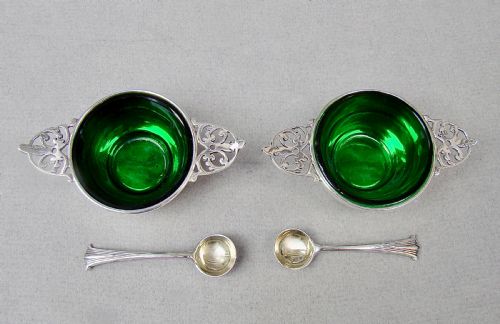
The survival of original coloured glass liners, whether cobalt blue or cranberry, significantly influences the integrity of a set. Finer examples display careful attention to detail in handles, rims, and matching spoons, distinguishing bespoke silversmith output from mass-produced items.
The listings include sterling silver, silver plate, cobalt glass, cranberry glass, ironstone china, and gold gilt across Georgian, Victorian, and Edwardian periods.
Josiah Williams & Co·David Hennell·John Edmonstone·Edward Wood·Vale Brothers and Sermon
The Pair Salt Dips Glossary
- Trencher salt
- A heavy, often multi-sided salt cellar from the seventeenth or eighteenth century that sat directly on the dining table. These low vessels pre-date footed and elevated salt cellars.
- Salt boat
- A salt cellar modelled in the elongated shape of a miniature boat or gravy boat, popular during the Georgian period. They often feature small scroll handles and a distinct lip.
- Cobalt glass
- A deep blue glass used widely in the nineteenth century for removable liners inside open silver salt cellars. The dark colour contrasts sharply with bright silver frameworks.
- Silver gilt
- Silver that has been coated with a thin layer of gold on the interior surface. This technique prevented the salt from tarnishing or corroding the underlying silver.
- Quaich
- A traditional Scottish two-handled drinking vessel, which makers occasionally translated into miniature form for novelty salt cellars.
Pair Salt Dips: Frequently Asked Questions
How were pair salt dips used at the table?
Dinners used pair salt dips by placing small portions of loose salt beside each guest or shared between two people. Guests used small spoons or pinched the salt directly to season their food.
Before the invention of free-flowing table shakers, these open cellars were a central part of formal dining etiquette and tableware arrangements.
How do I care for silver salt dips?
Silver salt dips require prompt cleaning after use because salt is corrosive and will pit or tarnish silver if left in contact for extended periods. Wash them gently in warm soapy water and dry thoroughly with a soft cloth.
Avoid harsh abrasive dips that can damage the underlying metal or any original gold gilt interiors.
How do I tell Georgian salts from Victorian ones?
Georgian salt dips generally display simpler, heavier forms such as circular cauldrons or boat shapes, often standing on three small feet without excessive ornamentation. Maker marks and duty marks from the period assist in precise dating.
Victorian examples tend towards heavier ornamentation, incorporating floral repoussé, intricate piercing, and coloured glass liners that reflect industrial manufacturing advances.
Why do some salt dips have glass liners?
Glass liners were introduced to prevent salt from coming into direct contact with the silver or silver plate, which reduced chemical corrosion and pitting. Cobalt blue and cranberry glass were popular choices because they provided a striking visual contrast.
Finding a set with its original matching glass liners adds significantly to the completeness of the piece.