


Cut Glass Salt Cellars
Cut glass salt cellars bring genuine weight and sparkle to the dining table, combining sharp wheel-cut bowls with precious mounts.
Cut Glass Salt Cellars
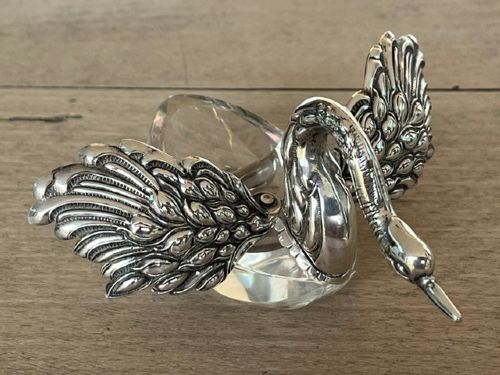
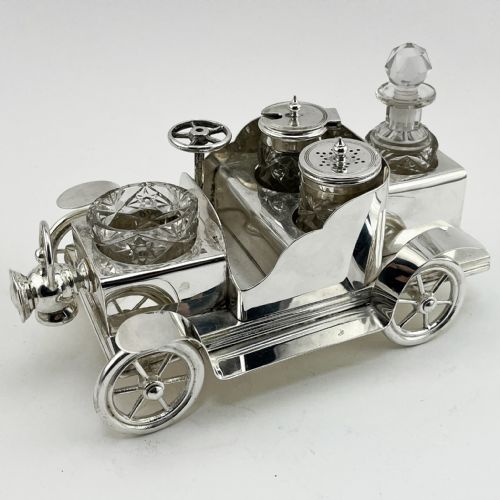
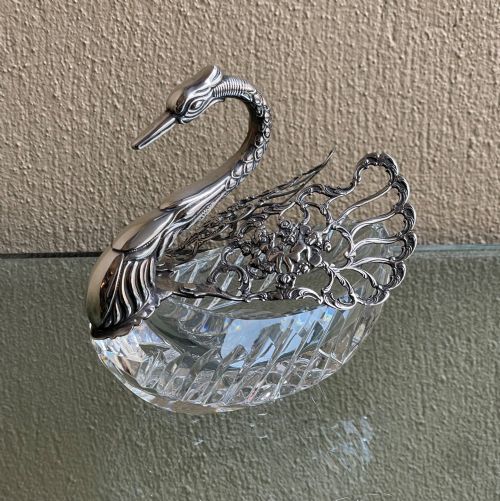
Cut glass salt cellars are small vessels designed to hold seasoning at the table, taking forms from simple open bowls to novelty swan and car shapes. When you search for cut glass salt cellars, you encounter pieces spanning the Georgian, Victorian, Edwardian, and mid-twentieth-century periods.
The domestic dining table of the nineteenth and early twentieth centuries relied heavily on these items, often housed within larger cruet sets or accompanied by silver spoons. The selection here leans strongly towards Victorian and Edwardian examples, alongside occasional Georgian and 1960s iterations.
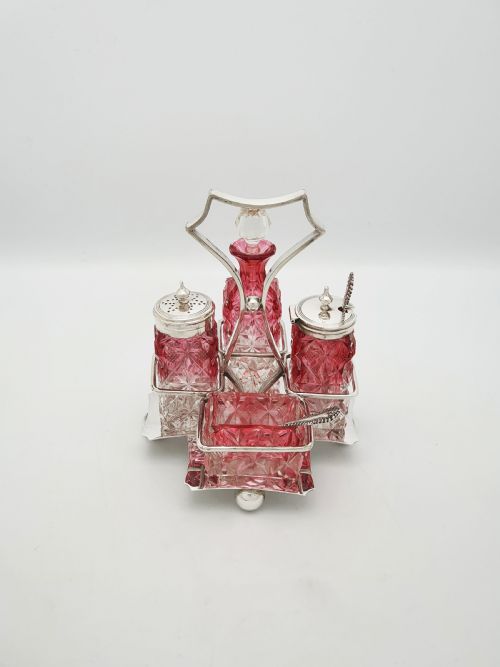
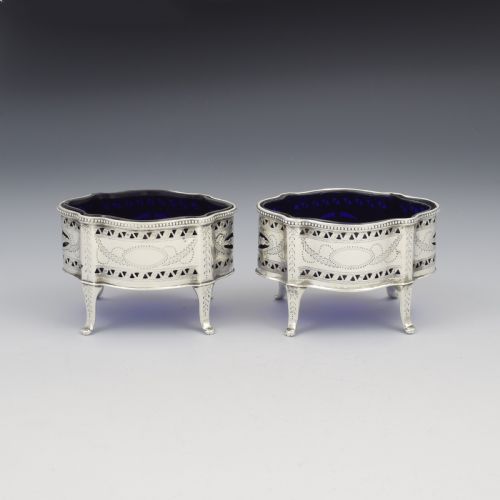
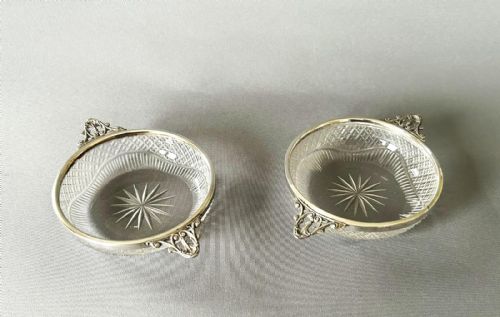
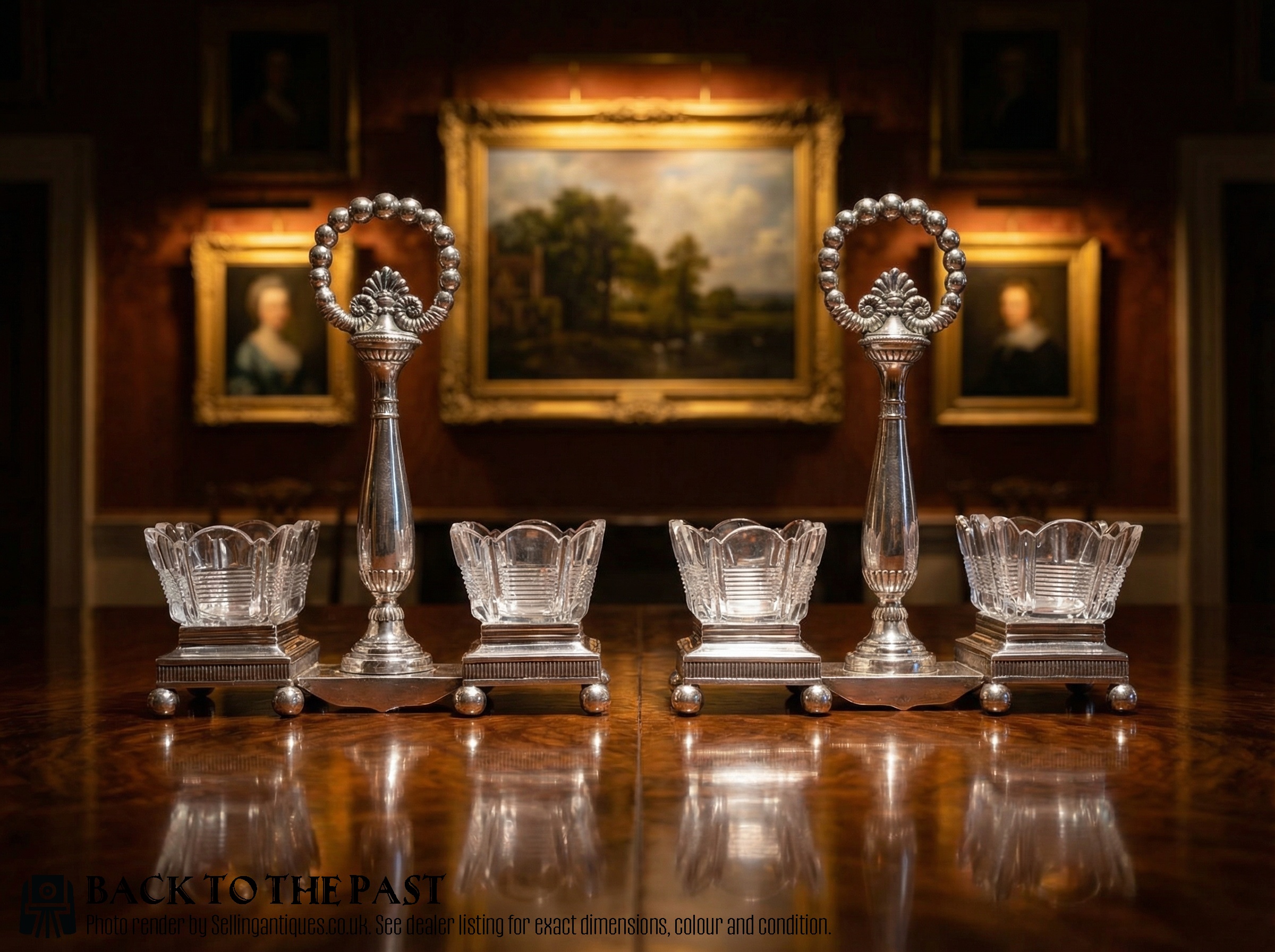
Vessels range from standalone open salts in pairs or trios to complex silver-plated stands holding multiple bottles and shakers. Materials shift between heavy lead crystal, cranberry glass, sterling silver, and silver plate.
Materials and Working Methods
Glassmakers produced the bodies using lead crystal or standard glass, shaping them through heavy cutting and facet polishing to catch the light. The distinctive surface patterns emerge from wheels that grind deep geometric or floral motifs directly into the material.
Metal mounts and rims utilise sterling silver or silver plate, sometimes accompanied by enamel work in later twentieth-century designs. Silversmiths formed pierced galleries and fitted collars to secure the glass bowls, adding structural integrity alongside decorative contrast.
Listings feature periods spanning from the Georgian era through to the 1960s, utilising materials such as cranberry glass, sterling silver, and lead crystal.
Judging Quality and Execution
Quality rests primarily on the crispness of the wheel-cutting and the clarity of the glass. Sharp, deep facets and heavy crystal indicate superior manufacturing compared to soft, shallow impressions.
The integration of metalwork also dictates value, with heavy hallmarked sterling silver mounts and intact original silver plating outperforming lighter, worn alternatives. Complete sets featuring matching spoons or fitted saucers command greater interest.
William Hutton and Sons
The Cut Glass Salt Cellars Glossary
- Open salt
- A small bowl designed to hold loose salt, allowing diners to pinch a portion with their fingers or a tiny spoon rather than shaking it through a lid.
- Cruet set
- A collection of glass bottles and salt cellars held within a metal stand for table condiments.
- Cranberry glass
- Transparent glass coloured by the addition of gold chloride, producing a distinctive rich pink-red hue popular in Victorian tableware.
- Lead crystal
- Glass containing metal oxide that increases weight, refractive index, and brilliance, making it ideal for deep cutting.
Cut Glass Salt Cellars: Frequently Asked Questions
How do I date these salt cellars?
Dating relies on hallmarks stamped into the silver mounts, the depth and style of the glass cutting, and overall design characteristics. Georgian and Victorian pieces often display hand-cut facets and heavier proportions.
Later Edwardian and mid-century items introduce sleeker lines, coloured glass, and alternative metals like chromium or enamel. Comparing the form against documented cruet sets helps narrow the decade of production.
Were these used individually or in sets?
Salt cellars were typically deployed in matching pairs or larger sets distributed along the length of the dining table. Diners shared access to a nearby salt rather than having an individual vessel at every single setting.
Grander dining arrangements incorporated multi-bottle cruet stands holding oils, vinegars, and mustards alongside the salt cellars.
How should I clean cut glass and silver?
Wash the glass portions gently in warm, soapy water using a soft cloth, avoiding abrasive pads that can scratch the surface. Dry them immediately to prevent water spots on the crystal.
Polish the silver mounts with a specialised cloth, taking care not to let harsh cleaning pastes linger on the glass or enter any crevices.
What is cranberry glass?
Cranberry glass is a vibrant red-pink ornamental glass created by adding gold to the molten batch during production. It gained immense popularity during the Victorian era for decorative tableware and cruet sets.
Pieces often feature this distinctive coloured glass flashed or layered over clear crystal before being cut away to reveal the contrast.