
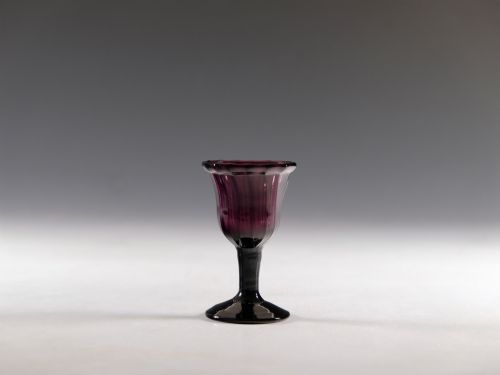


Regency Glass Tableware
Regency glass tableware brings brilliant hand blown and cut crystal to the table, offering the tactile weight and sparkle that collectors prize.
Regency Glass Tableware
When you search for regency glass tableware, you encounter functional and decorative pieces designed for dining during the Georgian, Regency, and early Victorian periods. These items range from salt cellars and egg cups to celery vases, finger bowls, and large pedestal comports.
The pieces most frequently met on this page date from the nineteenth century, including items originating around eighteen hundred and the eighteen-twenties. They include matched sets and individual vessels that reflect the formal dining habits of their era.
Makers and craftsmen of this era produced forms intended for both utility and display, utilising rich colours alongside clear crystal. The selection spans utilitarian salt cellars to grand comports, each carrying the distinct character of early glassmaking.
How they were made
These items are produced through traditional hand blowing techniques, resulting in heavy vessels with characteristic pontil marks and subtle variations in thickness. Glassmakers shaped molten metal by hand before applying cutting wheels to create facets and decorative motifs.
The material composition relies on lead crystal and cut glass, which provided the high refractive index necessary for maximum brilliance under candlelight. Workshops also utilised coloured glass formulae, producing deep hues of amethyst, opaline, and cobalt.
Surface ornamentation often involved wheel engraving and polished cutting to form draped swag designs and geometric patterns. This combination of hot-working and cold-cutting defined the technical standards of nineteenth-century British and Irish glasshouses.
Celery was considered a high-status luxury vegetable at the table, demanding dedicated tall crystal vases to keep it upright.
What varies in quality
The distinction between ordinary and superior pieces rests upon the crispness of the cut and the clarity of the metal. Finer examples display deep, sharp facets with hand-polished recesses that catch the light cleanly, whereas lower tiers show softer edges and cloudy metal.
Proportion and weight dictate the standing of a vessel, particularly in pedestal bowls and celery vases where balance is essential. Heavy lead crystal with uniform thickness and minimal internal impurities marks the upper end of the range.
The Regency Glass Tableware Glossary
- Lead Crystal
- Glass containing lead oxide, which increases the weight, refractive index, and workability for deep cutting. This material is standard for high-end tableware of the period.
- Comport
- A large pedestal bowl used for serving fruit or sweetmeats centrally on the dining table. These pieces often feature extensive hand-blown and cut crystal decoration.
- Finger Bowl
- A small bowl filled with water, used during formal meals for rinsing the fingers between courses. Regency examples frequently appear in matched sets.
- Celery Vase
- A tall, footed vessel specifically designed to hold stalks of celery upright on the dining table. They demonstrate the specialised forms created by nineteenth-century glasshouses.
- Pontil Mark
- The rough scar left on the base of a hand-blown vessel where the punty rod was detached. Its presence confirms traditional manufacturing methods.
Regency Glass Tableware: Frequently Asked Questions
What is regency glass tableware used for?
These objects served specific functions in nineteenth-century dining, from holding condiments and salt to presenting fruit and celery.
Today, collectors use them to recreate historical table settings or display them as decorative cabinet pieces.
How do I care for antique glass?
Wash pieces gently by hand in lukewarm water using mild detergent, avoiding sudden temperature changes that can crack old crystal.
Store them securely away from edge hazards, as lead glass is heavy and vulnerable to chipping on hard surfaces.
How can I tell the period?
Dating relies on stylistic clues such as cutting depth, heavy lead metal weight, and specific forms like pedestal comports and finger bowl sets.
Comparison with documented examples from the Georgian and Regency eras helps confirm manufacturing windows.
Why are Irish pieces notable?
Irish glasshouses during the early nineteenth century earned renown for exceptionally heavy, clear metal and deep, bold cutting.
Salt cellars and table wares attributed to this origin are particularly sought after for their visual impact.