


Victorian Open Salts
Victorian open salts bring miniature craft to the dining table, offering delightful variety in silver, glass and carved wood.
Victorian Open Salts
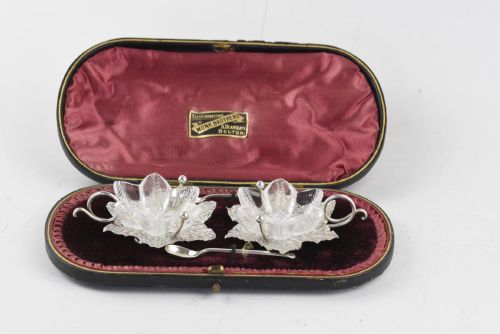
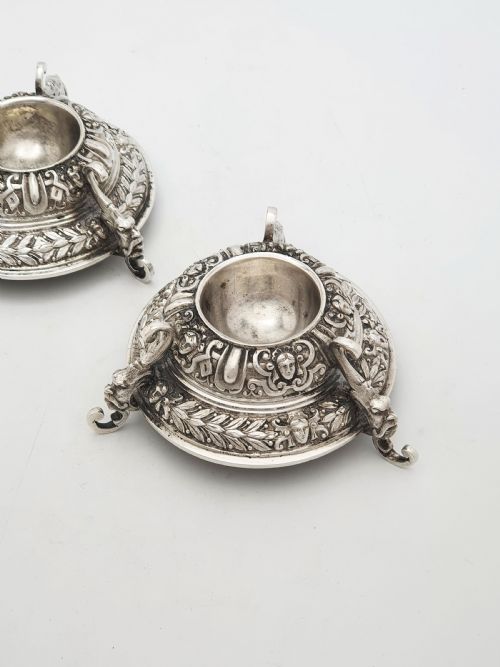
When searching for victorian open salts, collectors encounter small open vessels designed to hold ground salt at the dining table before shaker bottles became common. The pieces listed range from simple circular bowls to elaborate figural designs, boat shapes, and shell forms.
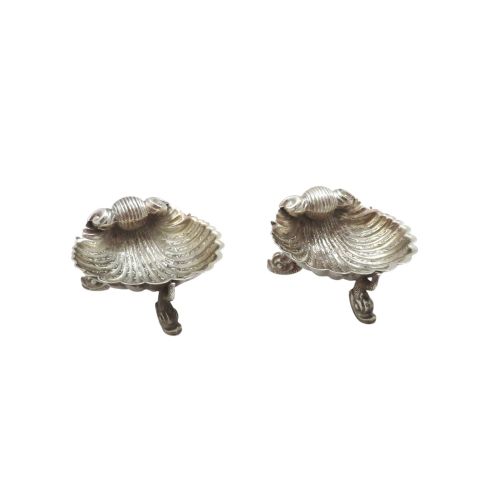
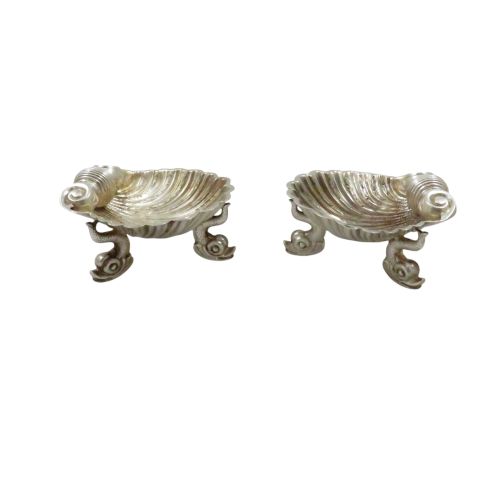
Most examples found on this page date from the nineteenth century, particularly the Victorian and Edwardian periods, appearing individually, in pairs, or as part of larger condiment and cruet sets. Alongside standard silver bowls, the selection includes novelty items such as bears, swans, and dolphin-footed dishes.
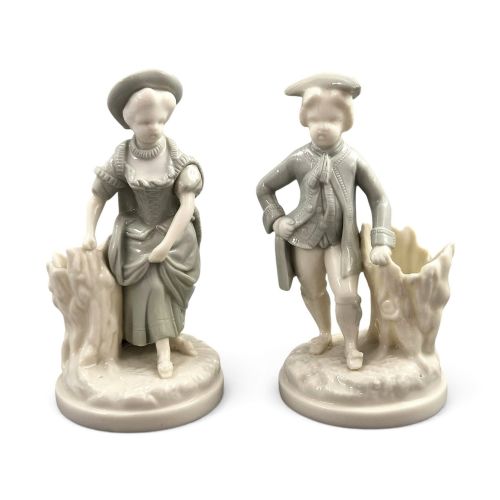
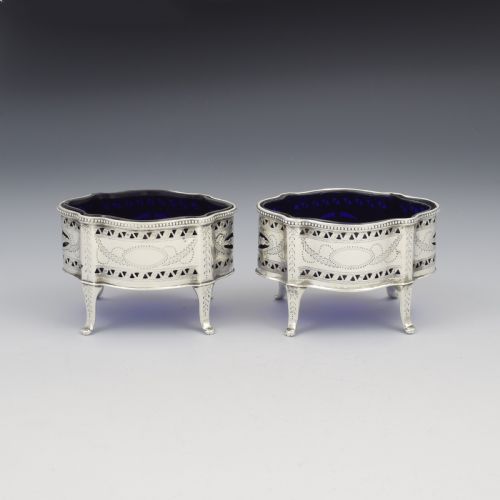
Forms span from plain sterling silver cauldrons and pierced serpentine dishes to carved wood capstan shapes and porcelain figures. These small tableware items served a practical function while demonstrating the decorative tastes of their era.
Materials and construction
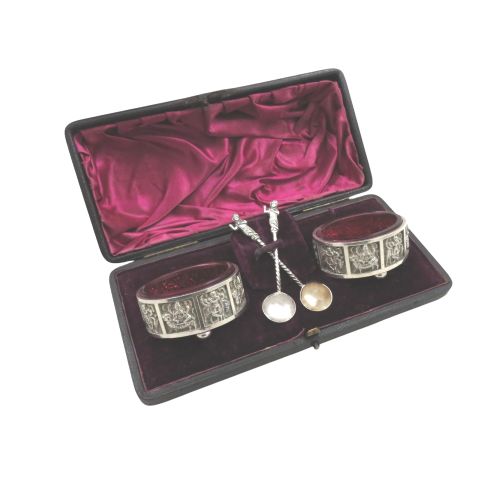
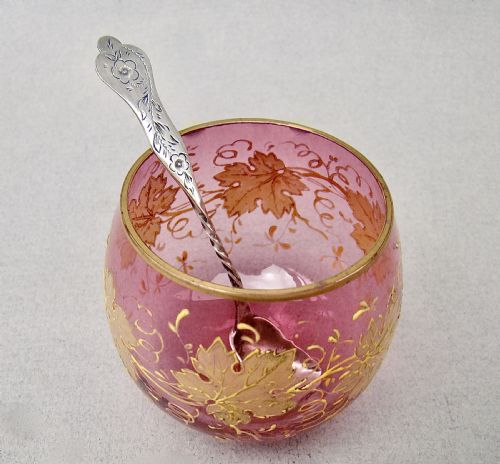
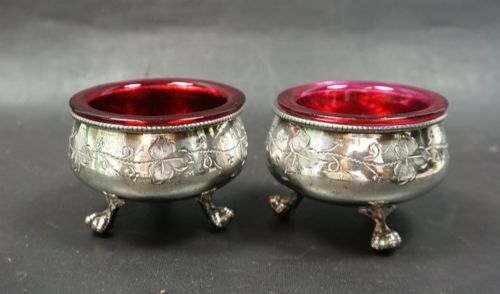
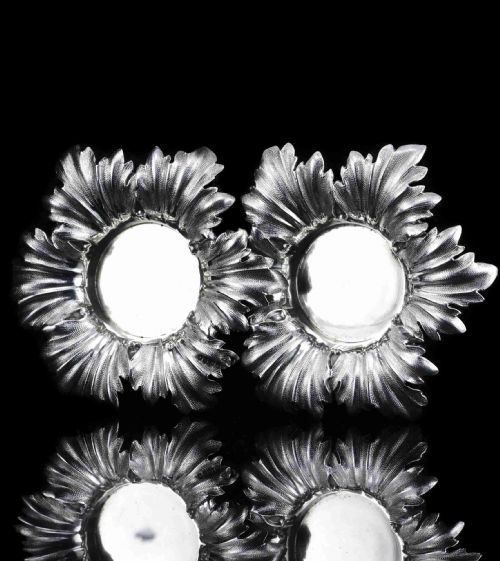
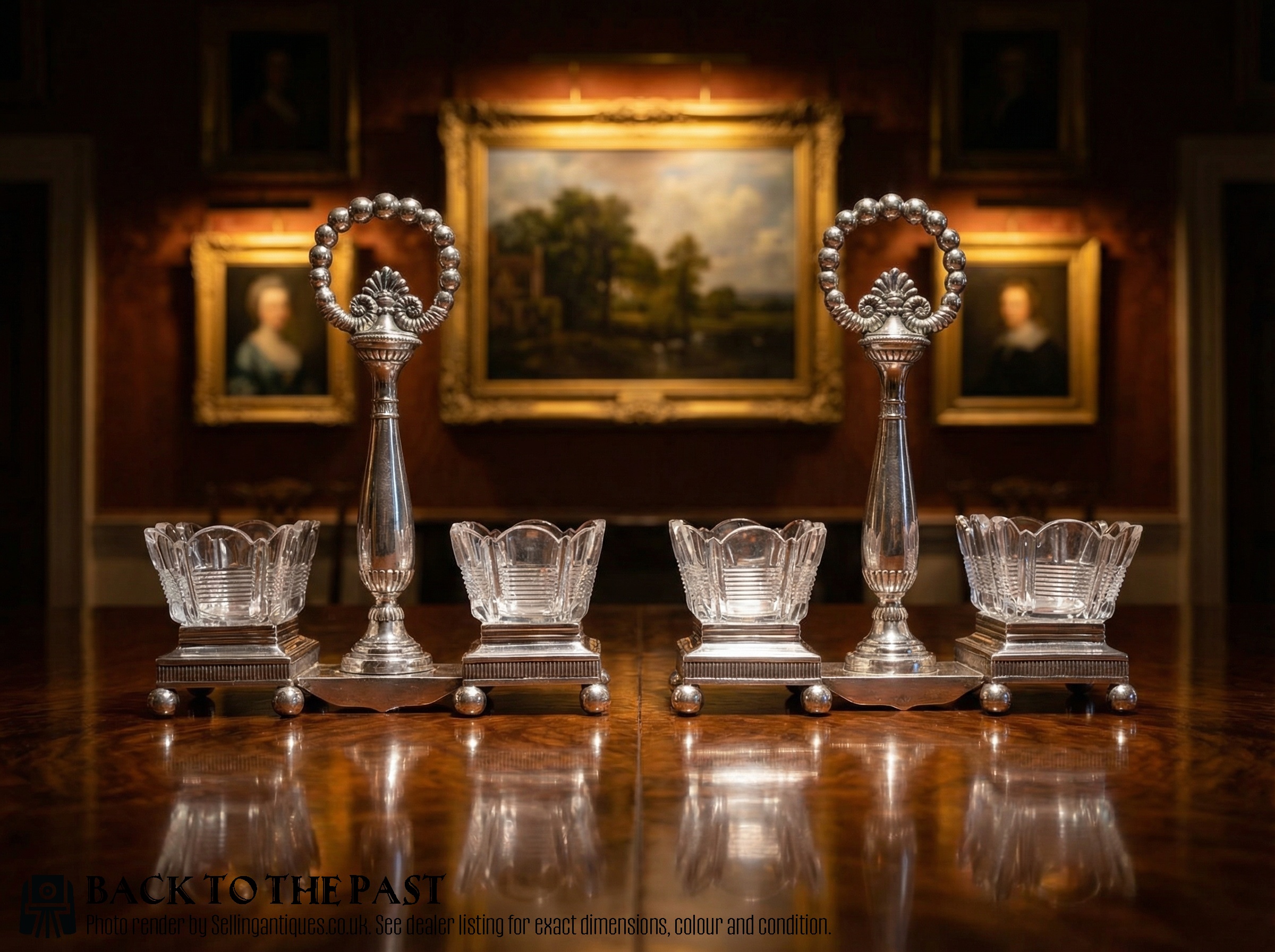
Makers shaped sterling silver and silver plate through casting, piercing, and repoussé chasing, creating textured surfaces like foliate patterns and fluted lobes. Many metal frames incorporate contrasting coloured glass inserts, notably cobalt blue and cranberry glass.
Carved wooden pieces utilise organic materials such as pollard oak and fruitwood, sometimes shaped into treen capstans or animal figures in the Black Forest style. Porcelain and pottery works from factories like Royal Worcester and KPM Berlin introduce delicate figural models with hand-painted details.
Victorian Open Salts Retail Price Guide 2026
Typical asking prices for victorian open salts among the pieces listed under this phrase on Sellingantiques today, from the lower quarter to the upper quarter. They describe what is for sale here now, not the wider market.
Dining tables of the era featured salt cellars shaped like bears, dolphins, swans, and cherubs holding well basins.
Judging quality and execution
Quality rests on the crispness of the chasing, the weight and gauge of the silver, and the finesse of figural modelling. Pierced openwork shows distinction when the margins are sharp and clean rather than rounded or heavy.
The presence of original coloured glass liners that fit their metal frames precisely elevates an item, as does a matched set of original spoons. Novelty animal or mythological forms succeed when anatomical proportions look convincing and purposeful.
Royal Worcester·KPM Berlin·Vale Brothers and Sermon·Thomas Smily
The Victorian Open Salts Glossary
- Open salt
- A small open dish placed on the dining table to hold salt, used alongside a small spoon or pinched by hand before salt shakers became standard.
- Liner
- A removable insert, frequently made of blue cobalt or cranberry glass, that sits inside a metal salt cellar to protect the silver from corrosion.
- Chasing
- A metalworking technique where the artisan hammers the front face of the silver to create raised ornamental designs and surface relief.
- Capstan
- A table salt shaped like the nautical winch used on ships to haul anchors, tapering towards the middle with a wide base and top.
- Treen
- Small handmade wooden domestic objects and utensils fashioned by turning on a lathe or through manual carving.
Victorian Open Salts: Frequently Asked Questions
What are open salts?
Open salts are small dishes used to hold salt at individual place settings on the dining table before the invention of the shaker.
Dining guests used tiny spoons or their fingers to take salt from the open bowl and sprinkle it over their food.
Why do some salts have glass inserts?
Glass liners were placed inside silver salt cellars to prevent the salt from corroding the metal over time.
These removable inserts made cleaning the vessels much easier after a meal concluded.
How are Victorian salts dated?
English silver pieces feature hallmarks stamped directly onto the metal, including maker's marks, city assay marks, and date letters.
Matching these letters against official assay office records reveals the exact year of manufacture.
Were these sold in sets?
Table salts frequently appear in matched pairs or sets of four to accommodate multiple diners around a table.
Some examples were produced as part of larger fitted cruet sets that also held mustard and pepper.