
Antique Glassware
Antique glassware brings centuries of drinking vessels, decanters, and vases shaped by Georgian, Victorian, and Art Deco hands into daily modern use.
Antique Glassware
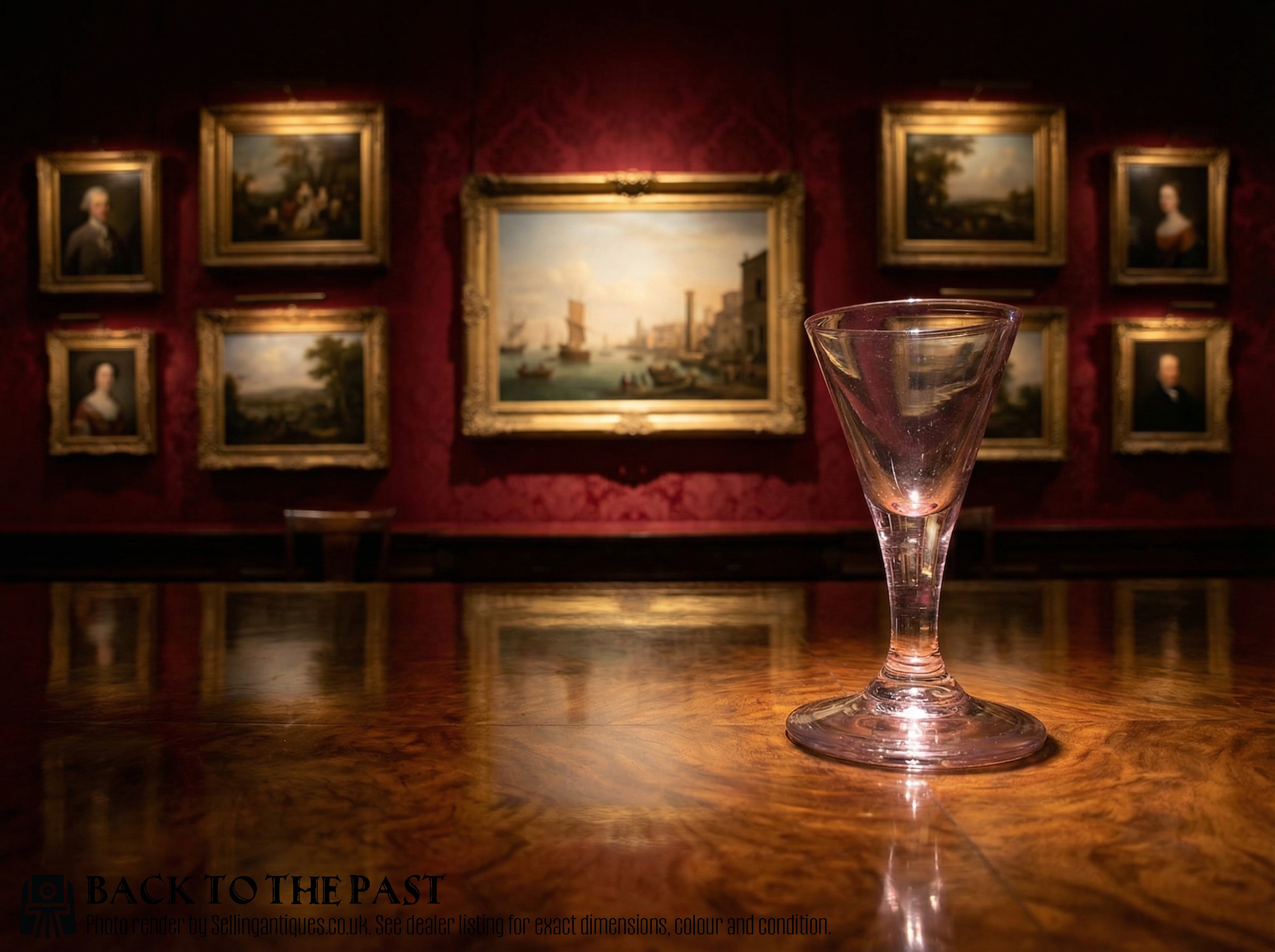
Antique glassware spans functional and decorative vessels produced across the eighteenth, nineteenth, and early twentieth centuries. When searching for antique glassware, buyers frequently encounter drinking glasses, decanters, vases, and ewers created during the Georgian and Victorian periods.
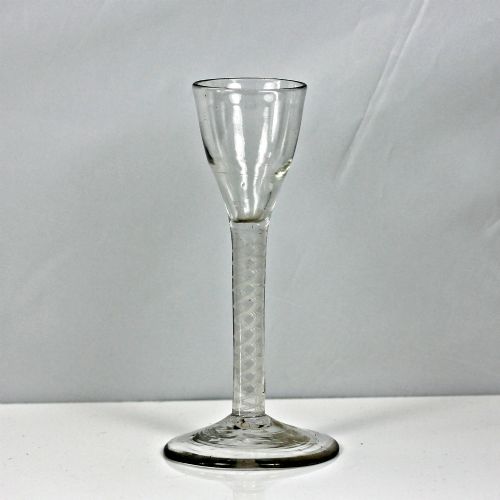
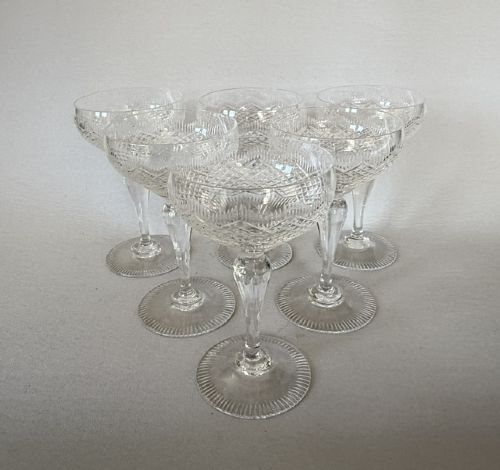
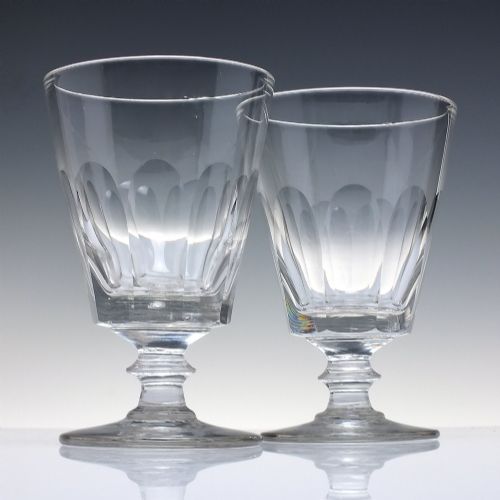
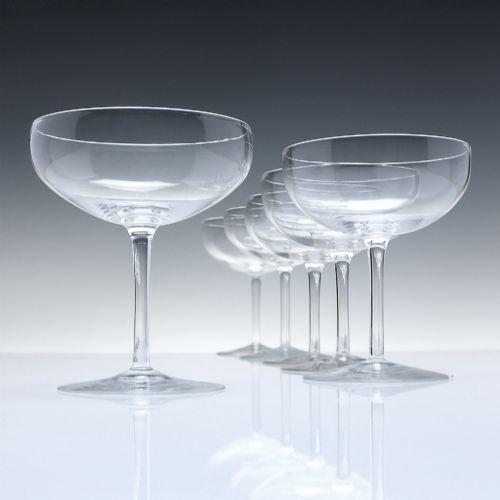
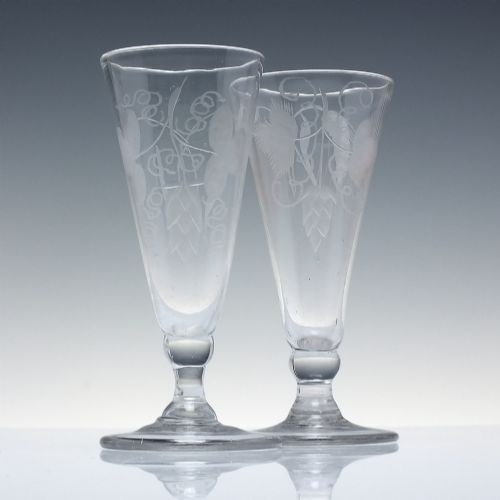
The objects range from single wine glasses with opaque twists to large matched sets of champagne coupes, rummers, and thumb-cut sherry flutes. Domestic tableware and celebratory vessels form the core of what appears on this page.
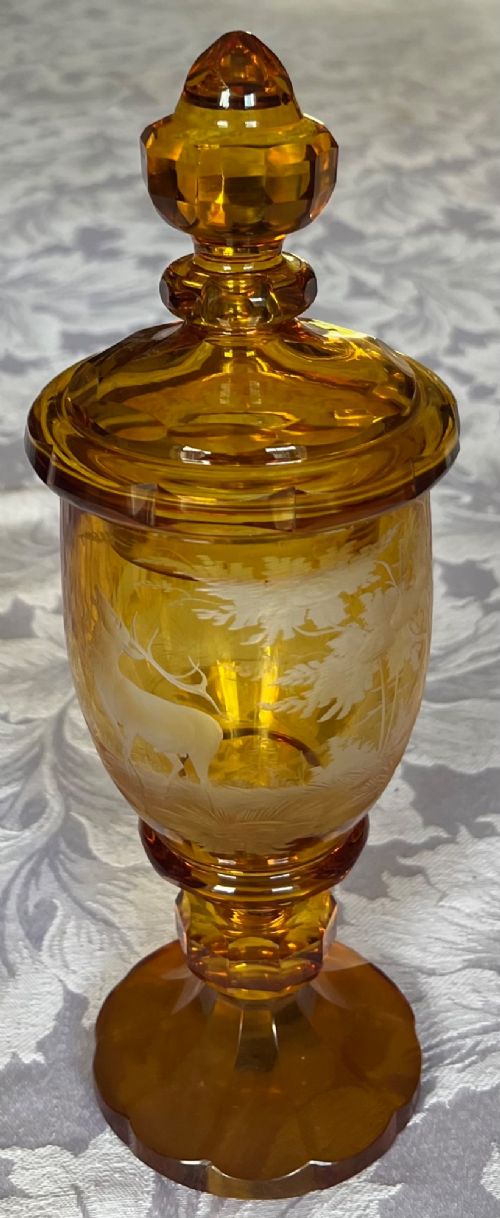
Origins stretch from English workshops to Bohemian and French glasshouses, reflecting shifting tastes from Georgian sobriety to elaborate Victorian etching and Art Deco colour.
How they were made
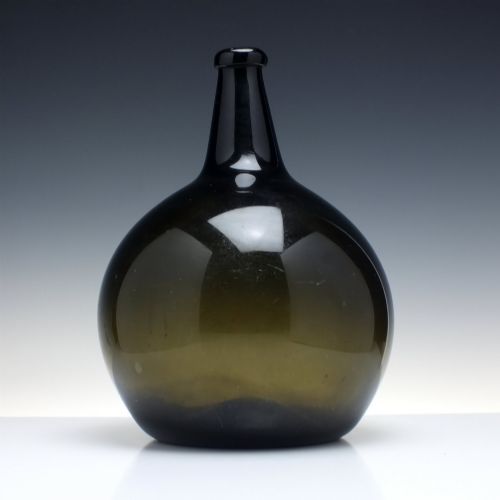
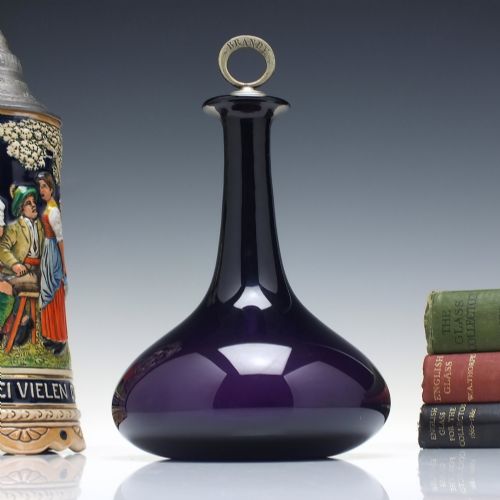
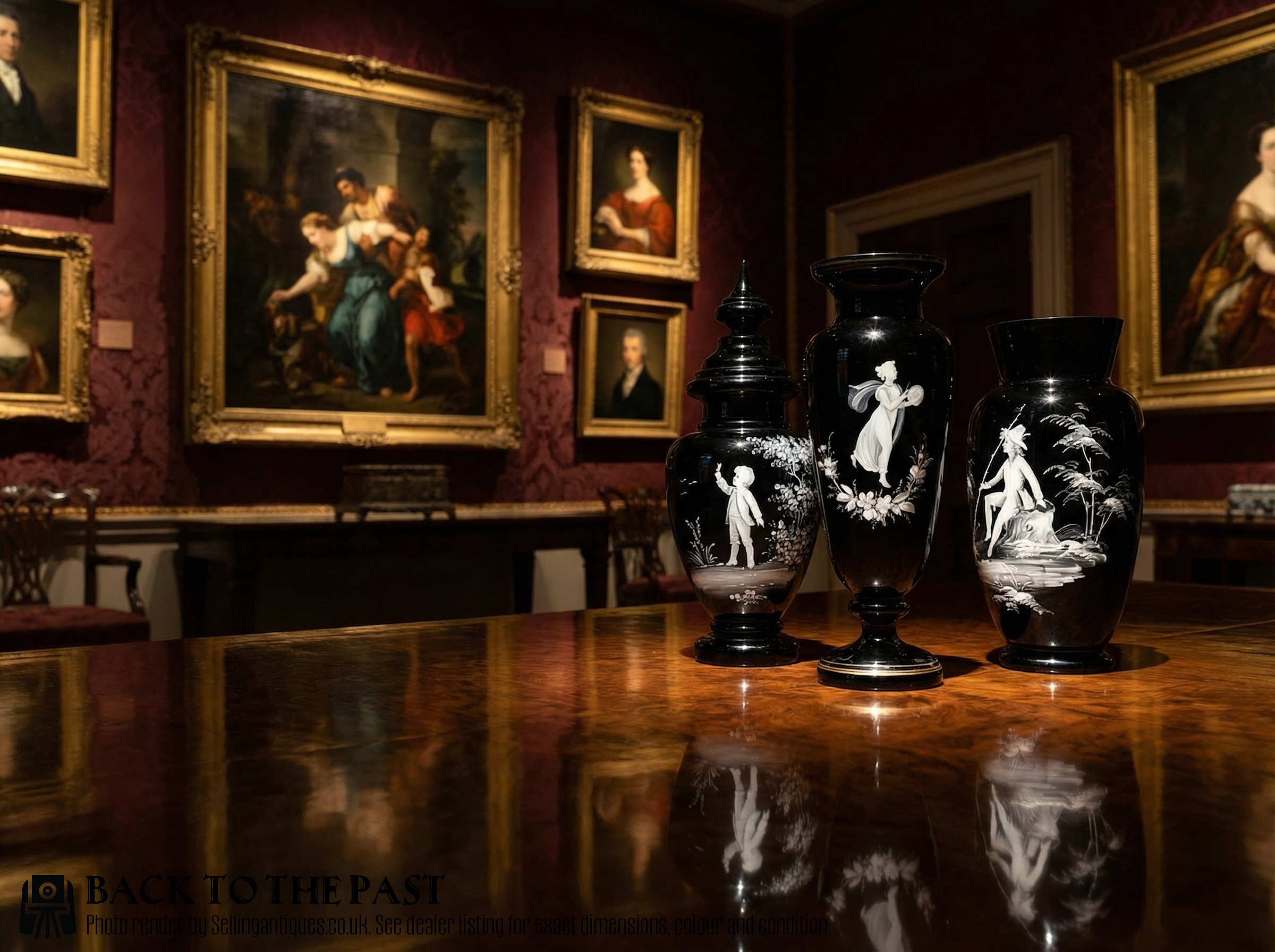
Makers shaped molten material by hand, employing free-blowing, mould-blowing, and cutting techniques to form clear glass, lead crystal, and coloured variants such as cranberry and Bristol blue. Metal pontil marks on bases often record the separation of the piece from the blowing iron.
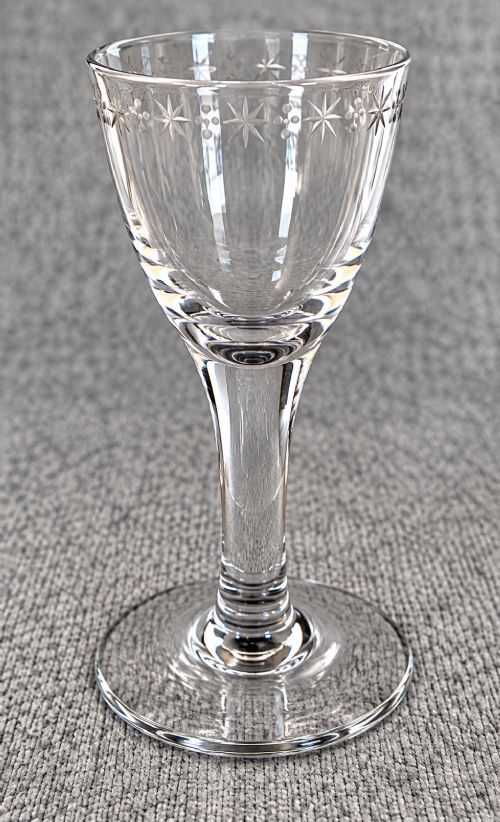
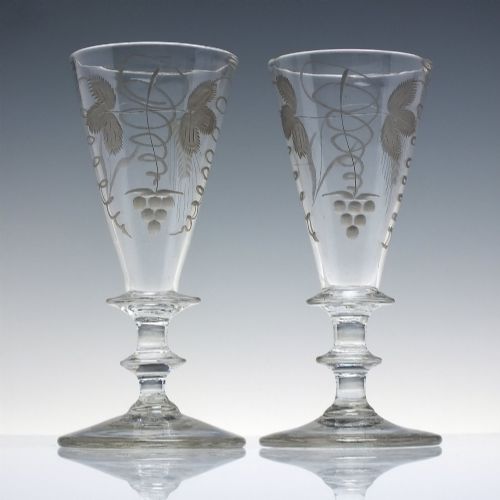
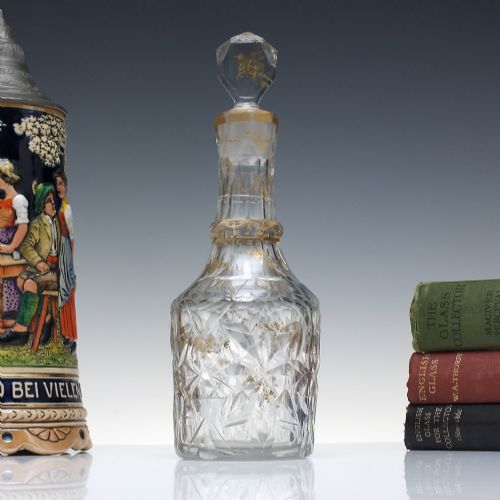
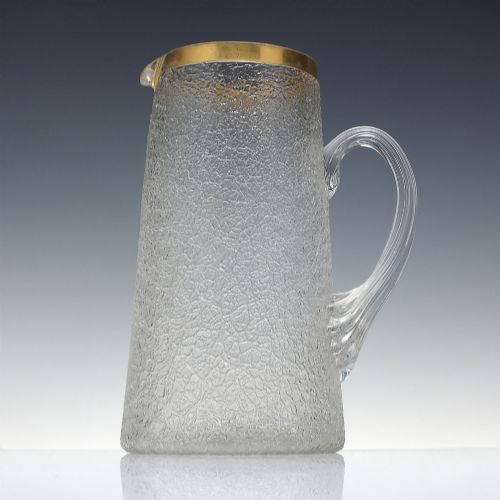
Decoration relied on wheel-engraving, star-etching, gilding with gold leaf, and applying enamel or contrasting glass handles. Operators used lead glass for its heavy weight and refractive brilliance, allowing deep facet cuts to catch the light.
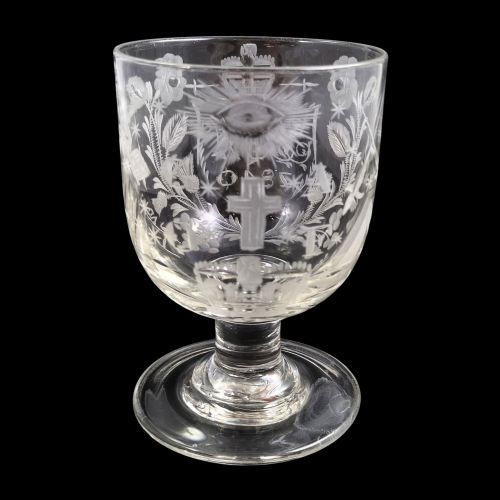
Masonic rummers carried secret toasts, while opalescent love birds sat frozen on Art Deco clocks.
What varies in quality
Quality rests upon the clarity of the material, the precision of the cutting, and the crispness of any engraved or gilded detail. Heavy lead crystal with sharp, deep facets separates finer productions from lighter, simpler press-moulded items.
Proportion and balance in hand-blown stems, handles, and feet dictate visual success. Pieces showing careful finishing at the rim and pontil demonstrate superior workshop standards.
James Giles·Stevens and Williams·Moser·Rene Lalique·Hille·Epstein
The Antique Glassware Glossary
- Rummer
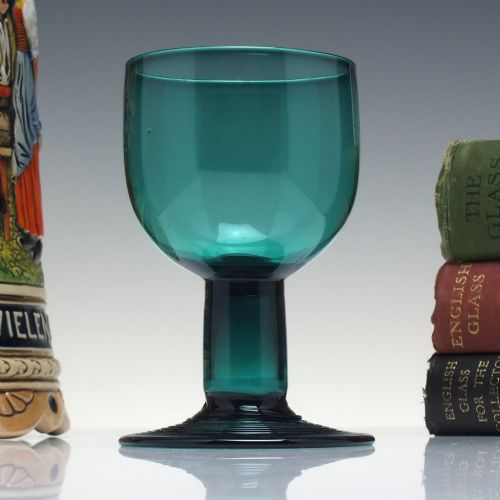
- A heavy drinking glass with a short stem and large bowl, popular in the Georgian and Victorian eras for ale or wine. These sturdy vessels were daily table staples.
- Pontil mark
- The rough scar left on the base of a blown glass object where the pontil rod was attached during manufacture. Its presence confirms hand-blown production.
- Cranberry glass
- Transparent red glass coloured with gold chloride, widely utilised in Victorian tableware and decorative bells. The shade ranges from pale pink to deep ruby.
- Wrythen
- A decorative spiral pattern moulded into the body of a glass vessel. This swirling optical effect appears frequently on eighteenth-century ale glasses and decanters.
- Roemer
- A traditional Germanic drinking goblet featuring a wide bowl and a coiled or stud-covered stem. They often appear in green or amber glass.
Antique Glassware: Frequently Asked Questions
Can I use antique glassware for drinks?
Most antique drinking glasses, decanters, and rummers remain fully functional for serving wine, spirits, or water today. Ensure pieces are clean and free from internal haze before use.
Avoid serving hot liquids in older vessels, as thermal shock risks fracturing the historic fabric. Treat delicate eighteenth-century stems with particular care.
How do I date antique glassware?
Examine the form, the weight of the metal, and the presence of pontil marks on the base. Georgian pieces often display distinct stem formations like air bubbles or opaque twists, while Victorian examples lean towards heavier cutting and colourful bodies.
Compare the style of engraving and typography with documented examples from known periods to narrow down the decade of production.
What is lead crystal?
Lead crystal is glass manufactured with the addition of lead oxide, which increases weight, clarity, and the refractive index. This composition makes the material ideal for deep diamond cutting and brilliant light reflection.
Objects made from lead glass feel noticeably heavier than standard soda-lime glass and produce a resonant ring when tapped gently.