
Vintage Drinking Glass
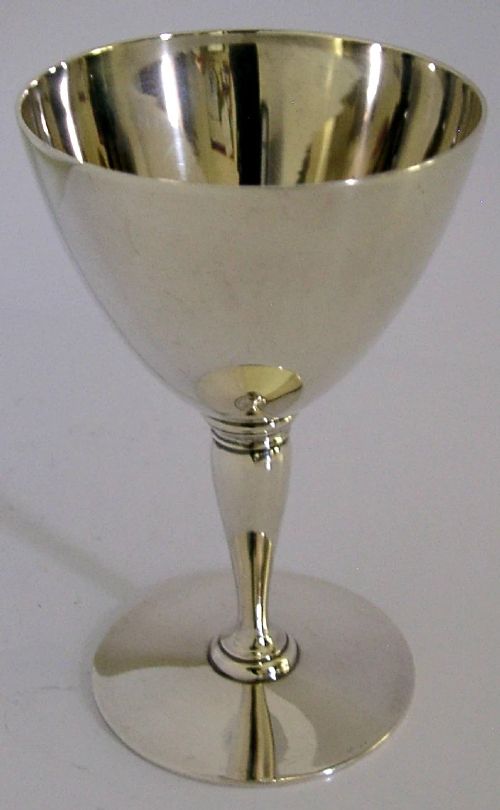
A vintage drinking glass brings tactile weight and historical form to the table, spanning Georgian twists to Art Deco suites.
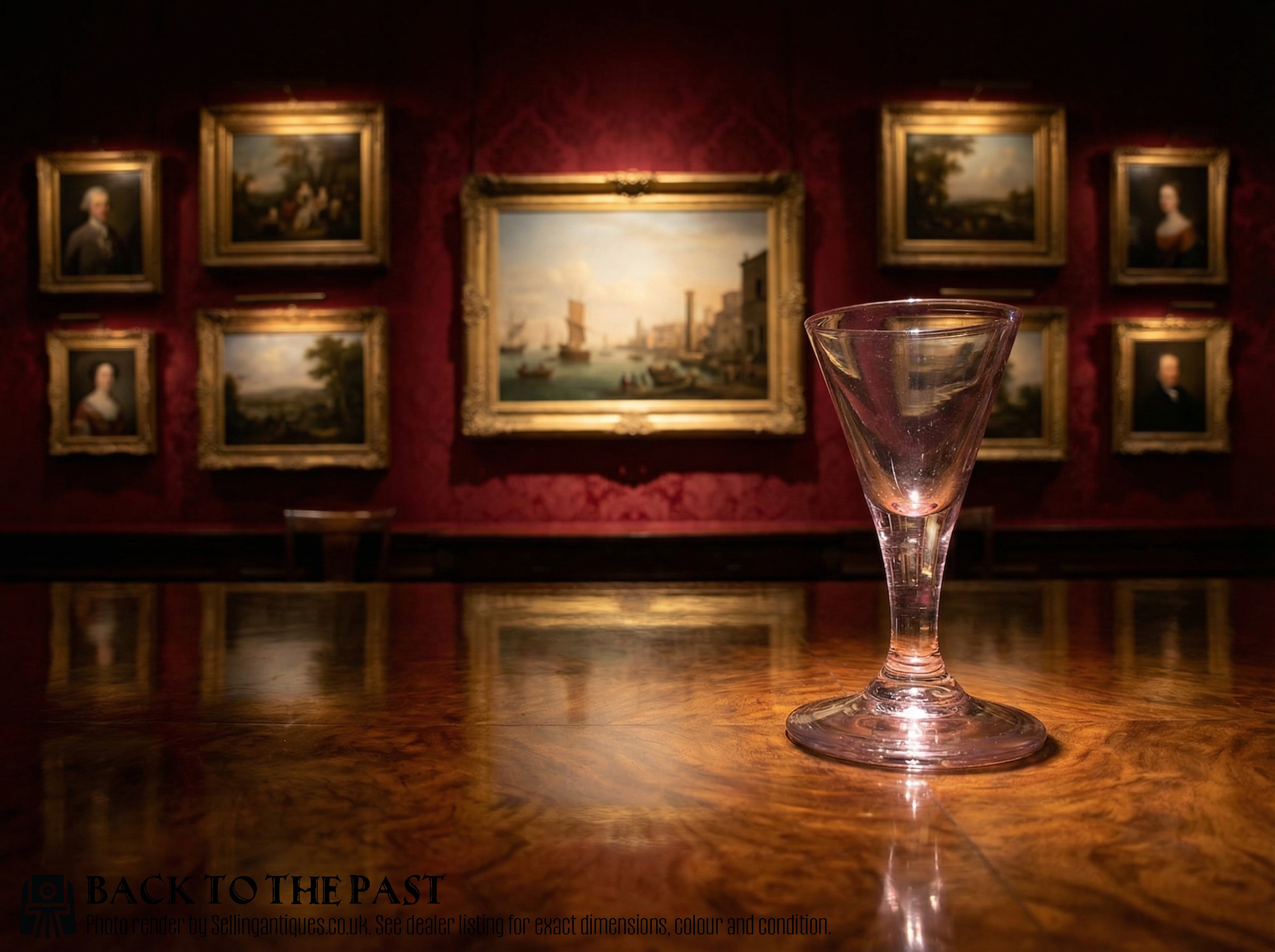
Vintage Drinking Glass
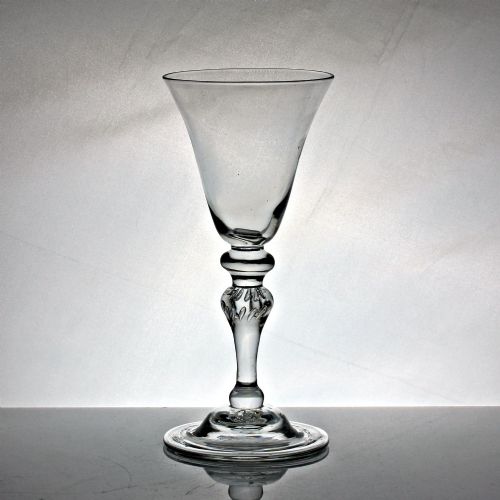
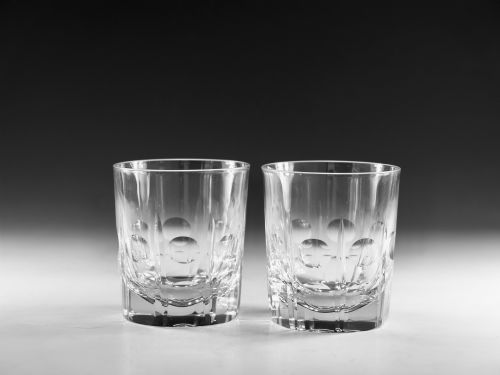
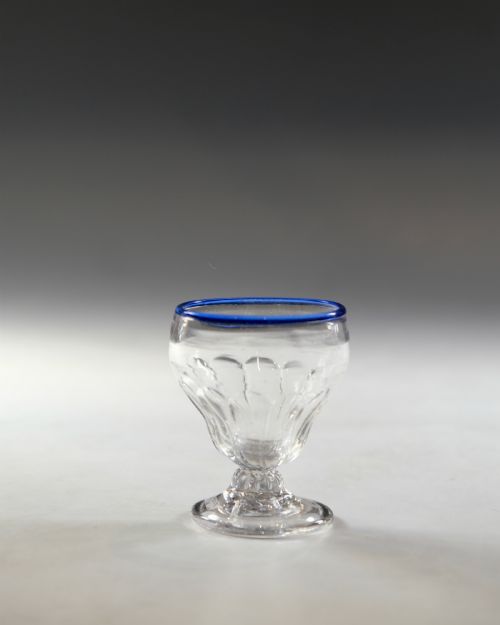
A vintage drinking glass covers functional vessels intended for toasts and everyday imbibing, stretching from eighteenth-century tableware to twentieth-century sets. Buyers look for authentic forms such as wine glasses, ale glasses, rummers, and whisky tumblers produced across multiple centuries.
The most common examples on this page include Georgian lead glass wine glasses featuring distinct twists in the stem, alongside sturdy Victorian rummers and matching twentieth-century suites. These pieces reflect shifts in drinking habits and social dining across the periods represented.
Originating largely from English and European workshops, these items range from solitary surviving specimens to substantial matching suites. Collectors encounter individual rarities alongside grouped sets designed for formal hospitality.
Materials and construction methods
Makers utilised lead glass and crystal for clarity and heavy substance, shaping bowls and stems through blowing and moulding techniques. Clear glass and lead crystal dominated production across the Georgian and Victorian eras, allowing for intricate surface work.
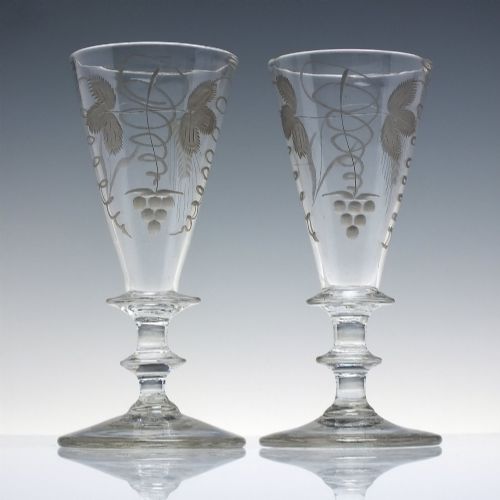
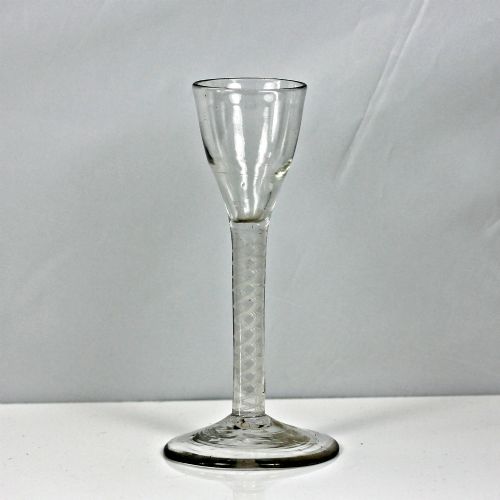
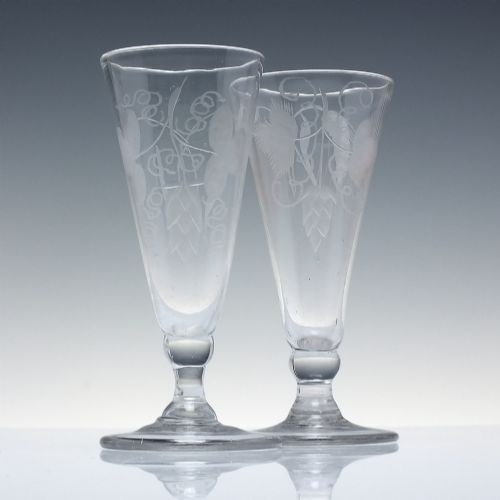
Surface ornamentation relied heavily upon wheel-cutting, acid etching, and delicate engraving to impart patterns onto bowls and trays. Twist stems in eighteenth-century examples required specialist skill, incorporating air or opaque glass threads within the molten metal.
Listings feature lead glass and crystal across Georgian, Victorian, and Edwardian periods, alongside Art Deco barware.
Distinctions in quality and execution
Quality rests upon the precision of the glassblower's hand and the clarity of the material itself. Superior pieces display crisp cutting, balanced proportions, and minimal internal impurities within the lead glass.
The execution of decorative elements, from engraved bowls to complex twist stems, separates standard utilitarian wares from higher-tier examples. Depth of wheel-cut facets and symmetry in the foot base indicate greater workshop capability.
TIFFANY & Co·James Dixon & Sons·Betjemann·Maison Bagues
The Vintage Drinking Glass Glossary
- Opaque twist
- A stem formation containing white or coloured glass threads twisted inside the clear metal. This technique dates predominantly to the eighteenth century.
- Rummer
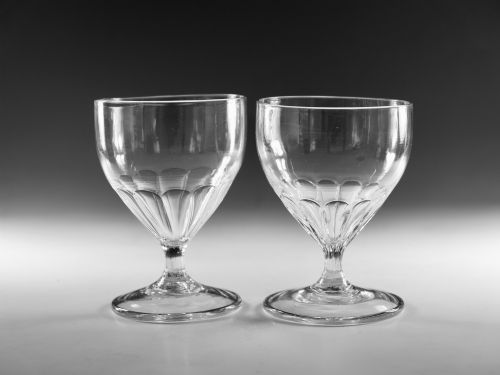
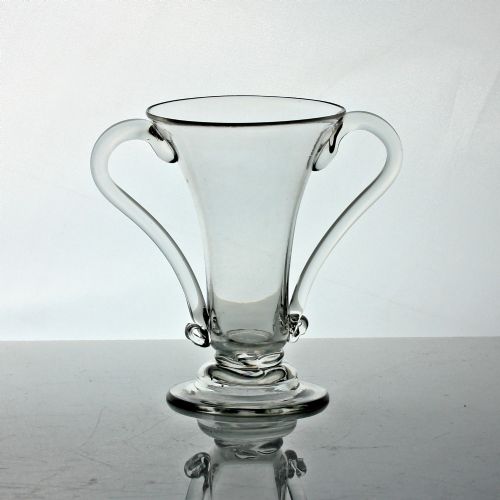
- A capacious drinking glass on a short stem, popular in the Georgian and Victorian periods for ale or wine. These sturdy vessels often feature bucket or ogee bowls.
- Air twist
- A decorative stem enclosing elongated bubbles or spirals of air trapped within the glass. Makers created these by drawing and twisting the molten material.
- Bonnet glass
- A small, elegant vessel with a shallow bowl and wide foot base, used in the eighteenth century for sweetmeats or jellies. The form sits low on the table.
Vintage Drinking Glass: Frequently Asked Questions
How do I date an old glass?
Dating relies upon examining the pontil mark on the underside, the composition of the metal, and the overall form of the bowl and stem. Georgian pieces often show distinct pontil scars and heavy lead content compared to later machine-made items.
Style indicators such as air twists or faceted stems help narrow the decade of manufacture. Comparing the piece to established period typologies confirms its era.
Can I use these glasses daily?
Many vintage drinking glass examples remain robust enough for regular use, provided they receive careful hand washing rather than machine cleaning. Thermal shock and harsh detergents can damage older lead glass over time.
Delicate eighteenth-century stems require extra caution during handling. Storing them securely prevents rim chips and preserves the integrity of the antique material.
What is a rummer used for?
A rummer served as a heavy-duty vessel for ale, beer, or wine during the Georgian and Victorian eras. Their generous capacity suited hearty toasts and communal dining tables.
The thick wall and sturdy foot made them practical for everyday tavern or household use. Today, collectors value them for their solid proportions and tactile presence.
Are twist stems fragile?
Twist stem glasses contain internal glass threads encased within the main stem structure, maintaining standard structural strength for glass of that period. Normal handling does not compromise the internal twists.
Care must be taken to avoid impact on the thin bowl walls and the wide foot base. Gentle placement on wooden surfaces keeps the fragile extremities safe.