


Antique Style Elbow Chairs
Antique style elbow chairs offer generous seating with defined armrests, combining historical design with comfort for any room.
Antique Style Elbow Chairs
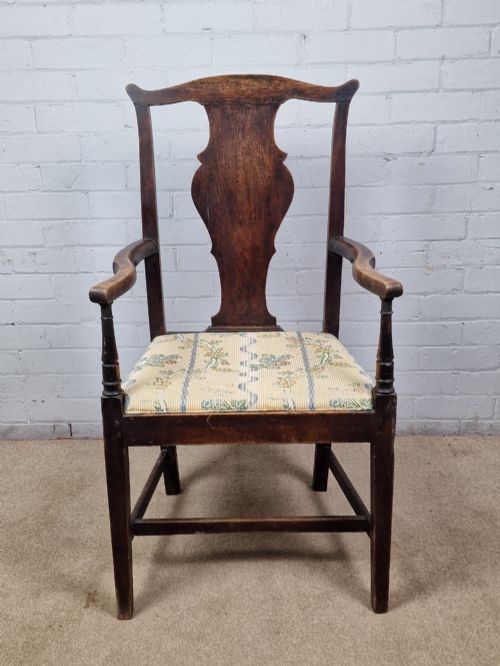
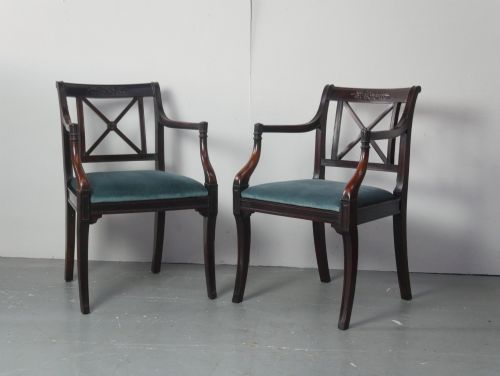
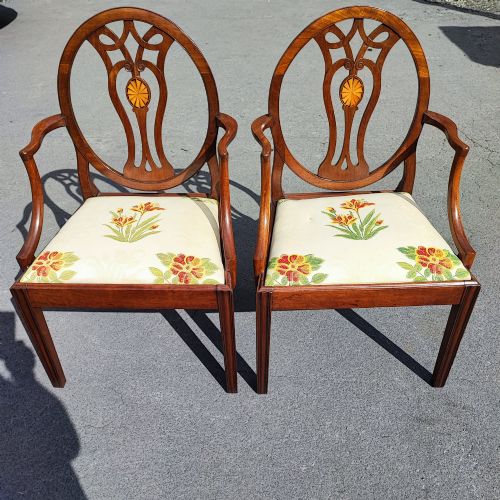
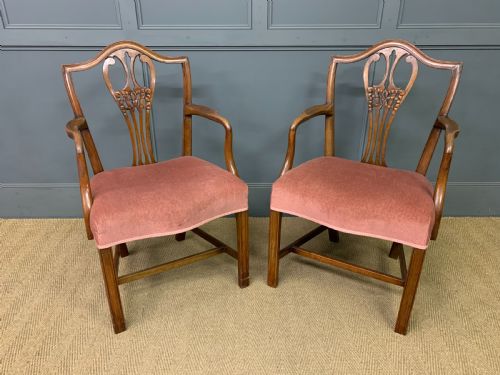
These seating pieces are known variously as armchairs, carvers, desk chairs, and library chairs, designed with supporting armrests for comfort. When exploring antique style elbow chairs, buyers encounter forms ranging from formal dining carvers to relaxed library seats and country vernacular models.
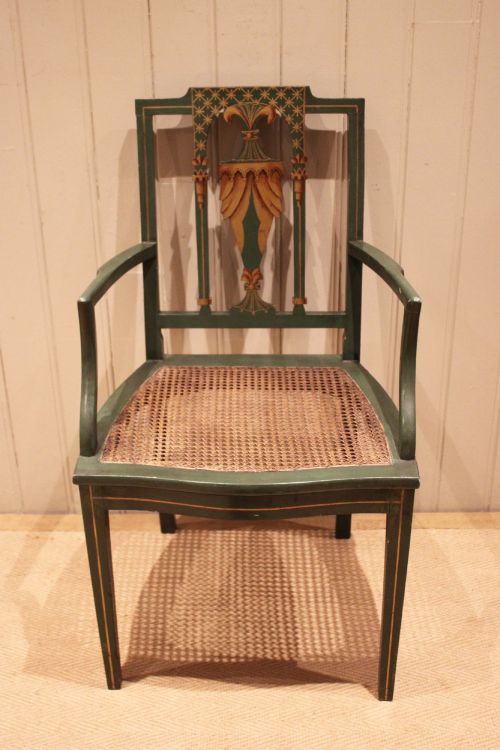
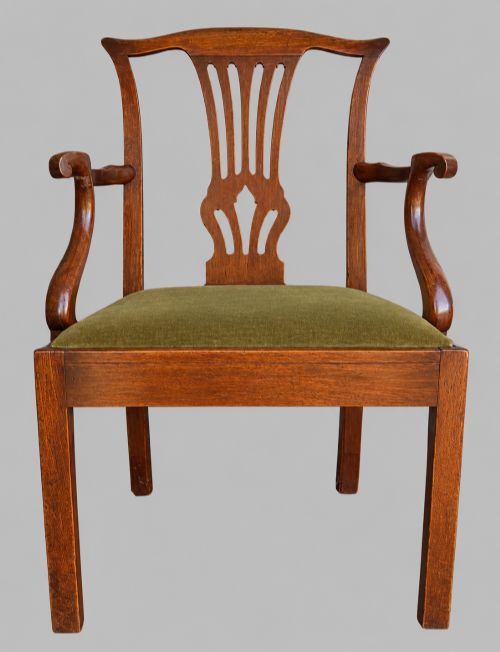
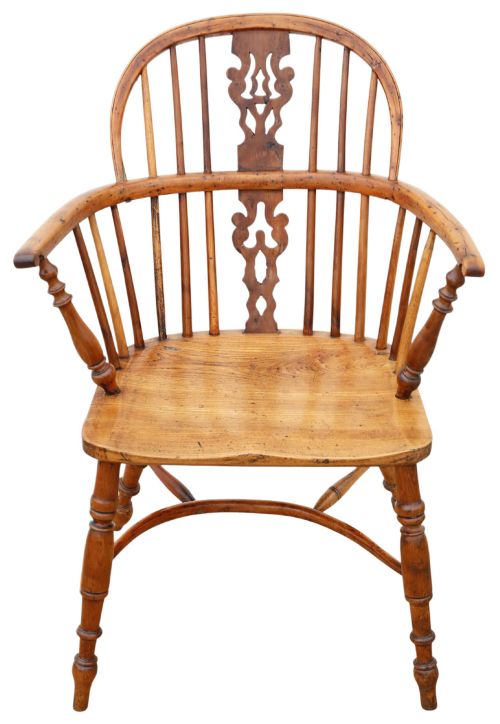
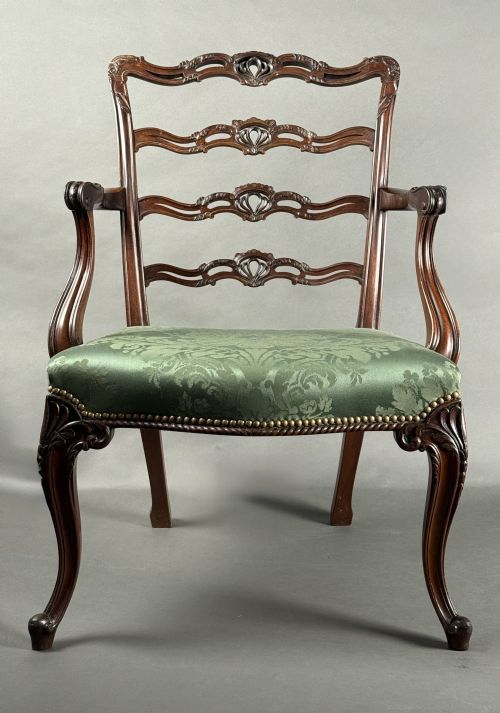
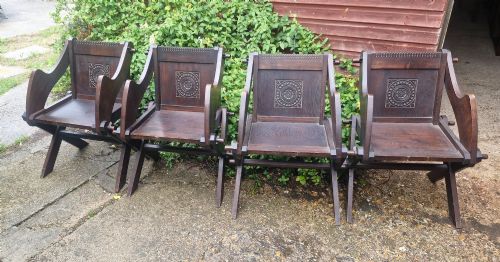
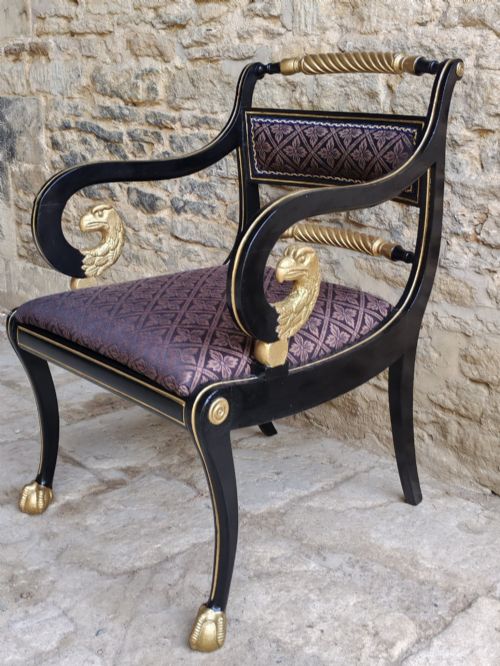
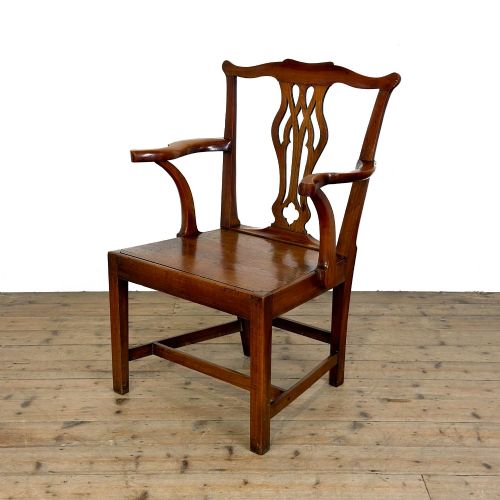
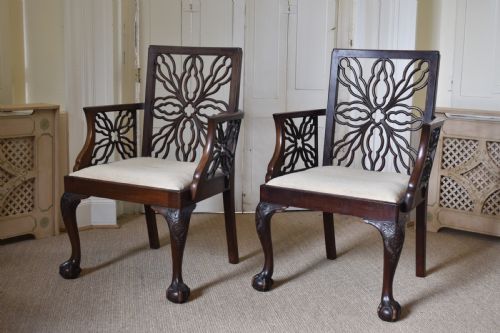
The selection includes pieces spanning the eighteenth century through to the Edwardian period and revival eras, showing influences from Georgian, Regency, and Victorian design. Common iterations include Chippendale style mahogany chairs, Sheraton revival cane-seated examples, and sturdy oak or elm country armchairs.
Makers and workshops across Britain, Europe, and further afield adapted classical silhouettes, producing both formal parlour seating and regional country variations. Buyers typically look for these items to serve as functional desks seats, bedroom chairs, or feature armchairs in living spaces.
How they were made
Makers utilised solid timbers such as mahogany, walnut, oak, ash, elm, and fruitwood, often selecting dense woods for carved structural components. Joinery relied on traditional mortise and tenon construction, frequently reinforced with pegged joints or internal corner blocks to ensure frame stability.
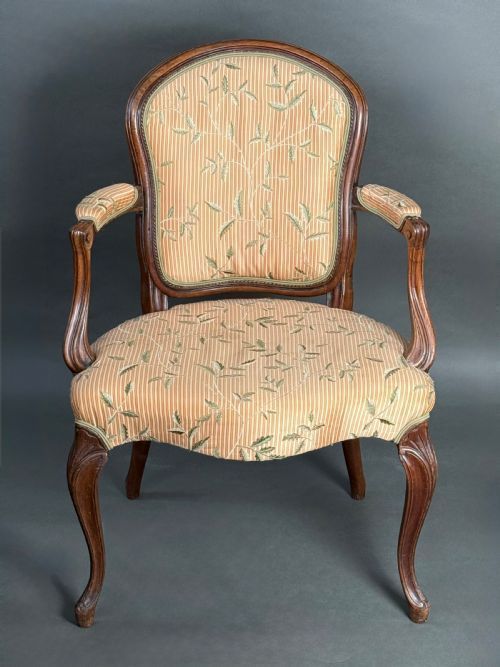
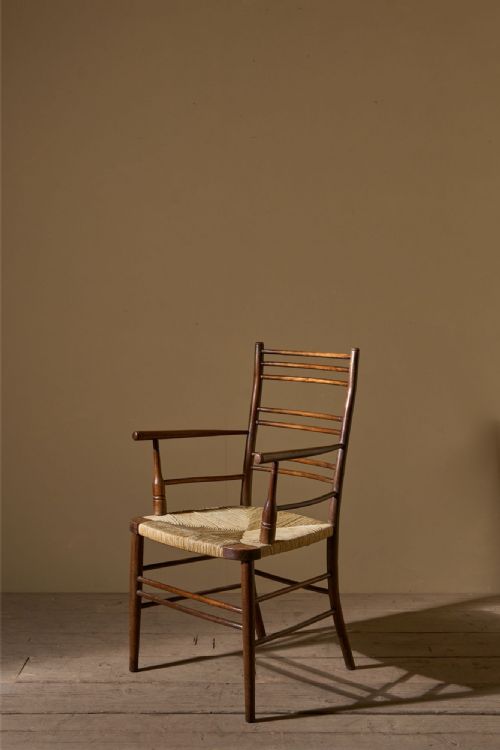
Surface detailing involved hand carving on splats, arms, and legs, alongside decorative inlays of contrasting veneers or painted finishes. Seat platforms were constructed using cane webbing, rush cord, or drop-in upholstered frames padded with traditional stuffings and covered in fabric, silk, or velvet.
A Swedish folk art armchair brings rustic charm alongside refined English country vernacular and Anglo-Indian carved pieces.
What varies in quality
The degree of refinement in hand carving separates standard production from superior pieces, with crisp detailing on acanthus leaves, claw-and-ball feet, and pierced splats indicating skilled workmanship. The choice of timber also dictates quality, as dense, well-figured mahogany or quarter-sawn oak displays better grain depth and structural endurance over time.
Integrity of construction defines the upper tier, where joints remain tight and original timber components show minimal replacement or excessive wear. Well-executed revival pieces from later periods often match the structural rigour of eighteenth-century originals through careful adherence to traditional joinery methods.
Liberty Morris And Co
The Antique Style Elbow Chairs Glossary
- Elbow chair
- A term used historically for an armchair, particularly those with open arms designed to accommodate wider garments. These pieces often served specific functions at desks or dining tables.
- Carver chair
- An armchair traditionally placed at the head of a dining table, matching the style of surrounding single chairs. They provide wider seats and supportive armrests for the host.
- Splat
- The vertical wooden slat positioned in the centre of a chair backrest, frequently shaped, carved, or pierced in styles such as Chippendale or Sheraton. It provides structural support and aesthetic detail.
- Cane
- Woven rattan strips utilised to form breathable, flexible seat panels or back inserts. This material appears frequently in Regency and revival seating.
- Library chair
- A heavy, stable armchair designed for reading rooms, often featuring upholstered armrests and sturdy timber frames. They prioritise prolonged comfort and scholarly utility.
Antique Style Elbow Chairs: Frequently Asked Questions
What is an elbow chair?
An elbow chair is a traditional term for an armchair, featuring low or open armrests designed to support the arms while seated at a desk or table.
These pieces function well as standalone accent items or paired with dining tables as host seating.
How do I style an antique armchair?
Place an antique armchair in a study, hallway, or living room to add architectural interest and functional seating. Their varied timber tones and historic silhouettes complement both traditional and modern interiors.
Pair them with complementary side tables or position them near reading lamps to highlight their carved details and upholstery.
What timber was used?
Makers constructed these chairs from a variety of woods including mahogany, walnut, oak, elm, ash, and fruitwood. Hardwoods like mahogany and walnut were favoured for formal urban seating, while regional timbers like elm and ash suited country vernacular designs.
Selection depended on the workshop location and the intended function of the chair.
Are these chairs comfortable?
Comfort varies depending on the seat construction, with upholstered pads and sprung frames offering a softer sit than rigid wood, rush, or cane panels. Many models were designed with ergonomic curved backrests and supportive arm heights for extended use.
Adding loose cushions can enhance the comfort of cane or wooden-seated versions during daily use.