



Fretwork Back Armchairs
These fretwork back armchairs bring intricate joinery and lasting timber frames into any room, offering both historic character and structural elegance.
Fretwork Back Armchairs
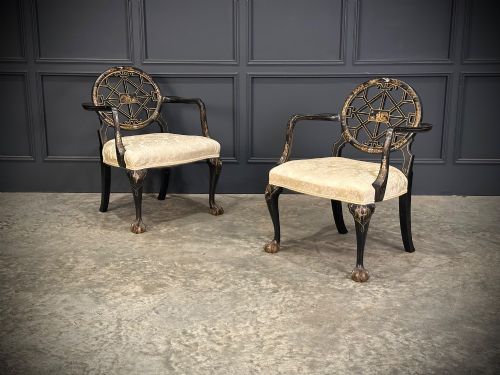
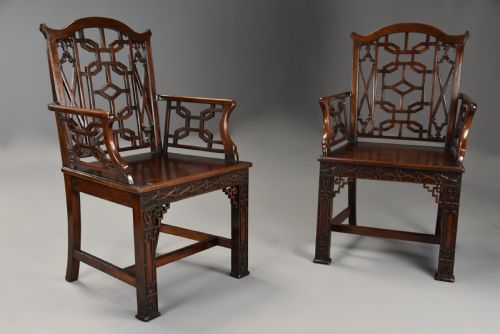
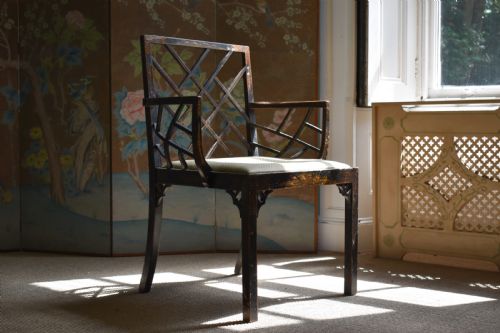
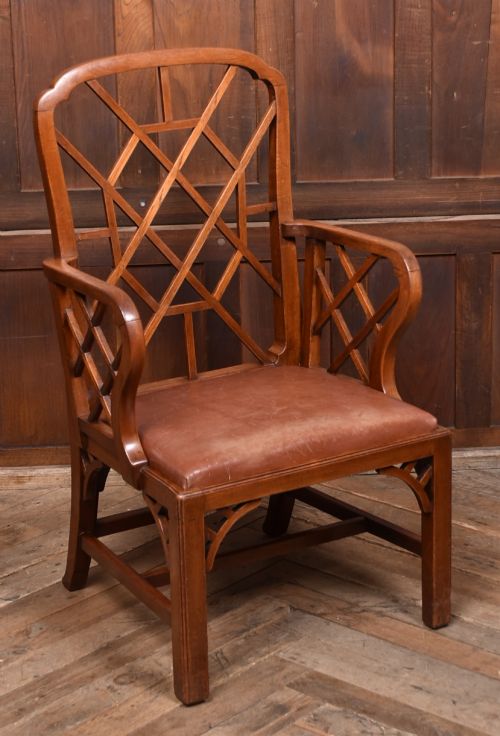
Fretwork back armchairs combine structural seating with open woodwork patterns derived from Chinese design or Gothic tracery. When you search for fretwork back armchairs, you encounter forms ranging from mid eighteenth century Chinese Chippendale open armchairs to Edwardian and later revival pieces.
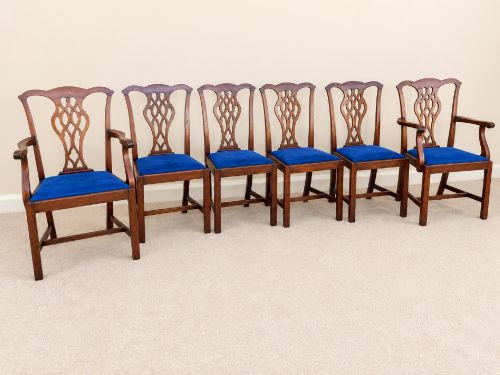
The selection includes dining chairs and open armchairs alongside specific variants like Cockpen chairs and Gainsborough armchairs. Materials span mahogany and Chinese hardwood, often paired with fabric, leather, or damask squab cushions.
Examples appear across multiple periods, including Georgian, Regency, Edwardian, and the early twentieth century. Most pieces on this page utilise timber frames shaped with pierced splats and intricate back designs.
How they were made
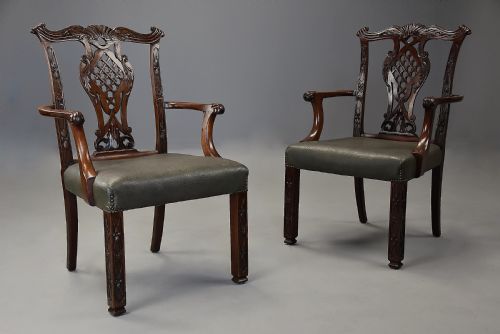
Cabinetmakers constructed these frames using solid mahogany and Chinese hardwood, employing mortise and tenon joints to bear the weight of the open fretwork splats. Skilled carvers pierced the timber by hand to create geometric, lattice, or pagoda patterns across the backrest.
Surface decoration involved clear polishing to highlight the timber grain, alongside black lacquer and gilding on Chinoiserie examples. Upholstered variants incorporated fabric, leather, or damask fastened over traditional stuffing.
Fretwork Back Armchairs Retail Price Guide 2026
Typical asking prices for fretwork back armchairs among the pieces listed under this phrase on Sellingantiques today, from the lower quarter to the upper quarter. They describe what is for sale here now, not the wider market.
Listings feature mahogany, timber, and Chinese hardwood across Georgian, Regency, and Edwardian periods.
What varies in quality
The crispness of the hand carving separates standard production from finer examples, particularly where pierced fretwork meets the upright stiles. Superior pieces maintain crisp geometric edges and balanced proportions across the arms and legs.
Timber selection also dictates the grade of the chair, with dense mahogany displaying a deeper natural patina than lesser secondary woods. Painted Chinoiserie versions depend on the preservation of the original lacquer and gilding layers.
Thomas Chippendale
The Fretwork Back Armchairs Glossary
- Fretwork
- Openwork timber carving formed into geometric or repeating patterns, typically applied to chair back splats. This technique draws heavily on Asian design influences popular during the eighteenth century.
- Cockpen chair
- A specific form of armchair featuring a lattice grid fretwork back and straight legs. The design originates from eighteenth century Chinese Chippendale inspiration.
- Gainsborough armchair
- A wide seat armchair with an upholstered back, open padded arms, and square or cabriole legs. These chairs appeared during the Georgian period for library and desk use.
- Chinoiserie
- European interpretation of Chinese artistic motifs, featuring lacquer, gilding, and painted scenes. This style appears on several armchairs listed on this page.
- Patina
- The surface sheen and colour developed by timber over decades of handling and polishing. Fine patina indicates age and regular care of the mahogany surface.
Fretwork Back Armchairs: Frequently Asked Questions
What is a fretwork back armchair?
A fretwork back armchair is a seating form featuring an open, pierced wooden splat in the backrest. These designs often draw on Chinese or Gothic architectural motifs.
They appear in various styles from the eighteenth century onwards, utilising timber frames such as mahogany and Chinese hardwood.
How do I identify a Chinese Chippendale chair?
Chinese Chippendale chairs are marked by intricate fretwork patterns, straight square legs, and sometimes pagoda style crest rails. They emerged during the eighteenth century and saw revivals in later periods.
Look for pierced lattice work in the back splat and robust timber construction.
Were these chairs used for dining?
Many fretwork back designs were made as dining chairs or open armchairs to surround a table. They provided formal seating for elite households.
Armchair versions typically sat at the head of the dining table or served as occasional seating in parlours.
How do I care for mahogany fretwork?
Maintain mahogany fretwork by keeping it away from direct heat sources and sudden humidity changes. Dust the intricate carved areas gently with a soft brush.
Apply suitable wax polish occasionally to preserve the timber grain and surface sheen.