




Lacquered Accent Chairs
Lacquered accent chairs bring surface depth and striking colour to a room, ranging from Chinoiserie armchairs to Victorian papier-mâché seats.
Lacquered Accent Chairs
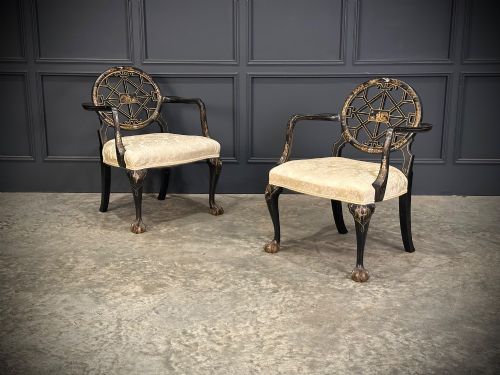
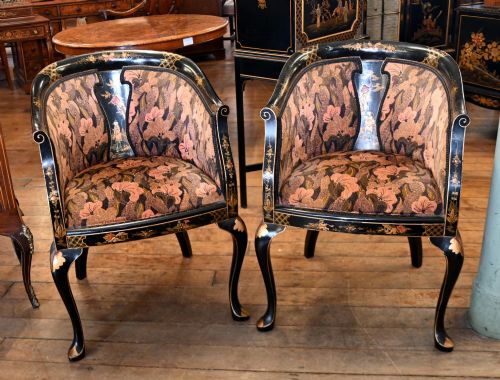
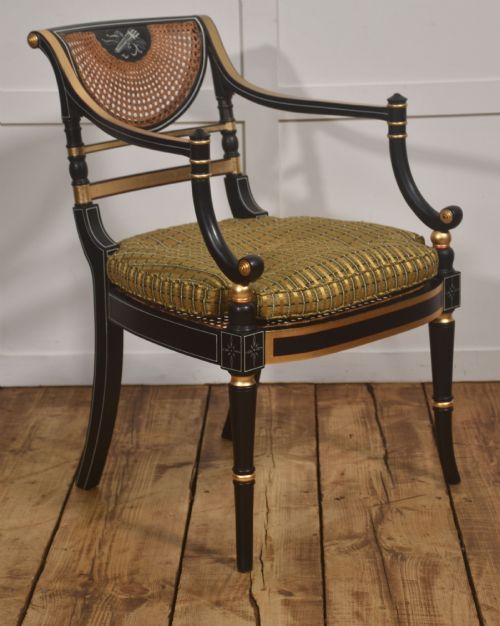
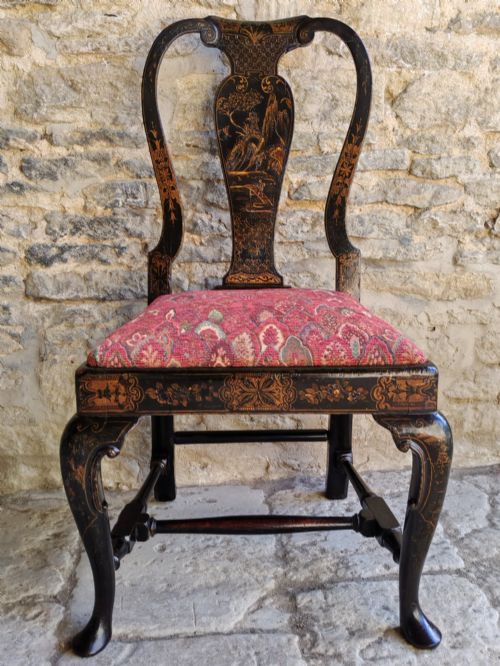
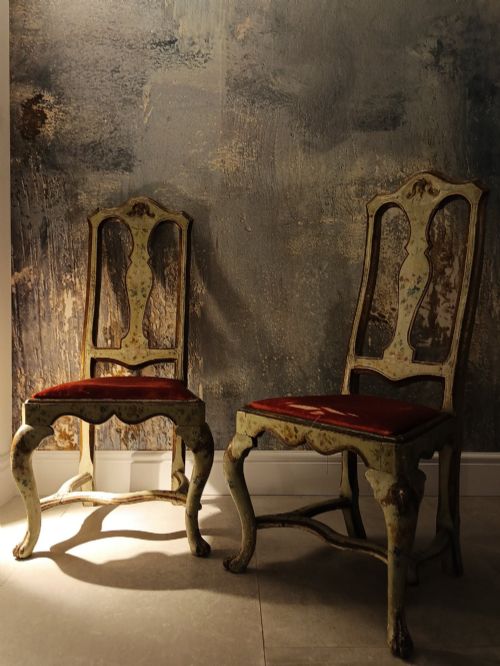
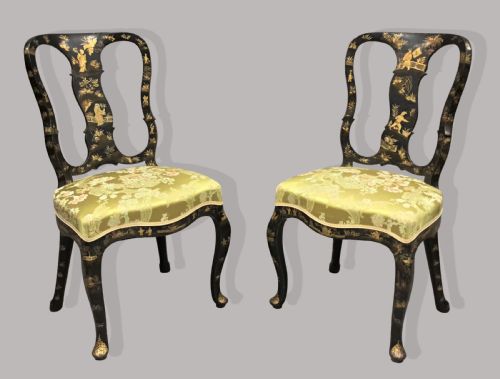
Lacquered accent chairs span distinct periods and regional traditions, appearing as eighteenth-century European interpretations alongside nineteenth-century Chinese elm forms. Buyers seeking lacquered accent chairs encounter varied seating types, including armchairs, side chairs, hall chairs, and bedroom chairs designed to stand out rather than sit around a dining table.
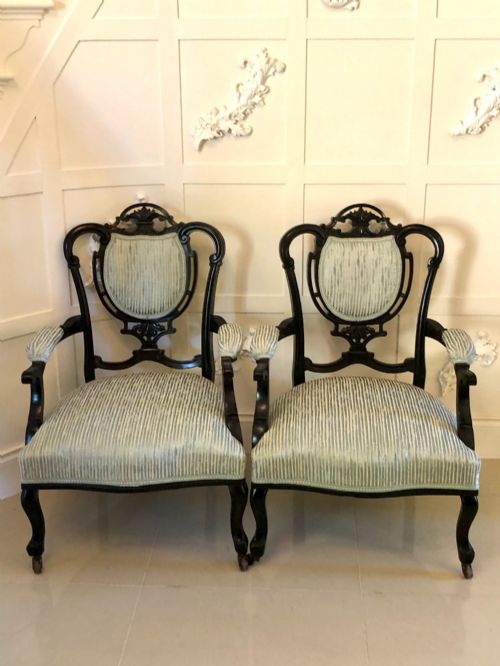
The selection ranges from early geometric side chairs to ornate Victorian library chairs and Edwardian Chinoiserie examples. Many pieces survive in pairs, offering symmetrical placement for hallways, drawing rooms, or bedrooms.
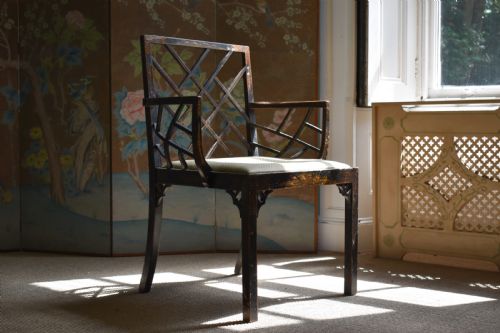
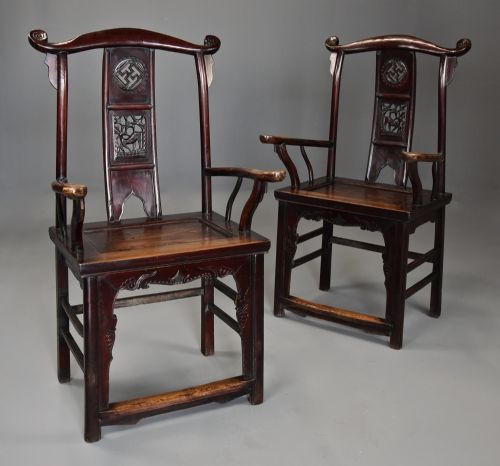
Origins stretch from English and Dutch workshops applying gilt decoration to Asian exports and regional Chinese elm yokeback armchairs retaining original red finishes. Each piece relies on decorative surface work to define its presence in an interior.
How they were made
Construction combines structural timbers such as elm, satinwood, and ebonised wood with specialised surface treatments including lacquer, papier-mâché, and paint. Artisans built frames using traditional joinery before applying successive layers of varnish or pigment to build up depth.
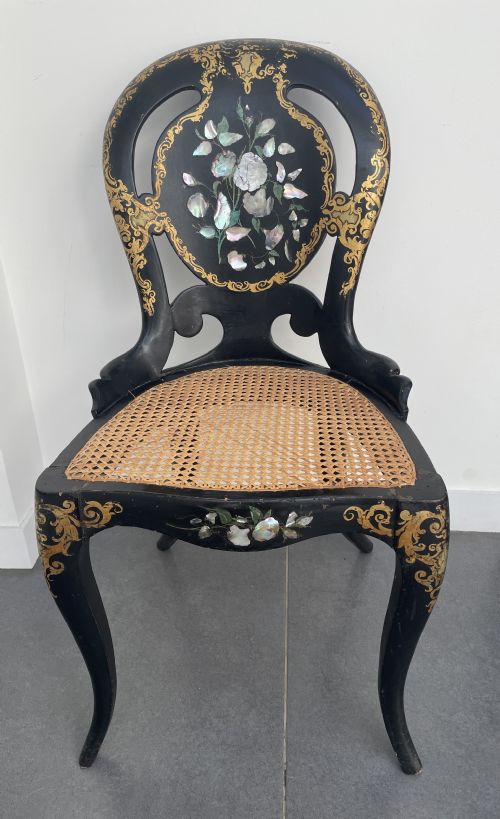
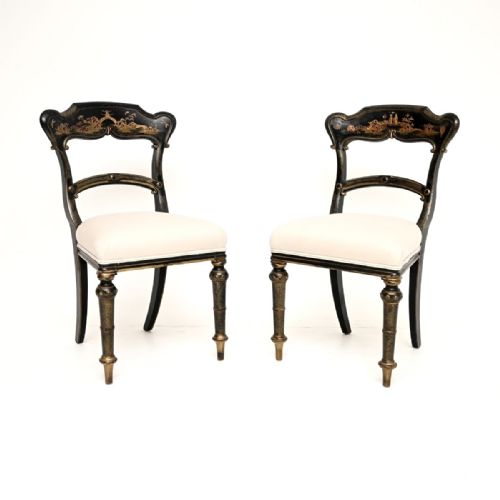
Surface ornamentation often incorporates gilt decoration, mother of pearl inlay, and hand-painted Chinoiserie motifs depicting figures and landscapes. Caned seating panels and upholstered pads provide functional support within the decorative wooden frameworks.
Lacquered Accent Chairs Retail Price Guide 2026
Typical asking prices for lacquered accent chairs among the pieces listed under this phrase on Sellingantiques today, from the lower quarter to the upper quarter. They describe what is for sale here now, not the wider market.
Current listings feature materials including lacquer, cane, gilt, elm, and papier-mâché across periods from the eighteenth century through the Edwardian era.
What varies in quality
Quality rests in the preservation of the original surface finish, whether deep black lacquer, red pigment, or gilt detailing. Pieces retaining their initial hand-painted or gilded motifs without extensive modern overpainting hold greater visual integrity.
The sophistication of the timber frame and the crispness of carved details, such as yokeback curves or Victorian library chair backs, distinguish standard utility seating from finer workshop productions. The integration of materials like mother of pearl inlay further elevates a piece.
The Lacquered Accent Chairs Glossary
- Chinoiserie
- European decorative style reflecting Chinese artistic influences, frequently seen in painted lacquer scenes on eighteenth and nineteenth-century furniture.
- Papier-mâché
- A composite material made from paper pulp and binders, pressed into moulds and lacquered to form durable chair backs and frames during the Victorian era.
- Yokeback
- A traditional chair design featuring a curved top rail resembling a yoke, common in Chinese elm armchairs.
- Ebonised wood
- Timber treated with chemical stains or dark finish to imitate expensive ebony, popular in nineteenth-century seating.
- Caning
- Woven rattan strips forming breathable seats or back panels within wooden frames.
Lacquered Accent Chairs: Frequently Asked Questions
How do I care for a lacquered chair?
Keep lacquered surfaces away from direct sunlight and excessive moisture to prevent the finish from cracking or lifting.
Dust gently with a dry, soft cloth and avoid chemical polishes that can damage the underlying varnish.
Are these chairs comfortable for daily use?
Many accent chairs prioritised decorative impact over ergonomic padding, particularly nineteenth-century side and hall chairs.
Armchairs with cane or upholstered seats offer more relaxed seating for occasional living room use.
How can I tell eighteenth-century chairs apart?
Early pieces often feature hand-applied gesso and gilt work over oak or pine structures, showing distinct craquelure.
Construction joints and regional timber choices help separate European workshop interpretations from later revival styles.
What is Chinese elm?
Chinese elm is a resilient hardwood utilised for traditional seating due to its strong grain and flexibility.
It forms the structural base for nineteenth-century red lacquered armchairs and yokeback designs.