


Antique Staffordshire Ornaments
These antique staffordshire ornaments are earthenware and porcelain figures that bring cottage mantelpieces and Victorian parlours directly to life.
Antique Staffordshire Ornaments
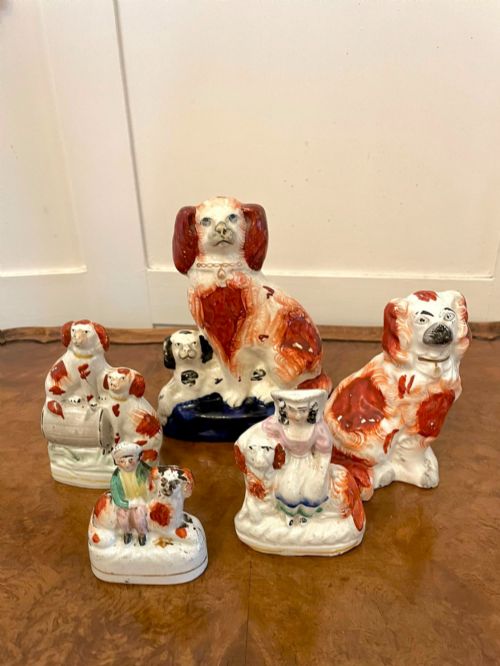
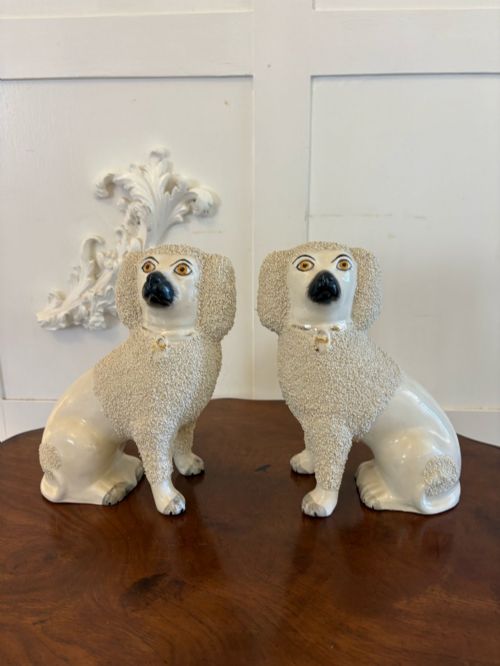
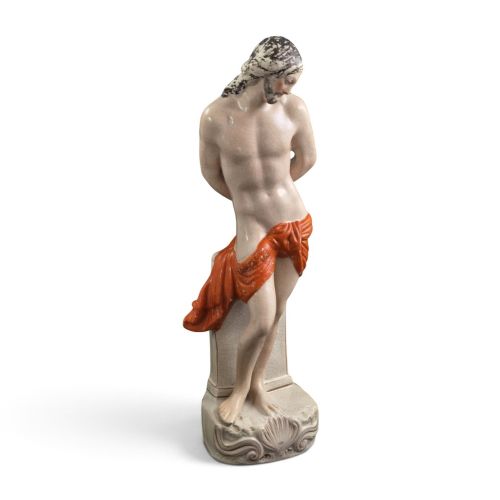
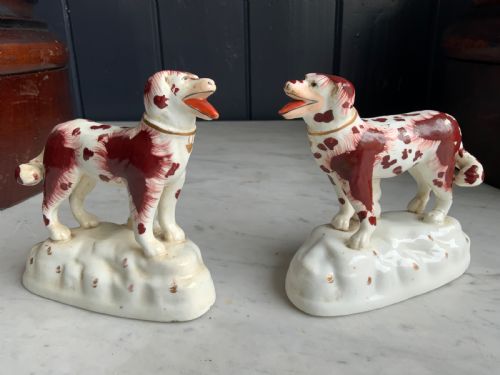
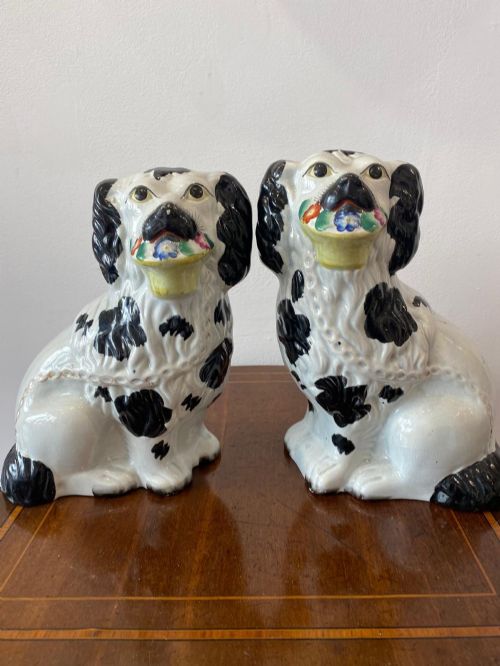
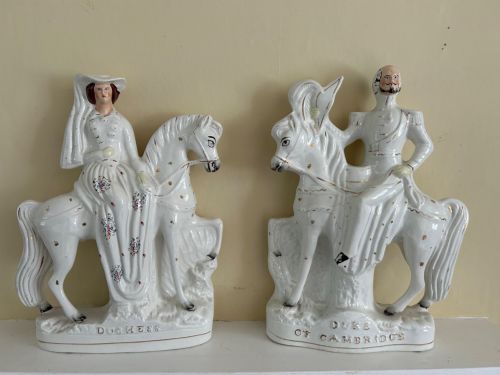
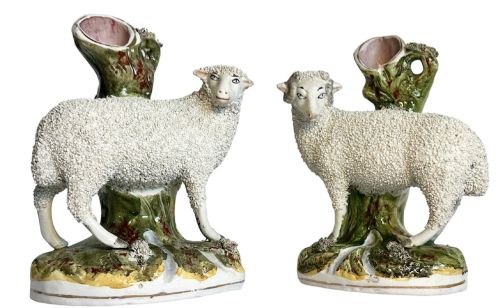
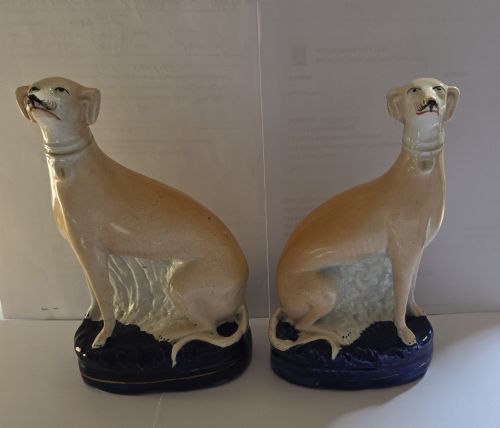
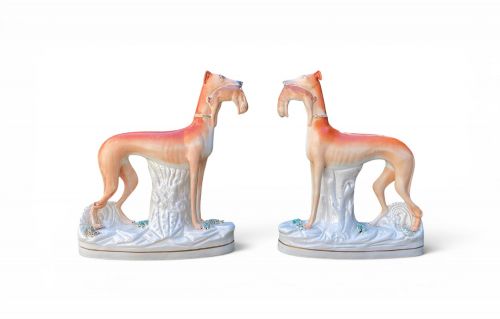
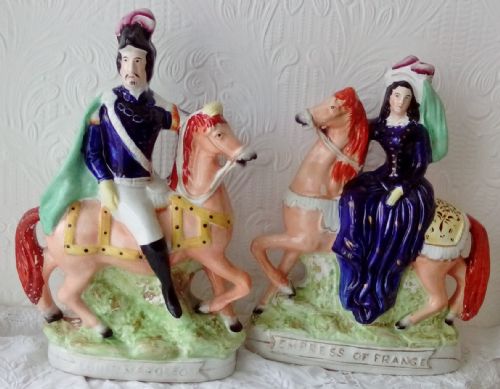
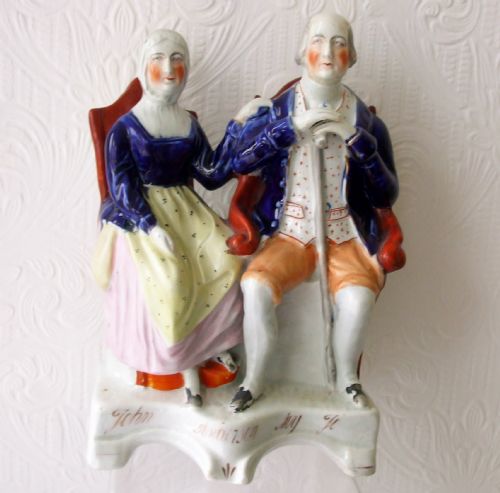
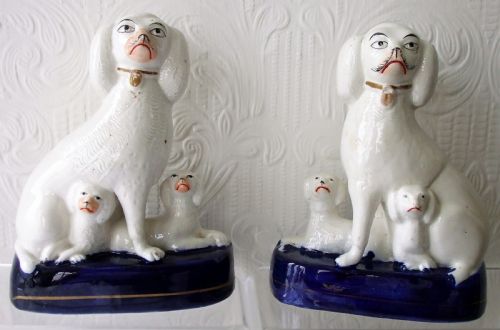
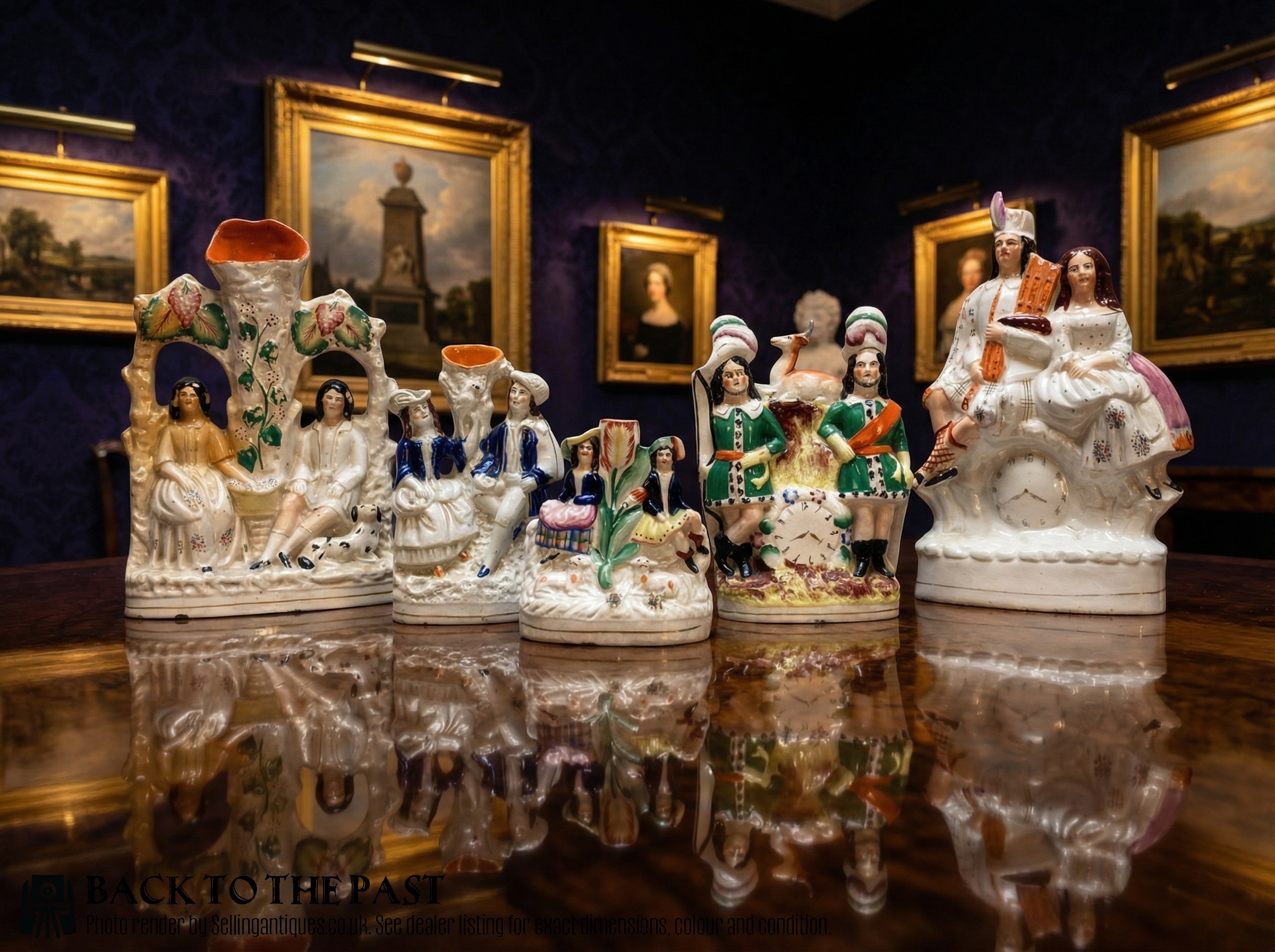
When you search for antique staffordshire ornaments, you encounter a diverse range of ceramic figures, spill vases, and portrait groups spanning the nineteenth century. The most common examples on this page are Victorian earthenware pairs, often depicting spaniels, poodles, and theatrical or historical personages.
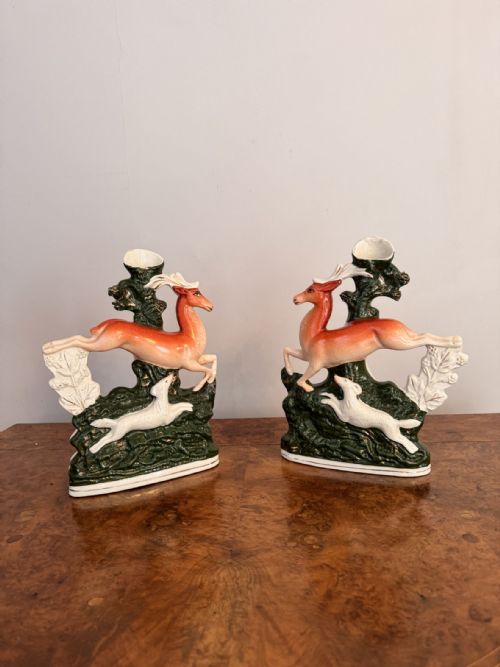
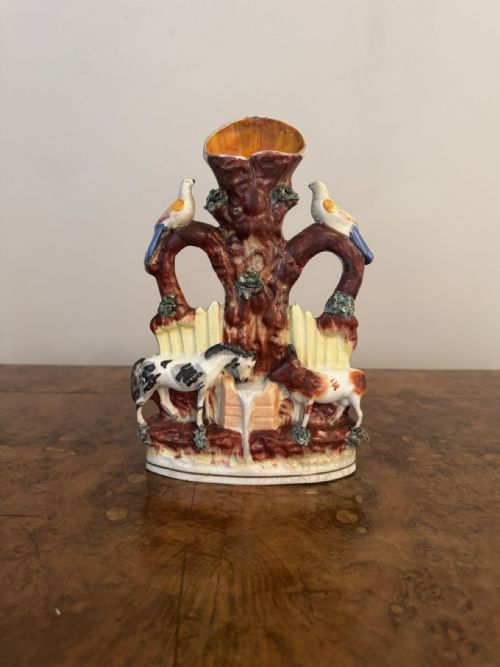
Makers produced these decorative objects predominantly for domestic display, capturing popular culture, royalty, and domestic animals. Pieces extend from simple glazed pottery figures to elaborate spill vases featuring deer, lions, and pastoral subjects.
The aesthetic bridges formal portraiture and robust folk art, reflecting the tastes of nineteenth-century households. You will find flatback figures designed to sit against mantelpiece walls alongside fully modelled three-dimensional groups.
How They Were Made
Potters shaped these objects using earthenware, pearlware, and porcelain, applying lead glazes to seal the porous clay bodies. Enamel colours and gold leaf provide the surface detail, fired at lower temperatures after the initial glaze firing.
Moulds formed the basis of production, allowing workshops to replicate popular figures and animal pairs efficiently. Flatback construction saved materials and weight by leaving the reverse unmodelled for placement against walls.
Pugs, poodles, lions, and cows appear alongside prime ministers and hymn singers, proving Victorian mantelpieces welcomed absolute chaos.
What Varies in Quality
The crispness of the original moulding and the precision of the hand-painting dictate the distinction between ordinary production and superior work. Finer pieces retain distinct facial expressions and clean enamel application without excessive blurring or bleeding into the glaze.
Completeness of the original matched pair and the preservation of delicate surface details, such as gold leaf highlights and applied clay textures, elevate certain items. Early pearlware examples demonstrate finer potting and more subtle oxide painting than mass-produced late Victorian pieces.
Longton Hall·Rockingham Pottery·Ralph Wood·John Bevington
The Antique Staffordshire Ornaments Glossary
- Flatback
- A figure moulded with a finished front and a flat, unglazed or minimally glazed rear designed to stand against a wall.
- Spill Vase
- A hollow ceramic cylinder incorporated into a figure or group, designed to hold wooden spills for lighting fires.
- Pearlware
- A refined earthenware body developed in the late eighteenth century featuring a bluish-white glaze that pooled in recesses.
- Enamel
- Opaque glass colours applied over the fired glaze and fixed in a muffle kiln.
- Companions
- Matred pairs of figures, most frequently spaniels or poodles, intended to sit facing each other on either end of a mantelpiece.
Antique Staffordshire Ornaments: Frequently Asked Questions
How do I spot a reproduction?
Examine the glaze texture, weight, and painting style under good light, as modern copies often feel overly heavy or display machine-printed transfer details rather than hand-applied enamels.
Genuine nineteenth-century earthenware shows characteristic crazing and wear consistent with age, whereas reproductions typically lack the soft patina accumulated over decades of display.
What are comphanion spaniels?
These seated dogs, frequently called comforter spaniels, were manufactured in mirrored pairs to anchor the ends of a Victorian fireplace mantel.
Potters decorated them with copper lustre patches or simple black markings, reflecting a beloved domestic pet of the period.
Why are some figures flat at the back?
Flatback construction allowed potters to economise on clay and reduce the weight of large figures intended exclusively for mantelpiece display.
Because the pieces sat flush against cottage walls, the reverse required no modelling or detailed glazing.
How should I clean my figures?
Dust gently with a soft, dry brush to prevent accumulation in the crevices of the modelling and around the glazed surfaces.
Avoid water or liquid cleaners, particularly on pieces with delicate enamel colours or gold leaf, which can lift easily from the glaze.
Were these figures made as toys?
These ceramics served strictly as decorative ornaments for parlour and mantelpiece display rather than playthings for children.
Their fragile earthenware bodies and delicate enamel paintwork meant they remained safely out of reach on upper shelves.