
Antique Silver Salt Dishes
These antique silver salt dishes bring timeless craftsmanship and refined utility to the dining table.
Antique Silver Salt Dishes
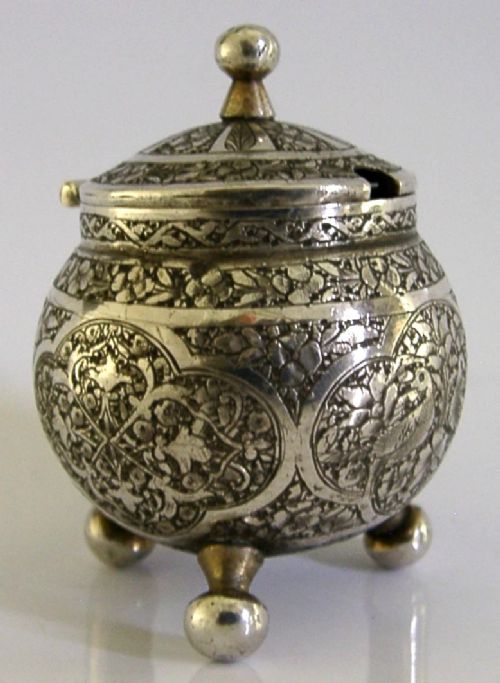
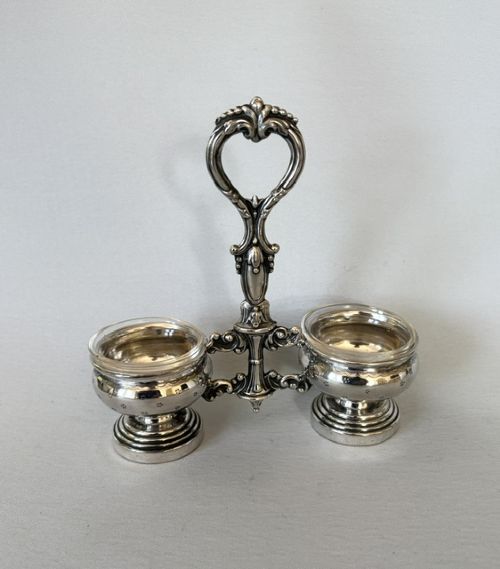
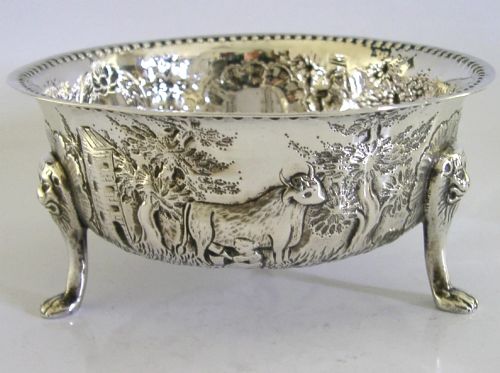
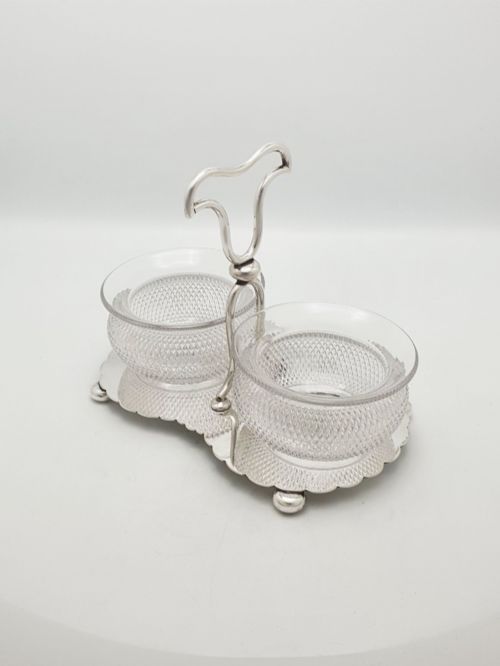
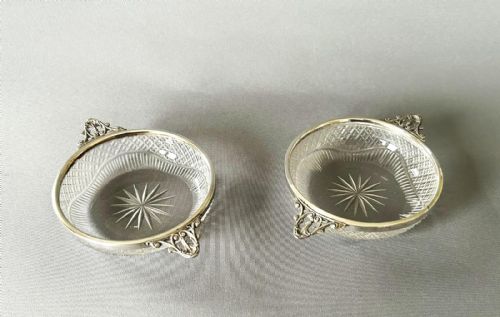
When searching for antique silver salt dishes, buyers encounter a diverse array of open cellars, pedestal forms, and boat-shaped vessels designed for table service. The selection spans distinct eras, ranging from Georgian and Victorian creations to Edwardian and later twentieth-century iterations.
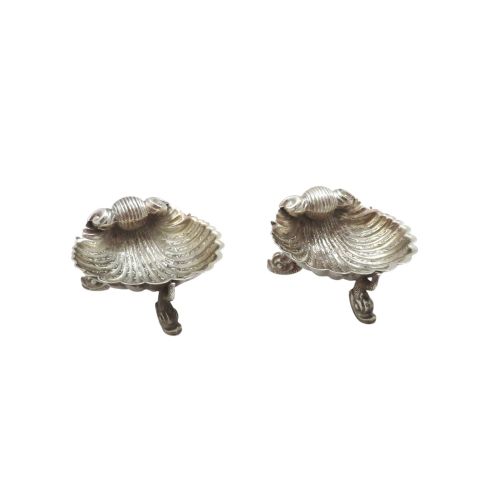
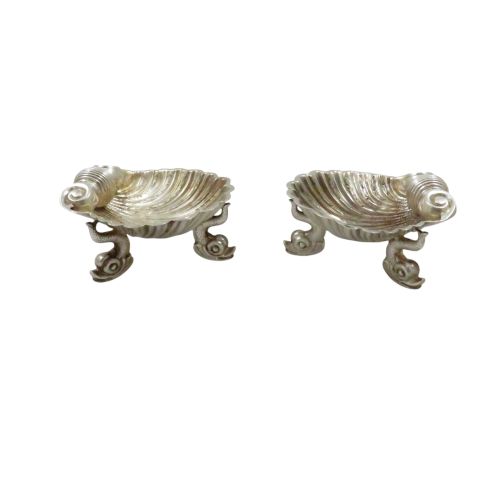
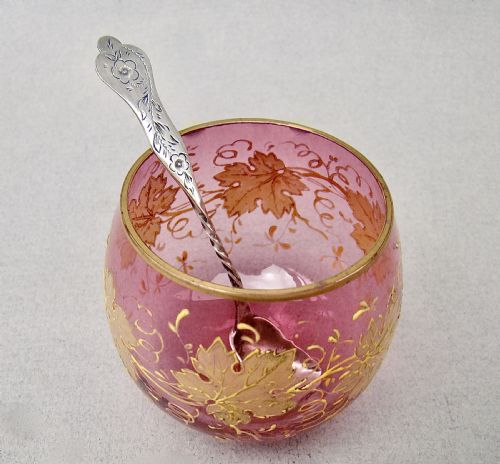
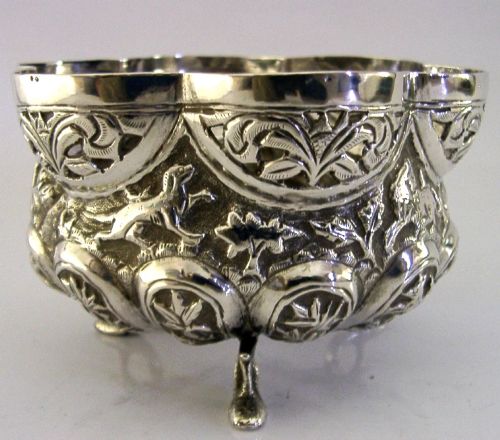
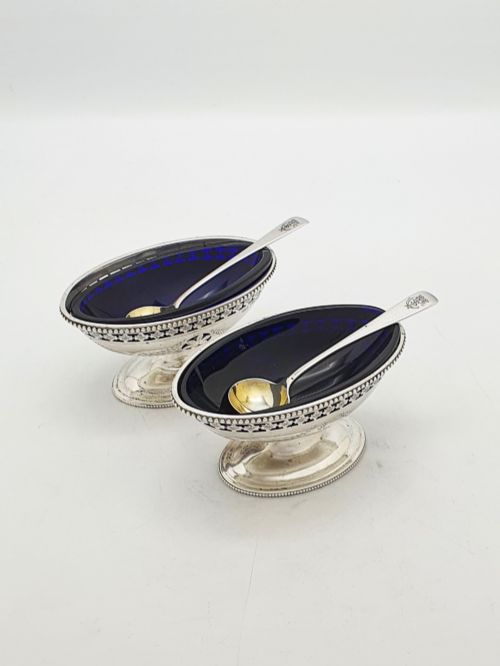
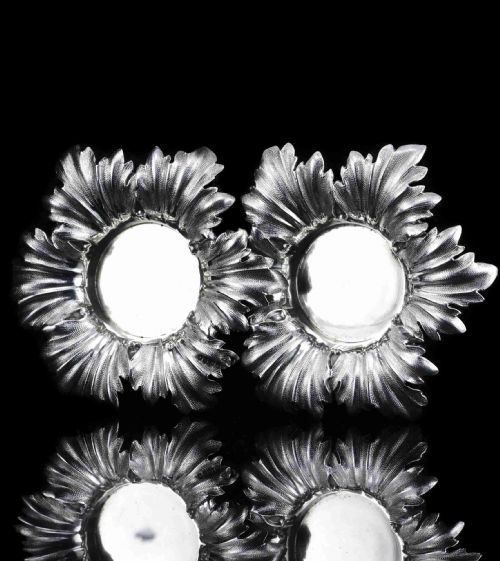
The versions most frequently met on this page include sterling silver shell salts, often raised on three feet or cast in naturalistic floral designs. Many period examples retain their original coloured glass liners, providing a striking contrast to the surrounding metalwork.
Materials and Techniques
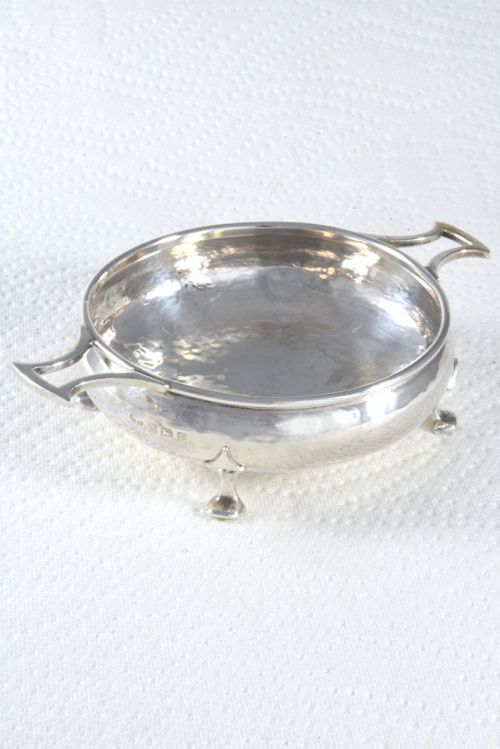
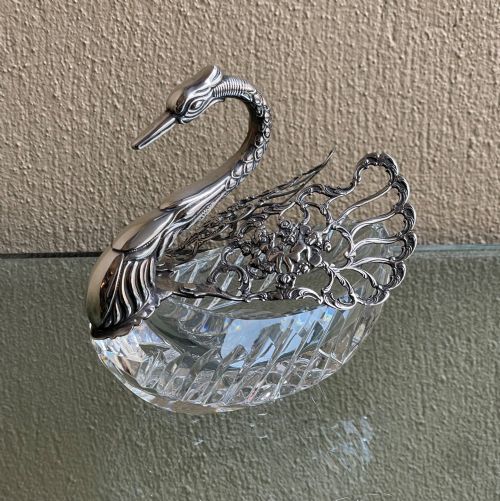
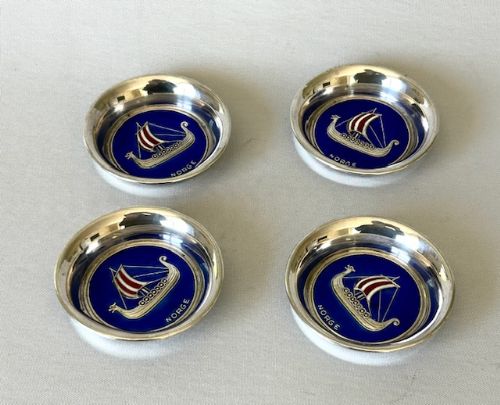
Silversmiths utilised solid sterling silver, silver plate, and silver gilt alongside contrasting elements such as cobalt glass, cut glass, crystal, and carved horn. Techniques combined traditional hand hammering, detailed chasing, and intricate casting to achieve sculptural forms like shells, swans, and botanical motifs.
Interior surfaces frequently received a thin layer of gold wash, known as vermeil or gilt, which protected the silver from the corrosive effects of salt crystals over prolonged use.
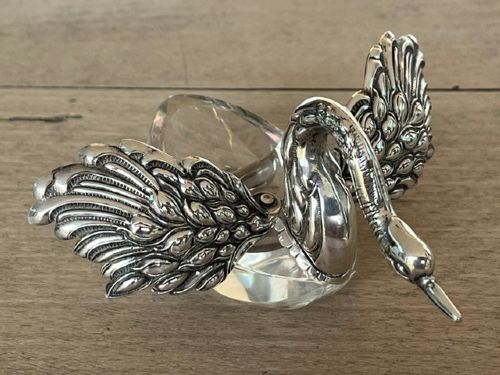
Several antique salts take the whimsical form of swimming swans with movable wings and cobalt glass interiors.
Quality Variations
Distinctions in quality often rest on the crispness of the casting and the depth of the hand-chased ornamentation, separating mass-produced vessels from master silversmith commissions. Pieces attributed to notable makers display superior weight, balanced proportions, and meticulously finished details such as dolphin feet or feathered wings.
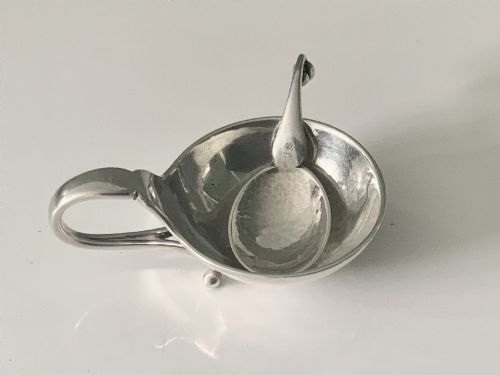
The presence and integrity of original components, including matching spoons and undamaged coloured glass liners, significantly elevate the standing of a salt dish within its period.
Barnards·Georg Jensen·William Bateman·Edward Farrell·Thomas Smily·Mary Sibley & Richard Sibley·Thomas Robbins·Paul Storr
The Antique Silver Salt Dishes Glossary
- Salt Cellar
- A small vessel designed to hold loose salt on the dining table before the advent of mechanical shakers.
- Vermeil
- Sterling silver coated with a thin layer of gold on the interior or exterior surfaces.
- Cobalt Glass
- A deep blue glass frequently utilised as a removable liner inside open silver salt dishes.
- Chasing
- A metalworking technique where designs are hammered into the front surface of the silver rather than carved away.
Antique Silver Salt Dishes: Frequently Asked Questions
How were salt dishes used?
Dining guests used these small open vessels to take pinches of salt during meals, often utilising a dedicated miniature spoon.
Servants placed them at intervals along the dining table for shared or individual use before modern shakers became common.
Do salt dishes need glass liners?
Many Victorian and Edwardian open cellars incorporated removable glass liners to prevent salt corrosion from damaging the underlying silver.
While some designs function entirely in solid metal, surviving period liners add considerable authenticity to the piece.
How do I clean antique silver?
Gentle washing with warm water and mild soap removes daily grime without harming the historic patina of the silver.
Specialist silver cloths should be used sparingly, avoiding harsh chemical dips that strip away desirable age characteristics.
How to tell periods apart?
Stylistic shifts provide key clues, moving from ornate Georgian rococo shells to Victorian naturalistic floral motifs and later Art Deco geometries.
Hallmarks stamped directly onto the metal offer definitive proof of the exact assay office and year of manufacture.