



Antique Silver Metal Centrepiece
An antique silver metal centrepiece anchors a dining table with substantial presence, bringing period craftsmanship and gleaming display to formal spaces.
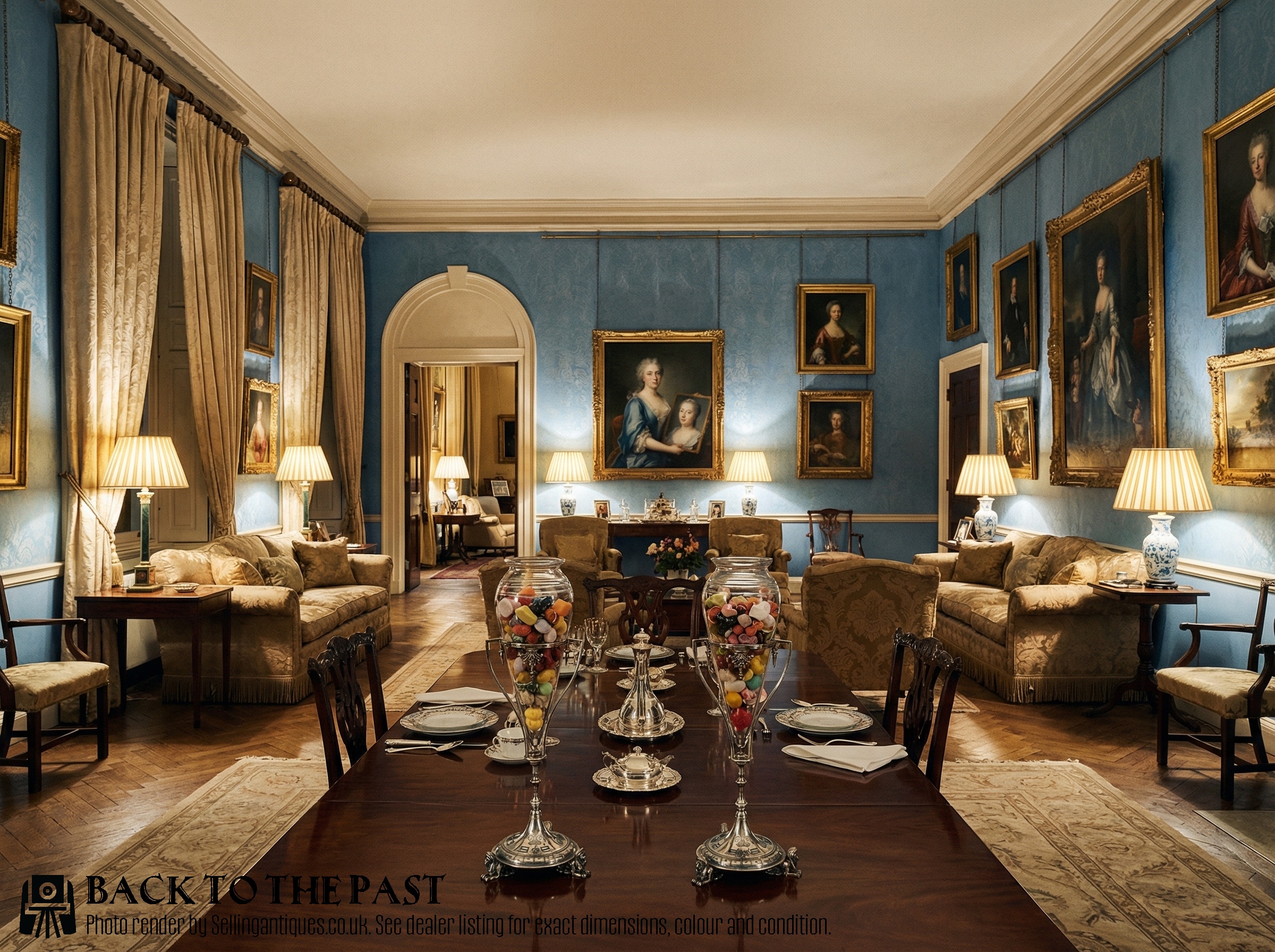
Antique Silver Metal Centrepiece
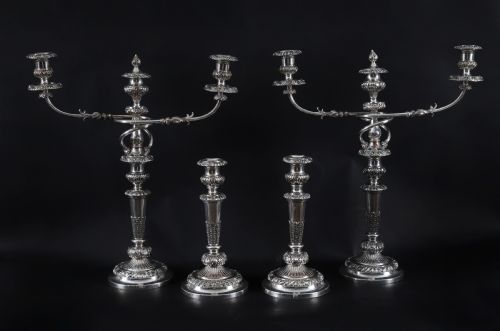
An antique silver metal centrepiece serves as a dramatic table focal point, drawing together diverse forms such as decorative bowls, epergnes, fruit baskets, and multi-branch candelabra. These table centerpieces range from sweeping Victorian floral arrangements to geometric Art Deco serving vessels and flowing Art Nouveau figural stands.
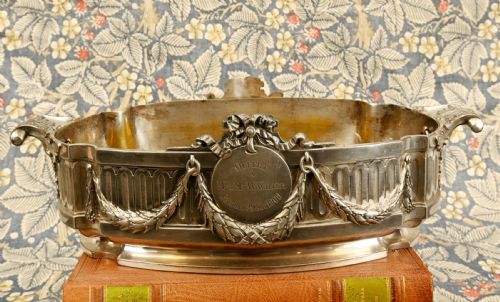
The selection on this page relies heavily on silver plate, white metal, pewter, and Old Sheffield Plate rather than solid sterling silver. Pieces span the eighteenth, nineteenth, and early twentieth centuries, encompassing Georgian symmetry, Victorian elaboration, Arts and Crafts simplicity, and French Neo-Classical refinement.
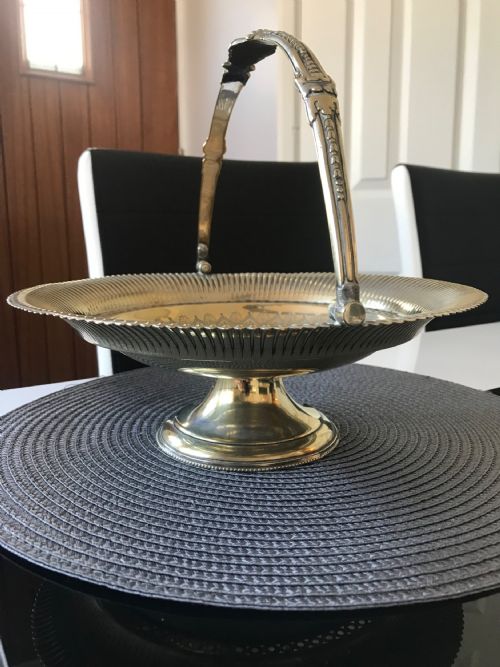
Buyers encounter distinct utilitarian and decorative iterations, including pedestal stands, tazzas, planter centrepieces, and wirework baskets. Each form reflects the dining customs and interior decoration trends of its specific period, from lavish Victorian dinner parties to streamlined twentieth-century table settings.
Materials and construction methods
Makers utilised silver plating techniques, Old Sheffield Plate fusing methods, and white metal casting to achieve the appearance of solid silver at a different scale. Pewter, brass, copper, and bronze also appear, shaped through hammering, spinning, or casting into complex botanical and geometric shapes.
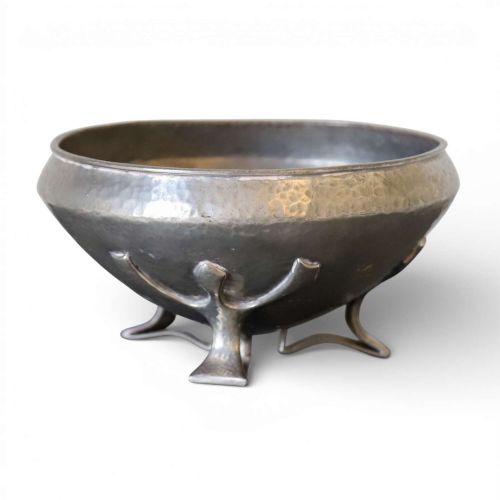
Art Nouveau and Arts and Crafts examples often display hand-hammered surfaces and organic pewter compositions, whilst Georgian and Victorian suites employ heavy Old Sheffield Plate or silver plating over base metal cores. Glass inserts, crystal bowls, and opaque glass components frequently integrate directly into metal frameworks for epergnes and table dishes.
Silver-plated fighting cockerels and leaping pheasants bring an unexpected menagerie directly onto the dining table.
Distinctions in manufacture and design
Quality rests upon the crispness of cast ornamentation, the weight of the metal base, and the integrity of applied or plated surfaces. Superior pieces display finely detailed figural work, balanced proportions, and seamless joints where components meet.
Maker attribution elevates certain pieces, particularly marked works by known firms such as WMF or Liberty & Co. The depth of hand-hammering, the quality of integrated glass elements, and the retention of original gilding or silver plating differentiate standard production items from exceptional workshop examples.
Oliver Baker·Liberty & Co·WMF·Brille
The Antique Silver Metal Centrepiece Glossary
- Old Sheffield Plate
- A composite material made by fusing a thin sheet of silver to a copper base before rolling and shaping. This early plating method produces distinct edge lines where the underlying copper shows.
- Taza
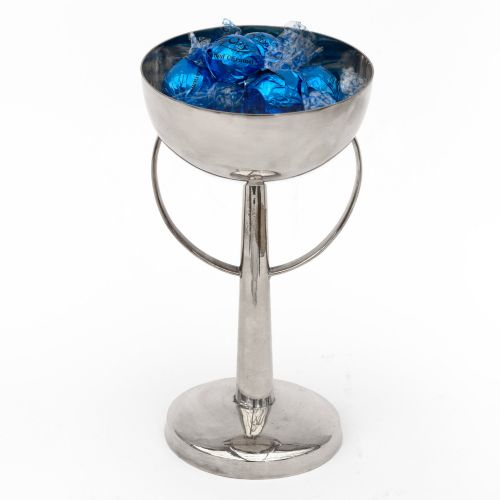
- A shallow cup or bowl raised on a high foot or pedestal, used historically for serving fruit or sweetmeats. These elevated dishes create vertical interest on dining tables.
- Epergne
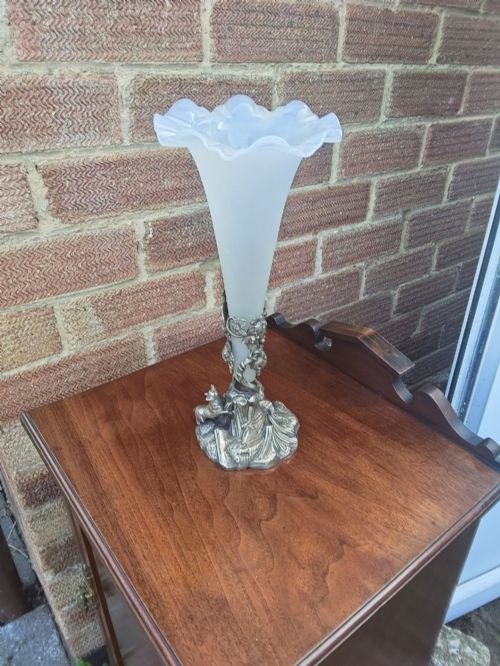
- An ornamental centrepiece featuring a central dish with multiple branching arms holding smaller baskets or vases. They were traditionally filled with fruit, sweetmeats, or flowers.
- Pewter
- A malleable metal alloy consisting primarily of tin alloyed with copper and antimony. In Arts and Crafts and Secessionist metalwork, it provides a muted grey surface well-suited to tactile hammering.
- Cairoware
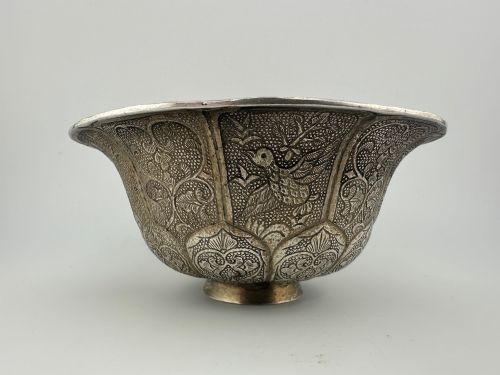
- Metalware inlaid with silver, copper, or gold, produced in Cairo and widely imitated in Victorian Europe. It incorporates dense Islamic geometric patterns onto brass or mixed metal bodies.
- Silver Plate
- A thin layer of silver bonded to a base metal such as copper, brass, or white metal. It allowed nineteenth-century manufacturers to produce large-scale decorative items at a fraction of solid silver costs.
Antique Silver Metal Centrepiece: Frequently Asked Questions
How do I clean plated metal centrepieces?
Cleaning requires gentle methods suitable for silver plate, white metal, or pewter to avoid wearing through thin plating layers. Mild soapy water and soft cloths preserve the remaining surface finish.
Harsh abrasive polishes strip silver plate and expose the base copper or brass underneath, diminishing the historical appearance of the object.
How do I distinguish Old Sheffield Plate?
Old Sheffield Plate involves fusing silver to copper, often revealing faint copper lines along edges and cut corners. This technique predates modern electroplating.
Items utilising this method typically date from the eighteenth or early nineteenth century and possess a characteristic heft and warmth distinct from later nineteenth-century electroplated wares.
What periods do these centrepieces represent?
The available pieces span the eighteenth century, Georgian and Regency eras, Victorian period, Edwardian era, and early twentieth-century movements like Art Nouveau and Art Deco. Each era brings distinct stylistic vocabularies.
Victorian pieces often feature elaborate neoclassical or floral revival motifs, whilst Art Nouveau and Arts and Crafts examples favour organic, whiplash lines or hand-hammered surfaces.