



Antique Satsuma Pottery Jar
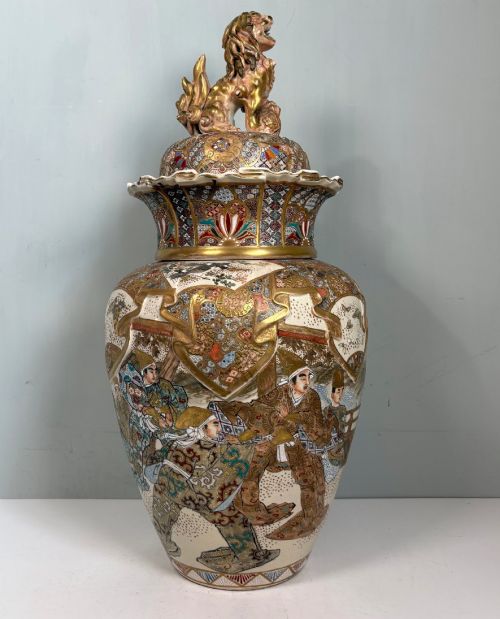
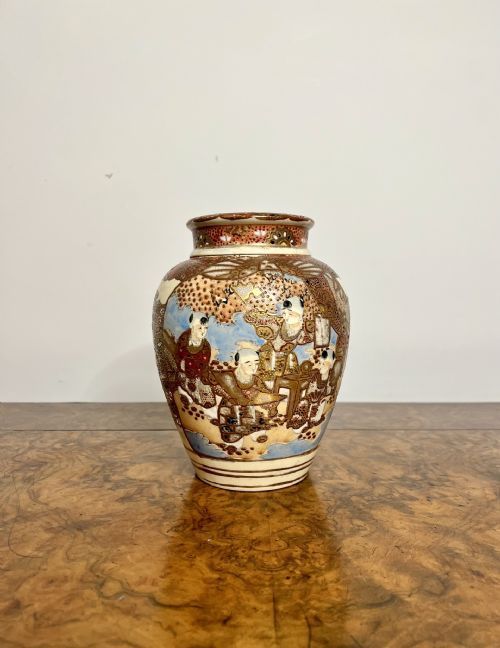
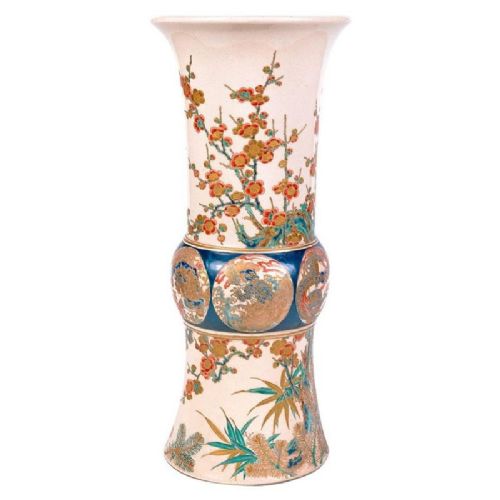
These antique satsuma pottery jar pieces bring intricate hand painted scenes and rich gilding into a room.
Antique Satsuma Pottery Jar
An antique satsuma pottery jar represents a distinct tradition of Japanese ceramic artistry, originating in Satsuma province and flourishing during the Meiji period. When exploring this selection, buyers encounter various forms including ginger jars, lidded vases, tea caddies, and sugar bowls dating from the late nineteenth century to the early twentieth century.
The pieces most frequently met on this page span the 1880s through 1910, often displaying detailed figural or floral motifs enriched with gilt and polychrome enamel. Such vessels serve as striking decorative centrepieces, reflecting the sophisticated aesthetic export markets demanded during the late Meiji era.
Assessing quality
Quality in these ceramics depends heavily on the fineness of the brushwork and the complexity of the figural or botanical scenes. Superior examples demonstrate remarkable control over polychrome enamel and precise application of gold leaf.
The presence of a clear signature from established studios or recognised makers distinguishes finer items from standard production pieces. Furthermore, the overall crispness of the earthenware moulding and the condition of the surface gilding indicate the level of craftsmanship involved.
Listings feature items spanning the 19th Century through 1910, incorporating earthenware, porcelain, enamel, and gold leaf.
Shuzan·Kinkozan·Tokyo Taizan·Shizan·Shozan
The Antique Satsuma Pottery Jar Glossary
- Meiji Period
- The era in Japanese history spanning from 1868 to 1912, characterised by extensive artistic output for international export. Much of the pottery found in this category originates from these decades.
- Polychrome Enamel
- A decorative technique using multiple coloured glass-like paints fused to the ceramic surface. This method creates the vibrant panels seen on traditional vessels.
- Gilding
- The application of gold leaf or gold paint to highlight specific design elements. It provides the characteristic metallic shimmer framing the painted scenes.
- Koro
- A traditional Japanese incense burner featuring a perforated lid. These vessels often include matching covers and three or more feet.
- Earthenware
- A porous type of pottery fired at lower temperatures, commonly used for traditional Satsuma wares before glazing and decoration.
Antique Satsuma Pottery Jar: Frequently Asked Questions
What is a satsuma jar?
A satsuma jar is a decorative ceramic vessel originating from Japan, typically featuring finely detailed polychrome enamel paintings and extensive gilding over an earthenware body. These pieces were produced in various forms, including ginger jars and lidded vases, primarily for export during the late nineteenth and early twentieth centuries.
Collectors and interior decorators value them for their intricate narrative scenes, often depicting figures, landscapes, or floral arrangements. Each jar showcases the high level of craftsmanship achieved by Japanese ceramic artists during the Meiji period.
How do I date a satsuma jar?
Dating these ceramic vessels involves examining the stylistic characteristics, the nature of the craquelure in the glaze, and any signatures or studio marks present on the base. Pieces from the Meiji period generally display exceptionally refined hand-painted details combined with heavy gold leaf accents.
Evaluating the specific form and historical context of the studio provides further clues to the manufacturing decade. Comparing the decorative palette against known examples from the late nineteenth century helps narrow down the production period.
Where were satsuma jars made?
These items originated in the Satsuma province of Kyushu, Japan, though production later expanded to major urban centres and kilns in Kyoto and Tokyo to meet international demand. Kyoto studios became particularly famous for producing highly ornate export wares during the Meiji era.
Different regions and studios developed distinct painting styles, ranging from densely populated figural scenes to delicate botanical motifs. This geographic spread contributes to the varied artistic expressions found within the category.
How should I display my jar?
Displaying these ceramic vessels requires a stable surface away from direct sunlight to protect the delicate polychrome enamels and gold leaf highlights. Placing them on a mantelpiece or within a dedicated cabinet allows the intricate details to be appreciated from multiple angles.
Because many examples include matching lids, keeping the complete set together preserves the visual balance of the object. Ensuring adequate spacing around the piece lets its vibrant colours stand out within a room.