




Antique Porcelain Vegetable Dish
An antique porcelain vegetable dish brings heavy, hand-painted elegance to the dining table, offering deep service vessels for grand feasts.
Antique Porcelain Vegetable Dish
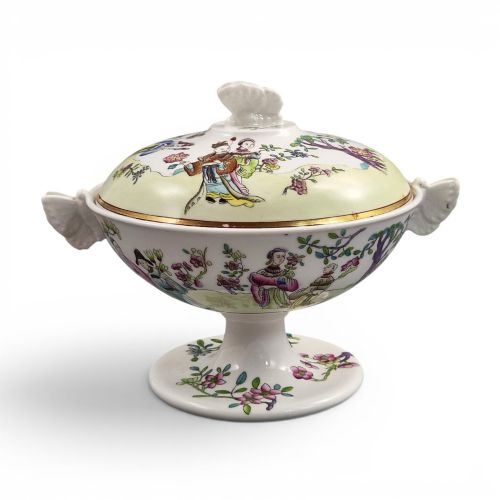
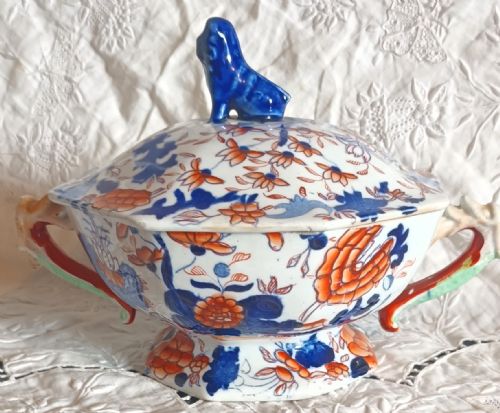
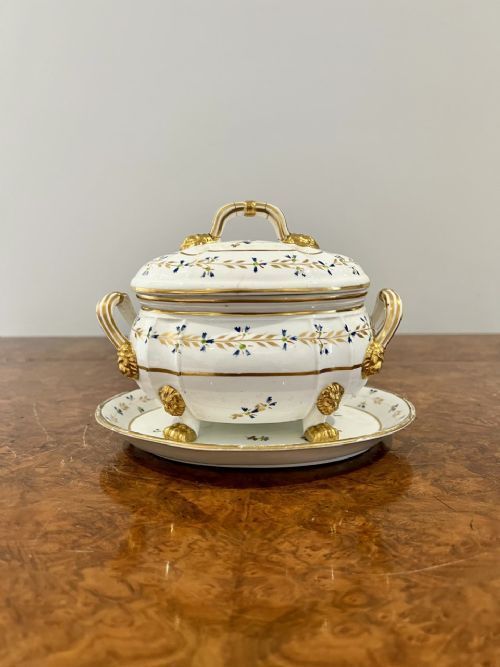
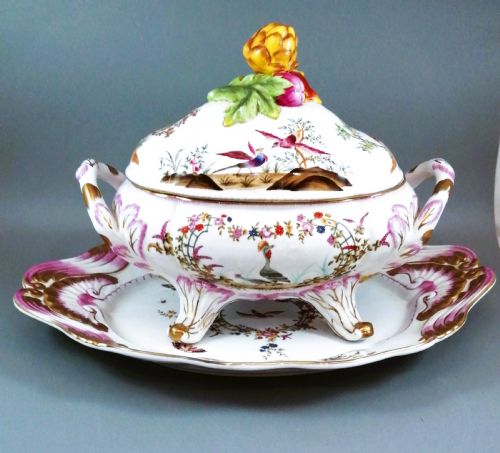
An antique porcelain vegetable dish encompasses covered tureens, entrée dishes, and pedestals designed for serving food at formal meals. When searching this phrase, collectors encounter covered vessels intended for soups, sauces, and vegetables across multiple centuries.
The pieces on this page span the eighteenth and nineteenth centuries, featuring Georgian, Regency, and Victorian aesthetics alongside Chinese Export creations. Ironstone and traditional porcelain bodies dominate, often accompanied by matching covers and stands.
English factories such as Worcester, Mason's, and Coalport sit alongside continental European makers and Chinese Export porcelain from the Qianlong period. Forms range from simple circular entrée dishes to ornate footed tureens with butterfly handles and intricate crests.
Materials and production methods
Potters built these vessels using porcelain, ironstone, and ceramic bodies shaped by hand or mould, then fired them at high temperatures. Glaze coats the clay to seal the surface, creating a smooth, impermeable shell for culinary use.
Makers applied hand-painted enamel colours, transfer printing, and gold leaf gilding to decorate the exterior surfaces. Gilding and enamel work received secondary low-temperature kiln firings to bond the metallic and coloured pigments to the glaze.
Antique Porcelain Vegetable Dish Retail Price Guide 2026
Typical asking prices for porcelain vegetable dish among the pieces listed under this phrase on Sellingantiques today, from the lower quarter to the upper quarter. They describe what is for sale here now, not the wider market.
Some nineteenth-century tureens feature whimsical butterfly handles designed to make formal dining guests smile.
Distinguishing quality in service vessels
The refinement of the porcelain body and the precision of the hand-painted enamels separate standard utility vessels from high-status salon pieces. Crisp moulding and deep, untarnished gold leaf gilding indicate superior workshop standards.
Completeness dictates worth, with matching covers, original underdishes, and paired ladles elevating the status of a tureen. The clarity of underglaze blue painting or complex Imari palettes reflects the skill invested by the painter.
Spode·Mason's·Coalport·Coalbrookdale·Crown Derby·Flight Barr And Barr·Müller Volkstedt·Chamberlain Worcester
The Antique Porcelain Vegetable Dish Glossary
- Tureen
- A deep covered vessel used for serving soups, sauces, or vegetables at the dining table. These pieces usually include matching lids to retain heat.
- Ironstone
- A dense, durable type of heavy earthenware patented in the nineteenth century. It resists chipping better than soft-paste porcelain while accepting enamel decoration readily.
- Imari
- A decorative style featuring underglaze blue combined with iron-red, green, and gold highlights. Originating in Japan, this aesthetic heavily influenced European porcelain factories.
- Qianlong Period
- An era of the Qing Dynasty spanning the eighteenth century known for fine Chinese Export porcelain. Pieces from this time often display intricate blue and white hand-painted motifs.
- Gilding
- The application of gold leaf or powdered gold to ceramic surfaces for decorative emphasis. This technique highlights handles, rims, and crests.
Antique Porcelain Vegetable Dish: Frequently Asked Questions
What is an antique porcelain vegetable dish used for?
These covered vessels served cooked vegetables, soups, and sauces at formal nineteenth-century dining tables. The tight-fitting lids kept food warm between the kitchen and the dining room.
Today, buyers use them as centrepiece display bowls, table ornaments, or functional serving pieces for special gatherings.
How do I date an antique tureen?
Dating relies on factory marks stamped or painted on the underside, stylistic cues like Regency handles, and material types such as heavy ironstone. Examining the glaze and wear patterns under the base also helps establish age.
Consulting recorded operating dates for factories like Flight Barr and Barr narrows the timeframe of manufacture down to specific decades.
Are these dishes safe for daily use?
While durable, antique pieces often feature delicate hand-painted enamel and gold leaf gilding that degrades in modern dishwashers. Hand washing preserves the historic pigments and prevents thermal shock.
Many collectors reserve them for occasional dining or display to protect fragile eighteenth and nineteenth-century glazes from accidental damage.
What is the difference between ironstone and porcelain?
Ironstone is a heavy, opaque ceramic composite patented for everyday durability, whereas true porcelain is a vitrified, translucent ceramic fired at extreme temperatures. Ironstone offers greater resistance to heavy use.
Porcelain tends to display finer translucency when held to the light and sharper details in moulded surface decorations.