
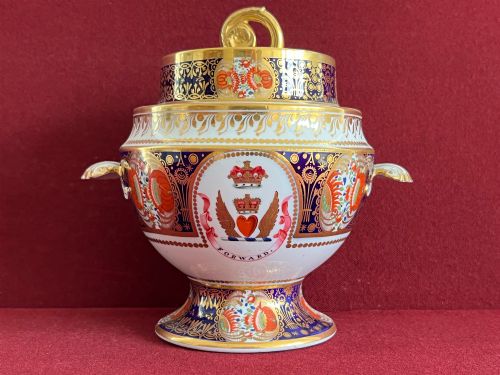
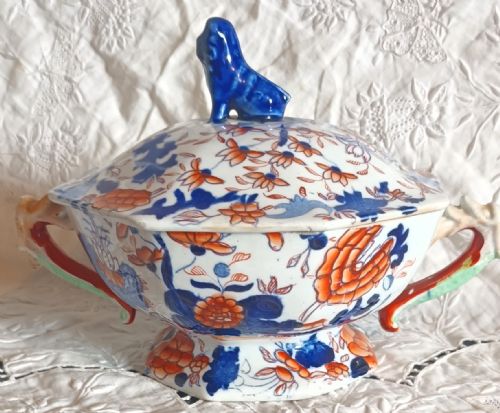


Cobalt Blue Porcelain Tureen
These cobalt blue porcelain tureen pieces bring rich, deep colour and historical service forms straight to the dining table.
Cobalt Blue Porcelain Tureen
When you search for cobalt blue porcelain tureen, you are looking at covered serving vessels designed for soups, sauces, and dessert creams. These table pieces date from the eighteenth and nineteenth centuries, taking forms that range from large soup vessels down to miniature dinner service elements and sauce tureens with stands.
The selections available here span diverse origins and stylistic periods, including Georgian, Regency, Victorian, and the Qianlong period. You will encounter English ironstone and porcelain alongside Chinese export pieces, demonstrating how European and Asian kilns both embraced rich blue decoration.
Forms vary from grand lidded tureens with covers and ladles to dainty dessert cream containers. Many examples arrive complete with matching stands, while others form part of child's services or larger tableware ensembles created for formal dining.
Materials and construction
The makers of these items relied on porcelain, ironstone, and earthenware as foundational bodies, shaping them into robust vessels and delicate tableware. Cobalt glaze and enamel provided the striking blue decoration, while select examples incorporated gold leaf detailing to highlight moulded handles and rims.
Kiln workers utilised high-temperature firings to fuse the cobalt blue pigments into the glaze, creating deep, permanent coloration. Many nineteenth-century English and eighteenth-century Chinese pieces show careful hand-painting beneath or over the glaze, resulting in varied depths of blue tone across the surface.
Listings feature pieces spanning the eighteenth and nineteenth centuries, including Regency and Victorian periods alongside Chinese export wares.
Judging the work
Quality in these pieces rests upon the crispness of the cobalt decoration and the precision of the moulding. Superior examples display smooth, even glaze application without pooling, alongside finely detailed handles and well-fitted covers that sit true.
The distinction between standard tableware and finer decorative pieces often lies in the hand-painted execution and the inclusion of supplementary elements like original stands and ladles. Finer specimens maintain sharp contours on relief-moulded ironstone and rich, vibrant blue pigments that remain stable across the entire surface.
The Cobalt Blue Porcelain Tureen Glossary
- Ironstone
- A heavy, durable type of earthenware patented in the nineteenth century to imitate Chinese porcelain. It provided a robust body for large soup tureens and everyday tableware.
- Qianlong Period
- The era of the Qing Dynasty spanning from seventeen thirty-six to seventeen ninety-five, noted for fine Chinese export porcelain sent to European markets.
- Flow blue
- A nineteenth-century ceramic technique where the cobalt blue pigment intentionally blurred or bled into the white glaze during firing, creating a soft, misty effect.
- Sauce tureen
- A small covered serving vessel specifically designed for gravies and sauces, frequently accompanied by an attached or separate matching stand.
- Chinoiserie
- European decorative style reflecting Chinese artistic motifs, commonly seen on eighteenth and nineteenth-century porcelain and ironstone vessels.
Cobalt Blue Porcelain Tureen: Frequently Asked Questions
What were cobalt blue porcelain tureens used for?
These lidded vessels served soups, gravies, and sauces at formal dining tables, keeping the contents warm between the kitchen and the dining room.
Larger pieces sat centrally on the dining table as part of dinner services, while smaller sauce tureens and dessert cream vessels were placed near individual guests or specific dishes.
How do I date a blue and white tureen?
Dating relies on examining the ceramic body, the style of the cobalt decoration, and any factory marks on the underside. Eighteenth-century Chinese export pieces differ notably in paste and blue tone from nineteenth-century English ironstone.
Stylistic cues such as Rococo revival handles or Regency classical forms also help narrow down the decade of manufacture.
Can I use these antique tureens for serving food?
While these vessels were originally made for dining, age and historic kiln methods mean many collectors prefer to use them strictly for display. Older ceramics can have micro-fissures in the glaze that absorb liquids over time.
Gentle hand washing is essential if you do choose to use them for modern dining.
Why do some tureens include stands and ladles?
Stands protected dining tables from heat and caught drips from the base of the vessel during service. Ladles provided a matching utensil designed specifically to fit the proportions of the tureen opening.
Finding a complete set with both cover, stand, and ladle intact is relatively uncommon compared to finding the tureen body alone.