



19th Century Porcelain Tureen
A 19th century porcelain tureen brings the formal dining room of the Georgian, Regency, and Victorian eras straight to the table.
19th Century Porcelain Tureen
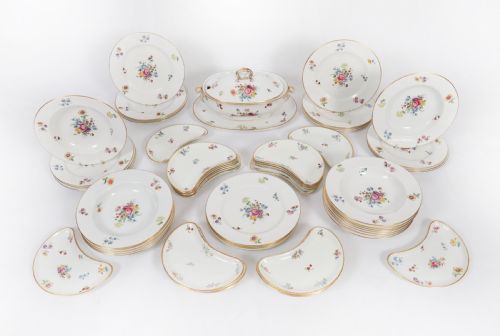
A 19th century porcelain tureen encompasses deep soup vessels, sauce tureens with stands, and broader table services originating from English, European, and Chinese export workshops. These objects arrive in forms ranging from compact dessert cream tureens to large soup vessels and pedestal bowls.
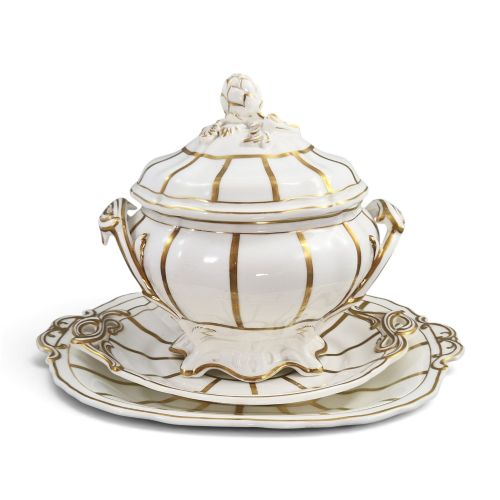
The pieces on this page span the 19th century, drawing from Georgian, Regency, and Victorian periods as well as specific decades like 1800, 1820, 1830, 1840, 1850, and 1880. Stylistic influences incorporate French Rococo Revival, Chinese Export, and naturalistic designs.
Buyers will most frequently encounter sauce tureens with matching ladles or lids alongside large soup tureens and decorative covered bowls. Manufacturers utilised ironstone, bone china, earthenware, and standard porcelain to construct these dining table centerpieces.
Materials and production methods
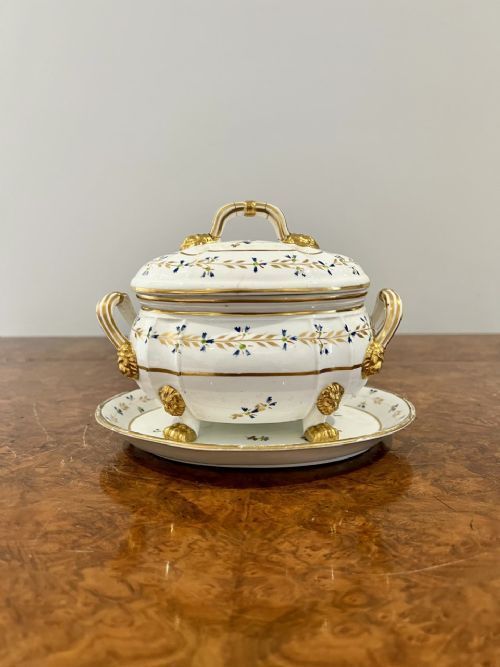
Potters and manufacturers constructed these vessels using ceramic, earthenware, bone china, and ironstone bodies, often finishing the surfaces with durable glaze and intricate enamel painting. Artisans applied gold leaf for gilt handles, crests, and border accents, particularly on Regency and Victorian tableware.
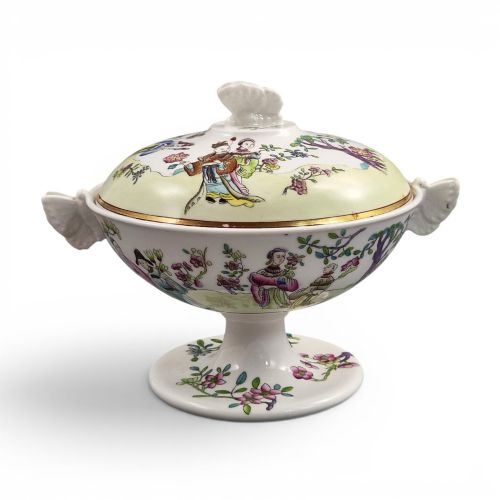
Decorating techniques on these pieces combined hand-painted motifs with transfer printing, exemplified by Flow blue processes and blue and white Chinoiserie patterns. Factories shaped functional elements like butterfly handles, naturalistic stems, and pedestals directly into the porcelain or ironstone body before firing.
Listings feature porcelain, ironstone, and bone china materials across Georgian, Regency, and Victorian periods.
Distinctions in quality
Quality in these vessels rests on the crispness of the moulding and the finesse of the hand-painting or transfer printing. Superior pieces display precise gilding on handles and rims that remains intact after decades of use.
The presence of matching stands, original covers, and auxiliary pieces like ladles elevates an example. Well-documented factory bodies from renowned makers show finer clay preparation and more translucent porcelain structures than utilitarian earthenwares.
Davenport Bone China·Spode·Copeland·Coalport·Crown Derby·Mintons·Ridgway·Flight Barr And Barr·Wedgwood·Worcester·Mason·Richard Ginori·Chamberlain Worcester·Coalbrookdale
The 19th Century Porcelain Tureen Glossary
- Bone china
- A type of soft-paste porcelain containing bone ash, known for its high strength and milky white appearance. It allowed 19th-century makers to produce thinner, more refined vessel walls.
- Ironstone
- A heavy, durable type of earthenware patented in the 19th century to imitate porcelain. It provided sturdy body material for large soup tureens and everyday dining services.
- Flow blue
- A cobalt blue transfer printing style where the colour blurred slightly into the surrounding white glaze during firing. This technique created a soft, misty appearance popular on mid-century services.
- Imari
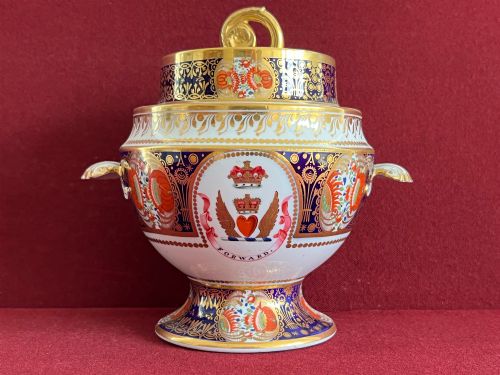
- A decorative style inspired by Japanese export wares, featuring rich underglaze blue and iron-red combined with generous gold leaf. English factories frequently adopted this palette for sauce tureens.
- Pedestal bowl
- A raised vessel supported on a central foot or base, often utilised for grand table displays. These items frequently included fitted covers and decorative handles.
19th Century Porcelain Tureen: Frequently Asked Questions
What were 19th century tureens used for?
These covered vessels held and served soups, sauces, broths, and creams at formal dining tables throughout the Georgian, Regency, and Victorian periods. Their deep basins kept liquids warm between the kitchen and the dining room.
Larger soup tureens sat centrally on the table, while smaller sauce or cream tureens accompanied specific courses on matching stands alongside ladles.
How do I identify a Regency tureen?
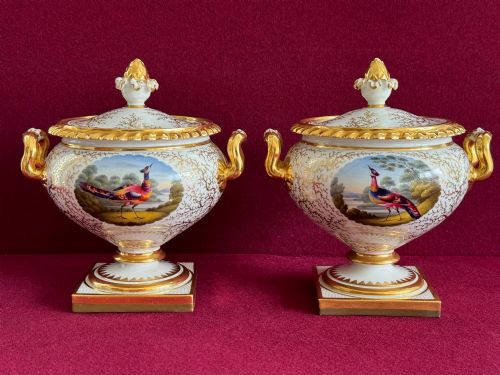
Regency tureens typically date between 1811 and 1820, displaying neoclassical influences, elegant gilt handles, and refined porcelain bodies. Look for fine enamel painting, crests, and classical pedestal bases.
Factories like Flight, Barr and Barr produced distinct Worcester porcelain examples from this exact era, often featuring crisp white glazes contrasted with rich gilding.
What is Flow blue porcelain?
Flow blue is a distinctive 19th-century ceramic style where cobalt blue pigment intentionally bled into the white glaze during the kiln firing. This produced a characteristic hazy, cloud-like depth across the pattern.
Child's services and full dinner sets utilised this technique extensively around the middle of the century, creating striking blue and white displays.