
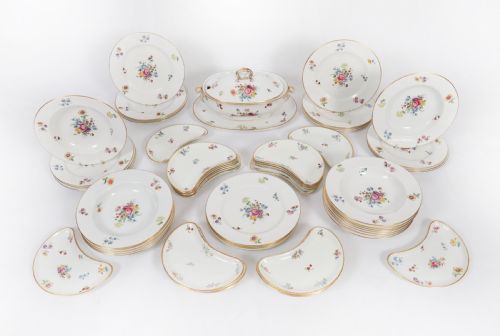



English Gilt Porcelain Tureen
An English gilt porcelain tureen brings Regency and Victorian elegance to the dining table with rich gilding and fine ceramic body.
English Gilt Porcelain Tureen
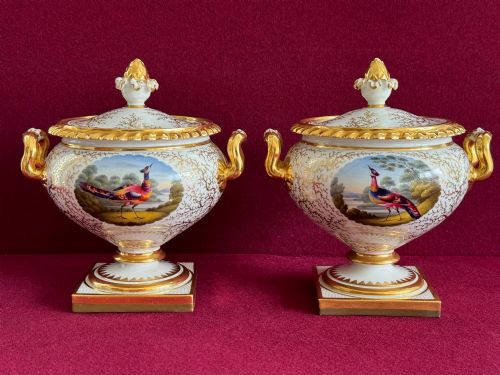
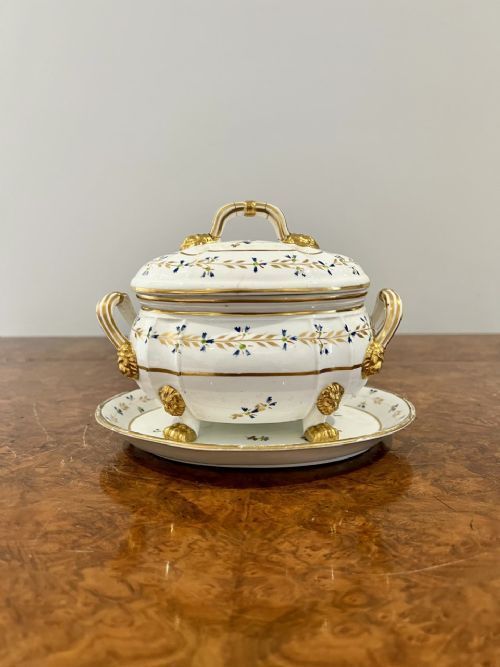
An english gilt porcelain tureen is a covered serving vessel designed for soups, sauces, or cream, made in England during the Georgian, Regency, and Victorian periods. These pieces range from sauce tureens with stands to large soup tureens and pedestal bowls.
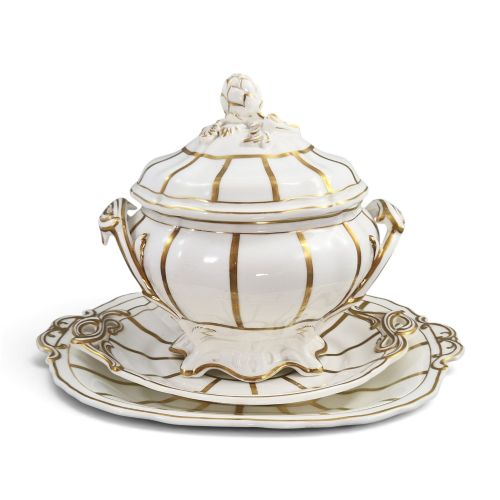
The versions most commonly met on this page date from the early nineteenth century up to the late Victorian era. Makers utilise classic forms such as the Rococo Revival style alongside simpler Regency shapes.
Buyers encounter items originating from prominent English manufactories like Worcester, Spode, and Coalport. Each example combines functional tableware with decorative gold leaf gilding and enamel painting.
What varies in quality
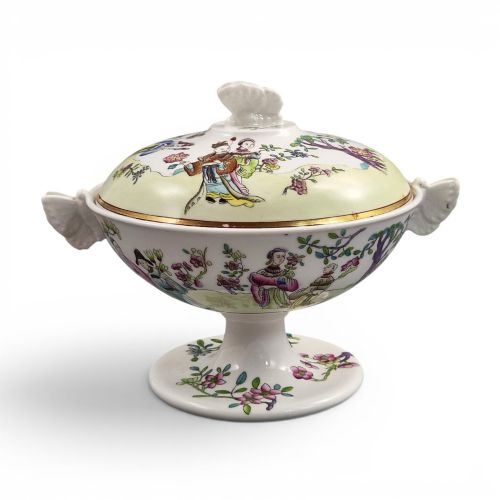
The refinement of the ceramic body and the crispness of the moulded details establish the primary tier of quality. Superior examples display thin, even walls and delicate handles shaped like butterflies or classical motifs.
The application and preservation of the gold leaf gilding distinguish finer pieces from standard production. Rich, heavy burnishing on the handles and rims indicates superior workshop standards during manufacture.
Listings feature porcelain tureens from the Regency, Georgian, and Victorian periods, alongside specific nineteenth-century styles.
Davenport Bone China·Spode·Coalport·Crown Derby·Mintons·Flight Barr And Barr·Chamberlain Worcester
The English Gilt Porcelain Tureen Glossary
- Felspar porcelain
- A dense ceramic body introduced in the nineteenth century containing feldspar to improve durability and whiteness. Manufacturers used this innovative material for fine tableware and decorative vessels.
- Gilding
- The application of gold leaf or powdered gold to the ceramic surface for decoration. Artisans burnished the gold to achieve a bright, reflective finish.
- Sauce tureen
- A small covered vessel specifically designed for serving hot or cold sauces at the dining table. These pieces often include a matching ceramic stand to protect the tablecloth.
- Soft-paste porcelain
- An early ceramic composition fired at lower temperatures than hard-paste porcelain, producing a warm glaze tone. This material characterises many eighteenth and early nineteenth-century English factory pieces.
- Imari
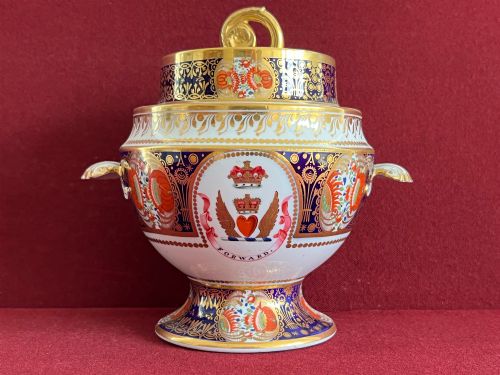
- A decorative style featuring underglaze blue combined with iron red and gold enamel highlights. English potteries frequently adopted this Japanese-inspired palette on porcelain tableware.
English Gilt Porcelain Tureen: Frequently Asked Questions
How do I date an English gilt porcelain tureen?
Examine the base for factory marks, pattern numbers, and specific paste types recorded by manufacturers during the Georgian and Victorian eras. Stylistic clues such as Regency handles or Rococo Revival moulding also narrow down the production period.
Compare the gilding style and enamel colours with known factory timelines. Early nineteenth-century pieces often feature hand-painted details unique to specific Worcester or Staffordshire workshops.
Were these tureens used for actual dining?
These covered vessels served functional roles on formal dining tables for holding soups, sauces, creams, and entrees. Wealthy households utilised matching ceramic services to present food with decorative distinction.
Many surviving pieces retain their original stands, designed to catch drips and protect fine dining furniture during service. Today, collectors primarily display them as decorative centrepieces.
What is the difference between bone china and felspar porcelain?
Bone china incorporates animal bone ash into the ceramic paste, creating a translucent body with a warm white tone. Felspar porcelain utilises felspathic rock to achieve a similar durability and whiteness without bone ash.
Both materials provided English potteries with strong foundations for intricate moulding and heavy gilding. Manufacturers selected specific bodies depending on the factory recipe and desired tableware function.
How should I clean a gilt porcelain tureen?
Wash the porcelain gently by hand using lukewarm water and a mild, non-abrasive liquid soap. Avoid harsh scrubbers or soaking the piece for extended periods, as these actions can damage old enamel and gold leaf.
Dry the tureen thoroughly with a soft cloth immediately after washing. Proper care preserves the fragile nineteenth-century gilding and prevents moisture from penetrating historic glaze cracks.