


Hand Painted Porcelain Tazza
These hand painted porcelain tazza pieces are elevated pedestal dishes that bring dramatic height and painted detail to a table, combining utility with decorative presence.
Hand Painted Porcelain Tazza
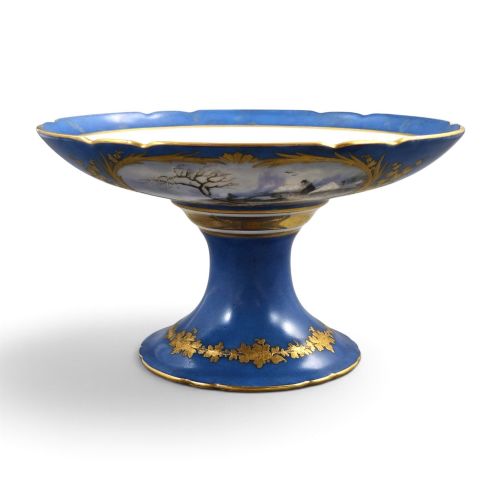
A hand painted porcelain tazza sits on a central pedestal, raising decorative dishes and dessert service components above the surface of a table. These pieces emerge in styles ranging from Georgian and Regency to Victorian Aesthetic Movement and French Rococo Revival.
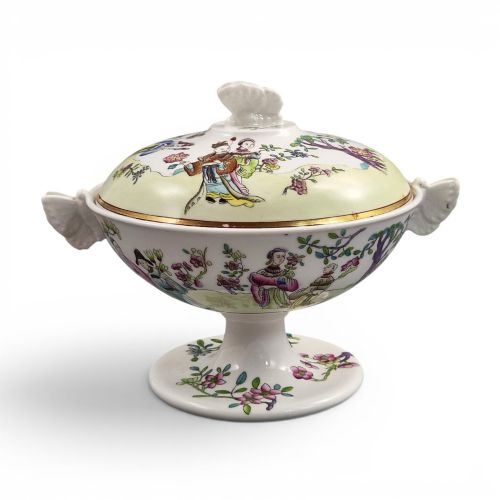
The forms span pedestal bowls, comports, and centrepieces, often featuring painted floral motifs, birds, or landscapes upon porcelain. Makers and decorators utilise shapes that echo French design or Chinese Canton export traditions.
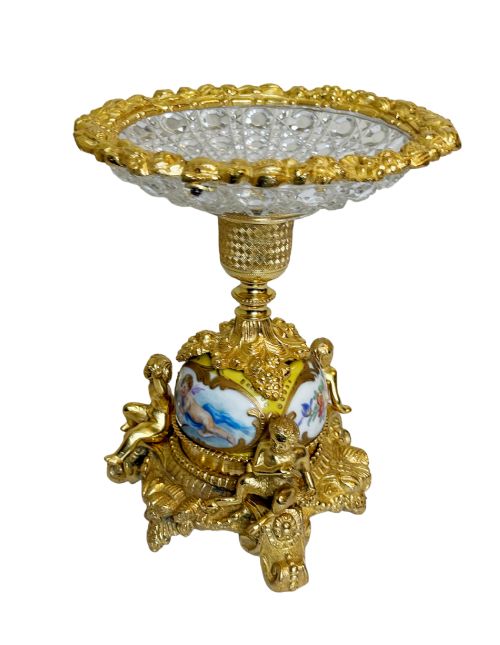
Victorian and nineteenth-century examples dominate the selections, alongside earlier Georgian productions. Buyers encounter everything from simple pedestal dishes to elaborately mounted centrepieces incorporating gilt bronze and ormolu.
Materials and construction
The body consists of porcelain, felspar porcelain, or cut crystal, shaped into pedestals, bowls, and dishes. Artisans apply hand painting directly onto the ceramic surface, frequently combining enamel colours with gilding.
Metal mounts in gilt bronze, ormolu, and champlevé enamel support or frame the porcelain vessels. These metal elements require precise casting and fitting to secure the elevated bowls and handles.
Listings feature pieces from the Georgian and Victorian eras, utilising porcelain, gilt bronze, cut crystal, and champlevé enamel.
What separates the standard of these pieces
The execution of the hand painting determines much of the character, distinguishing rapid decorative work from finely rendered botanical or figurative scenes. Crisp brushwork on subjects like orchids or landscapes elevates the piece.
The integration of materials also defines the construction, particularly where gilt bronze mounts, ormolu, or champlevé enamel meet the porcelain body. Well-fitted mounts and substantial pedestals indicate careful workshop assembly.
Sèvres Porcelain·Spode·John Ridgway·Thomas Moorcroft for E.J.D Bodley·Louis Pierre Malpass
The Hand Painted Porcelain Tazza Glossary
- Tazza
- A shallow bowl or dish mounted upon a stem and foot, used originally for serving food or displaying items.
- Comport
- An ornamental dish or bowl on a high foot, frequently used as part of a dessert service on a dining table.
- Ormolu
- Gilded bronze used for mounts, feet, and decorative handles on nineteenth-century decorative arts.
- Champlevé
- An enamelling technique where troughs are carved into metal and filled with vitreous enamel before firing.
- Felspar porcelain
- A specific ceramic body formulation introduced in the nineteenth century, known for its strength and bright white appearance.
Hand Painted Porcelain Tazza: Frequently Asked Questions
What is a tazza used for?
These elevated pedestal dishes served originally for presenting fruit, sweets, or small dessert items during formal dining.
Today they function primarily as decorative centrepieces on tables, sideboards, or mantelpieces, adding height and colour to a room.
How do I date a porcelain tazza?
Dating relies on identifying the style of the painting, the shape of the pedestal, and any factory marks on the underside of the porcelain. Nineteenth-century pieces often reflect revival styles like French Rococo or the Aesthetic Movement.
Comparing the ceramic body type and mount style, such as gilt bronze or champlevé enamel, helps narrow the period of manufacture.
Where were these pieces made?
Production centres were concentrated in European factories, particularly in France and England, alongside Chinese export wares destined for Western markets.
English potteries like Spode and various French workshops produced distinct regional interpretations of the pedestal bowl form.
How do I care for a painted tazza?
Clean these pieces gently with a dry or slightly damp soft cloth to protect the hand painted surfaces and delicate gilding. Avoid immersing mounted pieces in water, as moisture can damage the adhesives or metal elements.
Keep them away from direct sunlight to prevent fading of the enamel colours over time.